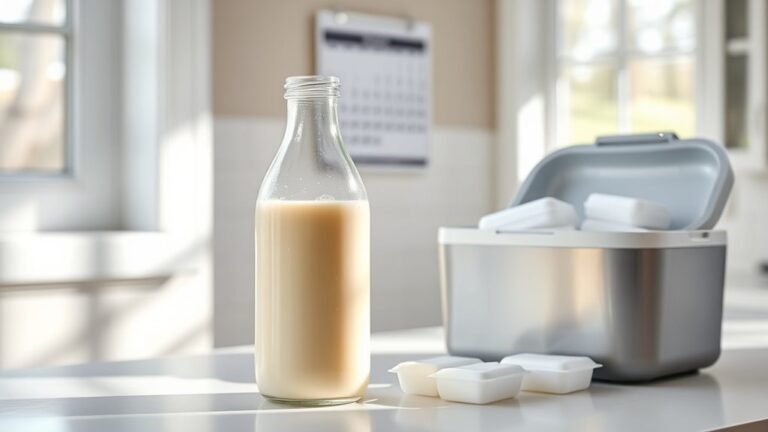
How Long Can Breast Milk Stay Out Safely?
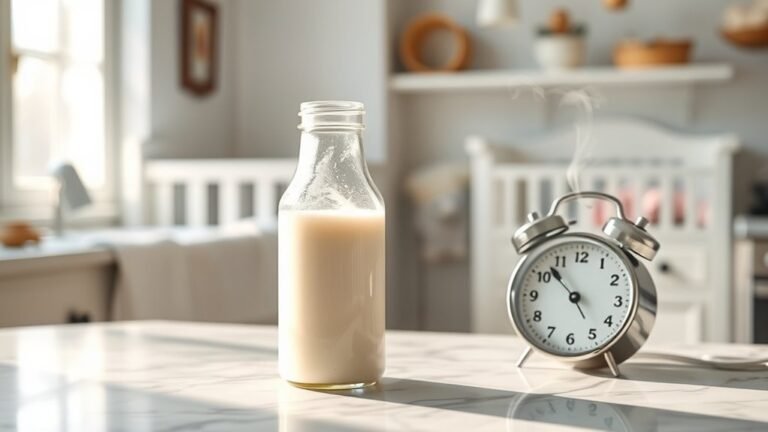
You can safely leave freshly expressed breast milk out at room temperature (about 66°F–72°F) for up to four hours. This guideline helps ensure the milk remains safe and nutritious for your baby. After four hours, bacteria begin to multiply, and the milk may spoil.
If the room is cooler, the milk might last a bit longer, but sticking to the four-hour limit is safest to prevent any risk. Thawed breast milk should be used within two hours at room temperature and should never be refrozen.
Always keep breast milk covered and clean to protect its quality. Want to know how to best store and handle your milk?
Factors Affecting Breast Milk Storage Time

Although breast milk is naturally designed to stay fresh, several factors affect how long it can be safely stored outside the refrigerator. You need to contemplate the cleanliness of your hands and the container you use; any contamination can reduce storage time.
The initial temperature of the milk matters too. Milk freshly expressed from a warm breast won’t last as long at room temperature.
How long you’ve already stored the milk before taking it out also plays a role.
Environmental conditions like humidity and airflow impact freshness, so a cool, dry place is better than a warm, enclosed one.
The method of expression, whether hand or pump, can introduce different levels of bacteria, affecting storage safety.
Being mindful of these factors helps keep breast milk safe for your baby.
Safe Room Temperature Range for Breast Milk

When you store breast milk at room temperature, keeping it within the right range is essential to preserve its quality and safety. Ideally, you want to maintain a temperature between 19°C and 22°C (66°F and 72°F).
Temperatures outside this range can promote bacterial growth or degrade nutrients. To help you manage this, keep in mind:
Temperatures outside this range can encourage bacteria growth and reduce milk nutrients, so careful storage is important.
- Avoid leaving milk in direct sunlight or near heat sources.
- Use a clean, covered container to protect the milk.
- Monitor the ambient temperature regularly if you’re storing milk for a few hours.
- If the room feels warm or humid, consider refrigeration instead.
Sticking to these guidelines will help ensure your baby gets the safest, most nutritious milk possible.
Maximum Duration for Freshly Expressed Milk at Room Temperature

Since fresh breast milk contains natural antibodies and nutrients, you can safely keep it at room temperature for up to four hours. This timeframe applies when the room temperature stays between 66°F and 78°F (19°C to 25.5°C).
Beyond four hours, bacteria may start to multiply, increasing the risk of contamination. If you plan to feed your baby later, refrigerate the milk promptly.
Also, avoid leaving milk near heat sources or in direct sunlight, as warmer temperatures shorten its safe duration.
Always store milk in clean, sealed containers to maintain freshness.
If your environment is cooler, up to 6-8 hours might be acceptable, but it’s best to stick to the four-hour guideline to guarantee your baby’s safety and health.
Guidelines for Thawed Breast Milk at Room Temperature
If you thaw breast milk, you should use it within two hours when kept at room temperature to guarantee your baby’s safety. Thawed milk is more perishable than fresh milk, so it’s important not to leave it out longer than necessary.
Here are some key guidelines to follow:
Never refreeze thawed breast milk. Use thawed milk within 24 hours if refrigerated immediately.
Once thawed, keep the milk covered and avoid contamination. Discard any leftover milk after feeding. Don’t save it for later.
Signs That Breast Milk Has Spoiled
Although breast milk looks normal most of the time, you can tell it’s spoiled by certain signs. If the milk smells sour or rancid, it’s a clear indicator it’s gone bad. You might also notice a change in color, such as a yellowish or grayish tint.
Spoiled milk can separate into layers that don’t mix back together after gentle swirling. Always trust your senses before feeding.
| Sign | Description | What to Do |
|---|---|---|
| Sour smell | Unpleasant, acidic odor | Discard immediately |
| Color change | Yellowish or grayish tint | Avoid feeding |
| Separation | Layers that won’t mix | Do not use |
| Texture change | Clumpy or grainy | Throw away |
Don’t risk your baby’s health by using questionable milk.
Best Practices for Handling and Storing Breast Milk
Handling and storing breast milk properly guarantees it stays safe and nutritious for your baby. To make sure you’re doing it right, follow these best practices:
Always wash your hands thoroughly before expressing or handling milk.
Use clean, BPA-free containers or breast milk storage bags, and label them with the date.
Store freshly expressed milk at room temperature for no more than 4 hours.
Refrigerate milk if you won’t use it within 4 hours, and use it within 4 days for ideal freshness.
How to Reheat Breast Milk Safely
When you’re ready to feed your baby, warming breast milk gently maintains its nutrients and prevents hot spots that could burn your little one. To reheat, place the bottle or storage bag in a bowl of warm water or hold it under warm running water.
Avoid using a microwave, as it heats unevenly and can damage milk’s beneficial properties. Swirl the milk gently to mix the layers but don’t shake vigorously, which can break down important proteins.
Test the temperature by placing a few drops on your wrist—it should feel warm, not hot. Once warmed, feed your baby within two hours and discard any leftover milk to ensure safety and quality.
Reheat only once; never re-freeze or reheat breast milk multiple times.
Tips for Maintaining Breast Milk Quality During Storage
Proper storage plays a big role in keeping breast milk fresh and nutritious after you’ve warmed and used it. To maintain its quality, you want to handle and store it carefully.
Here are some tips to help you:
Use clean, BPA-free containers with tight lids to prevent contamination.
Label each container with the date it was expressed to use the oldest milk first.
Store milk in small portions to avoid reheating and refreezing leftovers.
Keep breast milk in the back of the fridge or freezer where the temperature is most stable.
Frequently Asked Questions
Can Breast Milk Be Frozen More Than Once?
You shouldn’t refreeze breast milk once it’s thawed because it can lose nutrients and increase bacteria risk. Instead, use thawed milk within 24 hours and avoid reheating it multiple times for your baby’s safety.
How Does Breast Milk Storage Differ for Premature Babies?
You’ll need to store breast milk for premature babies more carefully, usually using fresher milk and stricter hygiene. Their immature immune systems require fresher milk, often stored shorter to reduce bacterial growth risks.
Are There Preservatives Safe to Add to Stored Breast Milk?
You won’t find miracle preservatives to make breast milk last forever! You shouldn’t add anything to stored milk; it’s best to rely on proper refrigeration and freezing to keep it safe and nutritious for your baby.
Can Breast Milk Be Stored in a Car Safely?
You shouldn’t store breast milk in a car without proper cooling because temperatures fluctuate.
If you use a cooler with ice packs, you can keep it safe for a few hours, but avoid leaving it in a warm car.
How Does Diet Affect Breast Milk Storage and Quality?
Your diet impacts breast milk’s nutrient content and taste, but it doesn’t considerably affect storage safety. Eating balanced, nutritious foods helps maintain quality, so focus on variety and hydration to support healthy milk for your baby.
Conclusion
To keep your precious pumped milk perfect, prioritize proper practices. Remember, room temperature ranges and timely handling tremendously tip the scales toward safety. Spot signs of spoilage swiftly, store smartly, and reheat responsibly to retain richness and nutrients.
By balancing these basics, you’ll beautifully boost your baby’s health and happiness. Understanding how long breast milk can stay out safely is key. So, stay savvy, stay safe, and savor every sweet, safe sip your little one receives from your loving labor.