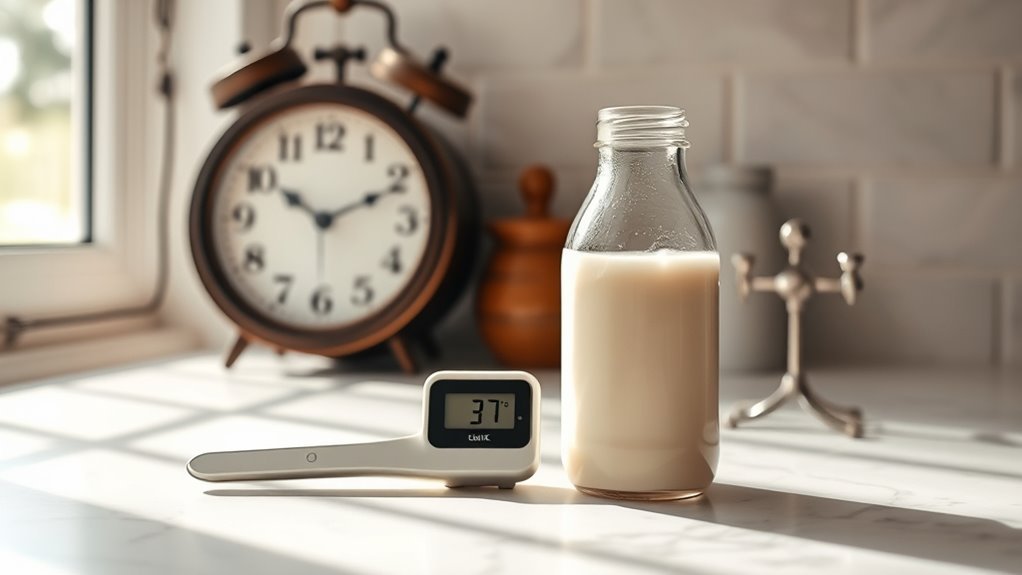
How Long Can Refrigerated Breast Milk Sit Out Safely? (Expert Guidelines)
When you take refrigerated breast milk out, you might wonder how long it can safely stay at room temperature before it risks spoiling. Understanding how long breast milk can sit out is vital to keep your baby safe and avoid wasting precious milk. Knowing the right window for breast milk storage depends on a few important factors you should consider carefully.
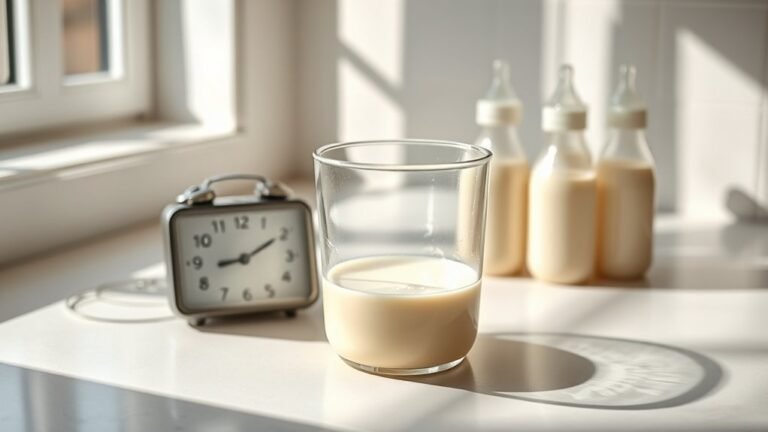
Breast milk that has been refrigerated can typically sit out at room temperature for up to 4 hours. However, this time frame can vary based on the cleanliness of the environment and the temperature of the room. It’s essential to always check the milk for any signs of spoilage before feeding your baby.
If the breast milk has been left out longer than recommended, it’s safer to discard it to prevent any risk of contamination. Proper storage and handling of breast milk ensure your baby gets the most nutritious and safe feeding possible.
Recommended Room Temperature Limits for Breast Milk

Although you might want to keep breast milk at room temperature for convenience, it’s important to know that you can safely store it for up to 4 hours at 77°F (25°C).
This temperature guideline guarantees feeding safety by limiting bacterial growth and maintaining milk quality.
If the room temperature exceeds 77°F, the expiration time shortens to just 1-2 hours, so you should adjust accordingly.
To store breast milk safely, use it within this 4-hour window when kept out, or discard after this period to prevent risks.
Remember, once refrigerated breast milk is taken out, the same room temperature limits apply.
Following these temperature guidelines helps you maintain safe storage and guarantees the milk remains safe for your baby.
Safe Handling Practices for Refrigerated Breast Milk

When you store breast milk in the refrigerator, keeping it at or below 39°F (4°C) guarantees it stays safe for up to four days.
To guarantee safe handling of refrigerated breast milk, follow these key steps to prevent bacteria growth and maintain quality:
Follow these essential steps to keep refrigerated breast milk safe and maintain its quality effectively
- Practice good hygiene by washing your hands and sterilizing storage containers before use.
- Use proper storage containers, label each with the date expressed, and keep track of expiration time.
- Store milk in the back of the refrigerator where temperature control is most consistent, avoiding the door.
- Discard leftover milk in bottles after two hours to minimize bacteria growth and ensure safety.
Signs Breast Milk May Have Spoiled

Proper storage helps keep breast milk safe, but it’s important to recognize when it may have spoiled. You should watch for a sour smell or rancid odor, which are clear signs of spoiled breast milk.
An off odor or unusual taste also indicates milk spoilage and means you should discard the milk.
Changes in color or discoloration, such as yellowing, can signal spoilage too.
Additionally, curdling or separation that doesn’t mix back together points to milk that’s no longer safe.
Always check for these signs before feeding your baby to avoid any risk.
Trust your senses. If the breast milk has any strange smell, taste, or appearance, it’s best to throw it out to keep your baby safe.
Combining Fresh and Stored Breast Milk Safely
If you want to combine fresh breast milk with stored milk, make sure the freshly expressed milk has cooled to refrigerator temperature first to prevent bacterial growth. Mixing warm milk with stored milk can cause contamination and spoilage.
Follow these safety guidelines:
- Cool freshly expressed milk to refrigerator temperature before combining with stored milk.
- Only combine refrigerated milk with other refrigerated milk; avoid mixing with hot or warm milk.
- After combining, refrigerate promptly to maintain freshness and prevent bacterial growth.
- Use the combined milk within 24 hours to ensure safety and avoid contamination.
Best Containers for Breast Milk Storage
Choosing the right containers plays a crucial role in keeping your breast milk safe and fresh. Always use clean containers made from food-grade glass or BPA-free plastic with tight-fitting lids to prevent contamination.
Use clean, food-grade glass or BPA-free plastic containers with tight lids to keep breast milk safe and fresh.
Specially designed breast milk storage bags are also great options. However, avoid household plastic bags or disposable liners.
Before use, thoroughly wash containers with soap and hot water to guarantee contamination prevention.
Label each container clearly with the date of expression and your baby’s name if needed, making it easier to track freshness.
For ideal temperature control, store milk in the back of your refrigerator or freezer, where temperatures stay consistent.
Proper container choice and storage practices help maintain your milk’s quality and safety until feeding time.
Guidelines for Thawing and Using Frozen Breast Milk
Once you’ve stored your breast milk correctly, knowing how to thaw and use it safely becomes the next important step. Follow these storage guidelines to maintain food safety when thawing breast milk:
-
- Thawting breast milk is best done by placing it in the refrigerator overnight or warming it gently in a bowl of warm water.
- Avoid thawing breast milk at room temperature to prevent bacterial growth.
- Use thawed breast milk within 24 hours if kept refrigerated and never refreeze it.
- Discard leftovers after 24 hours of refrigerator storage to ensure safety.
Effects of Prolonged Room Temperature Exposure on Breast Milk
Although breast milk can safely remain at room temperature (77°F or 25°C) for up to 4 hours, leaving it out longer increases the risk of bacterial growth and nutrient loss. Prolonged exposure leads to vitamin C degradation and milk spoilage, compromising safety and nutritional value.
To prevent bacterial contamination, adhere to safety guidelines and discard milk past its expiration time at room temperature. Here’s a quick look at the effects over storage time:
| Storage Time | Bacterial Growth | Nutrient Status |
|---|---|---|
| 0-4 hours | Minimal | Fresh breast milk intact |
| 4-6 hours | Moderate increase | Beginning vitamin C degradation |
| 6-8 hours | High | Significant nutrient loss |
| >8 hours | Unsafe contamination | Milk spoilage occurs |
Always prioritize fresh breast milk and avoid extended room temperature exposure.
Tips for Minimizing Waste and Preserving Nutrients
To minimize waste and preserve nutrients, store breast milk in small portions that match your baby’s feeding amounts. Proper temperature control and safe storage are essential to prevent spoilage and bacterial growth. Follow these storage tips to maintain nutrient preservation and extend milk usability:
Store breast milk in small portions with proper temperature control to preserve nutrients and prevent spoilage.
- Label containers with the date to track milk expiration and use the oldest refrigerated breast milk first.
- Cool fresh expressed milk promptly before placing it in the refrigerator to reduce bacterial growth.
- Avoid storing milk in the refrigerator door, where temperature fluctuates, risking spoilage.
- Discard any milk left unrefrigerated for over 2 hours to ensure safety and nutrient integrity.

Frequently Asked Questions
How Long Does Breast Milk Last After Taken Out of the Fridge?
Once you take breast milk out of the fridge, you should use it within 4 hours at room temperature.
If the room is warm, aim to use it within 2 hours to keep your baby safe.
Can You Leave Refrigerated Breast Milk Out in Room Temperature After?
You can leave refrigerated breast milk out at room temperature for up to 4 hours safely. Just remember to use it within that time or discard it to keep your baby safe from harmful bacteria growth.
What Happens to Breast Milk After 4 Hours at Room Temperature?
After 4 hours at room temperature, breast milk starts growing bacteria, which can harm your baby. You’ll want to discard it since its nutritional quality declines, and it won’t be safe or healthy to feed anymore.
How Long to Use Breastmilk After Warming From the Fridge?
You wouldn’t leave warmed milk out all day, right? Once you warm refrigerated breast milk, use it within 1 to 2 hours.
Don’t reheat or refrigerate it again to keep your baby safe and healthy.
Conclusion
You can safely leave refrigerated breast milk out at room temperature (77°F or 25°C) for up to 4 hours. However, if the environment is warmer than this, limit that time to 1-2 hours to keep your baby safe.
Remember, bacteria can multiply quickly, so timely use is vital. Breast milk left out too long can spoil and pose health risks.
Following these guidelines helps preserve nutrients and prevent waste. This ensures your baby gets the best nourishment every time. Proper handling and understanding how long refrigerated breast milk can sit out safely are key to maintaining milk quality and your baby’s health.