How Long Can Refrigerated Breast Milk Sit Out Safely
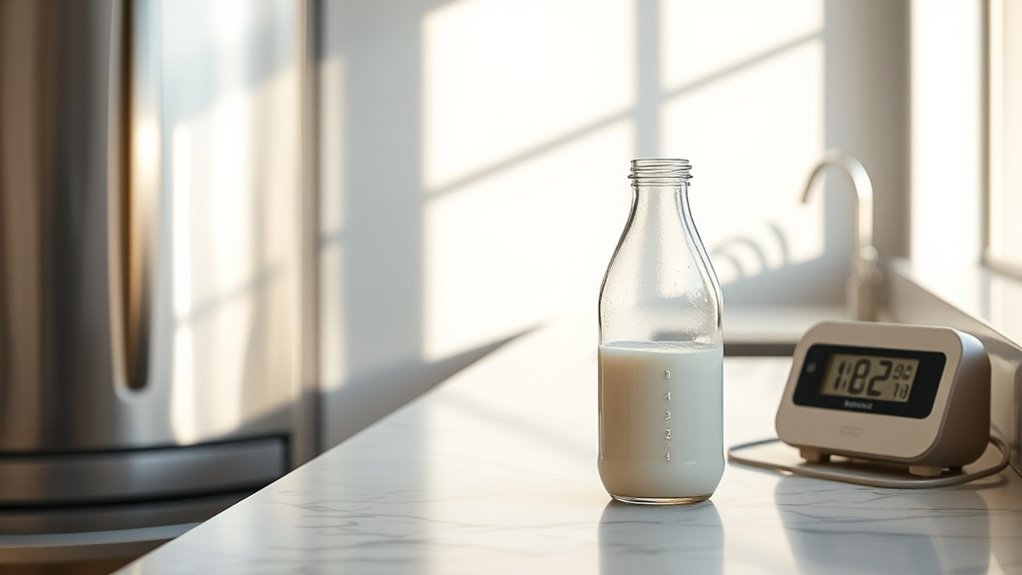
You can safely leave refrigerated breast milk out at room temperature for up to four hours if the room is about 77°F (25°C) or cooler. This guideline helps ensure the milk stays fresh and safe for your baby. If the temperature is higher, it’s important to limit the time to two hours to prevent spoilage.
Always use breast milk within one hour after warming and avoid refreezing thawed milk. Proper handling and storage are crucial to keeping your milk nutritious and fresh.
Keep exploring to learn how to spot spoilage and store milk safely during outings. Understanding these tips will help you provide the best for your little one.
Understanding Breast Milk Storage Guidelines

Although storing breast milk properly might seem straightforward, following specific guidelines is essential to keep it safe and nutritious for your baby.
You’ll want to use clean containers made of glass or BPA-free plastic and label them with the date you expressed the milk.
Make sure to store breast milk in the back of the refrigerator, where the temperature is most consistent, ideally at 4°C (39°F) or lower.
Avoid placing milk in the door, as temperature fluctuations can occur there.
Use refrigerated breast milk within 4 days to ensure freshness and reduce the risk of bacterial growth.
When thawing frozen milk, do it in the refrigerator or under warm running water, never at room temperature.
Proper storage safeguards your baby’s health and preserves milk quality.
Factors Affecting Breast Milk Shelf Life

Since breast milk’s shelf life depends on several variables, understanding these factors can help you store it more safely and effectively. You’ll want to contemplate how each element impacts milk quality over time.
First, the cleanliness of your pumping and storage equipment plays a big role. You need to keep everything sanitized to prevent bacterial growth.
Sanitize all pumping and storage equipment thoroughly to prevent bacterial contamination and keep breast milk safe.
Second, how quickly you refrigerate or freeze the milk after pumping affects freshness; the sooner, the better.
Finally, repeated warming and cooling cycles can break down nutrients and increase spoilage risk.
- Use sterile containers and wash hands thoroughly
- Refrigerate milk promptly, ideally within two hours
- Avoid thawing and refreezing milk multiple times
Keeping these in mind will help maintain your breast milk’s safety and nutritional value.
Ideal Temperature for Refrigerated Breast Milk

Proper storage conditions play a vital role in keeping your breast milk fresh and nutritious. To guarantee its safety, keep your refrigerated breast milk at a consistent temperature between 32°F and 39°F (0°C to 4°C). This range slows bacterial growth while preserving nutrients.
Avoid storing milk in the refrigerator door, where temperature fluctuates frequently. Instead, place it toward the back of the main compartment.
Use a dedicated container or breast milk storage bags that seal tightly to prevent contamination.
Monitor your fridge temperature regularly with a thermometer to maintain this ideal range. By keeping your breast milk at the right temperature, you safeguard its quality and extend its usability, giving your baby the best nutrition possible every time.
Signs That Breast Milk Has Spoiled
When you store breast milk, it’s important to recognize the signs that indicate it has gone bad to ensure your baby’s safety. Spoiled breast milk can cause discomfort or illness, so always check before feeding.
Here’s what to look for:
Off smell: Sour or rancid odor instead of the usual sweet, nutty scent.
Unusual appearance: Clumps, discoloration, or a watery separation that doesn’t mix back together after gentle swirling.
Texture changes: Slimy or sticky consistency rather than smooth and creamy.
If you notice any of these signs, it’s best to discard the milk. Trust your senses and when in doubt, throw it out to keep your baby safe and healthy.
Safe Duration for Breast Milk at Room Temperature
Although breast milk is naturally designed to nourish your baby, it can only stay safe at room temperature for a limited time. Generally, freshly expressed breast milk can sit out for up to 4 hours if the room is around 77°F (25°C) or cooler.
If the room is warmer, the safe duration shortens considerably. Knowing how long you can leave breast milk out helps prevent spoilage and keeps your baby safe.
| Room Temperature | Safe Duration |
|---|---|
| Up to 77°F (25°C) | Up to 4 hours |
| Above 77°F (25°C) | Up to 2 hours |
| Immediately after warming | Use within 1 hour |
Always aim to refrigerate or use breast milk within these time frames to maintain its quality.
Best Practices for Handling Breast Milk Outside the Fridge
Since breast milk can spoil quickly outside the fridge, you should handle it carefully to maintain it safe for your baby. When you take breast milk out, minimize its exposure to warm air and always use clean hands and sterilized containers.
Here are some best practices to follow:
- Keep the milk in a cooler bag with ice packs if you’re away from home.
- Avoid opening the container repeatedly to prevent contamination.
- Label milk with the date and time it was expressed to track freshness.
Always use the oldest milk first and never refreeze milk that’s been thawed.
Reheating Refrigerated Breast Milk Safely
If you want to preserve the nutrients and safety of refrigerated breast milk, you should warm it carefully before feeding. Avoid using a microwave, as it can create hot spots that may burn your baby and degrade valuable nutrients.
Instead, place the bottle in a bowl of warm water or use a bottle warmer designed for breast milk. Gently swirl the milk to mix the fats that may have separated, but don’t shake vigorously.
Always test the temperature by dropping a few drops on your wrist. It should feel lukewarm, not hot.
Once warmed, feed your baby within two hours and discard any leftover milk.
Reheating breast milk multiple times is unsafe, so only warm what your baby will finish during a feeding.
Freezing vs. Refrigerating Breast Milk: Time Differences
When you need to store breast milk, choosing between freezing and refrigerating depends largely on how long you plan to keep it.
Refrigerated breast milk is ideal if you’ll use it within a few days, while freezing is best for longer storage.
For short-term use, refrigerate breast milk; freeze it when you need to store it longer.
Consider these time frames:
- Refrigerated: Up to 4 days at 39°F (4°C)
- Frozen: Up to 6 months in a standard freezer at 0°F (-18°C)
- Deep Freezer: Up to 12 months at -4°F (-20°C) or lower
How to Store Breast Milk During Travel or Outings
Although traveling with breast milk can seem challenging, you can keep it safe and fresh by planning ahead and using proper storage methods. Start by packing your milk in a cooler bag with ice packs to maintain a temperature below 40°F (4°C).
Use insulated containers or specialized breast milk storage bags to prevent leaks and contamination. Label each container with the date and time you expressed the milk so you can use the oldest first.
If your trip lasts longer than four hours, consider using a portable cooler with additional ice packs to extend freshness. Avoid opening the cooler frequently, as this raises the temperature inside.
Once you reach your destination, transfer the milk to a refrigerator or freezer promptly to preserve its quality until feeding time.
Tips for Maintaining Breast Milk Quality After Refrigeration
To keep your refrigerated breast milk safe and nutritious, handle it with care and attention. After refrigeration, you want to maintain its quality by minimizing exposure to temperature changes and contaminants.
Always thaw or warm breast milk gently, avoiding microwaves which can create hot spots and degrade nutrients. Use clean hands and sanitized containers to prevent bacteria growth.
Here are some tips to keep in mind:
Store milk in the back of the refrigerator where temperatures stay more consistent. Use the oldest milk first to ensure freshness. Once warmed, feed your baby within two hours and discard any leftovers.
Frequently Asked Questions
Can Breast Milk Be Mixed From Different Pumping Sessions?
Yes, you can mix breast milk from different pumping sessions, but make sure the milk is cooled first.
Always combine the newest milk with the older milk to keep everything safe and fresh for your baby.
How Does Maternal Diet Affect Stored Breast Milk?
You’ll find that about 20% of breast milk’s fat content can vary with your diet. What you eat impacts vitamins and fatty acids in stored milk, so focusing on nutritious foods helps keep your milk nourishing for your baby.
Is It Safe to Add Fresh Milk to Thawed Milk?
You shouldn’t add fresh milk to thawed breast milk because it can increase bacterial growth. Instead, use fresh milk separately and always store and handle breast milk properly to keep it safe for your baby’s feeding.
Can Breast Milk Be Donated After Refrigeration?
Yes, you can donate breast milk after refrigeration if it’s been stored properly and hasn’t exceeded recommended time limits. Always check with your milk bank’s guidelines to guarantee it meets their safety and quality standards.
What Containers Are Best for Storing Breast Milk?
Think of storing breast milk like preserving a rare wine. You want airtight, BPA-free containers or specially designed breast milk storage bags. These keep the milk fresh, safe, and ready for your baby’s next feeding without contamination.
Conclusion
Think of refrigerated breast milk like a delicate message in a bottle—you want it to reach your baby fresh and safe. Just as a message left too long in the sun fades, breast milk can spoil if left out too long. By following storage guidelines and keeping it cool, you preserve its nourishing power.
Remember, every drop is a gift, so handle it with care to keep your little one thriving. Knowing how long refrigerated breast milk can sit out safely ensures you provide the best for your baby. Always prioritize proper storage to maintain the milk’s quality and safety.