How Long Can Breast Milk Stay in the Fridge Safely? Storage Guidelines Explained
Did you know breast milk can stay fresh in your refrigerator for up to four days? Proper breast milk storage is essential to preserve its nutrients and protect your baby from harmful bacteria. Knowing how long breast milk can stay in the fridge safely helps ensure your baby gets the best nutrition.
The exact time and conditions can vary depending on how you store the milk, where you place it in the fridge, and how you handle leftovers. Understanding these details can help you keep your milk safe and your baby healthy. Always store breast milk in clean, sealed containers and label them with the date to track freshness.
Recommended Containers for Storing Breast Milk

When storing breast milk, you should use clean, food-grade glass or BPA-free hard plastic containers with tight-fitting lids to keep the milk safe and fresh. Glass bottles and plastic containers designed specifically for breast milk storage work best, as they’re safe for both refrigeration and freezing.
Avoid household plastic bags or disposable liners, but specially designed storage bags are acceptable.
Always wash and sterilize your storage containers thoroughly before the first use and after each use to prevent contamination.
Thoroughly wash and sterilize containers before first use and after each use to keep breast milk safe.
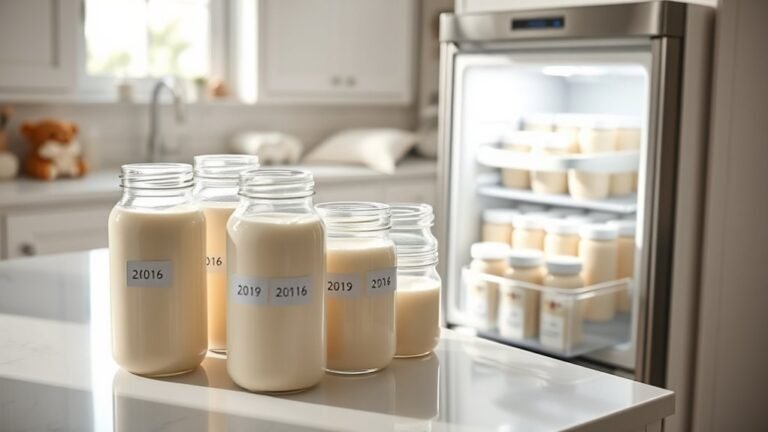
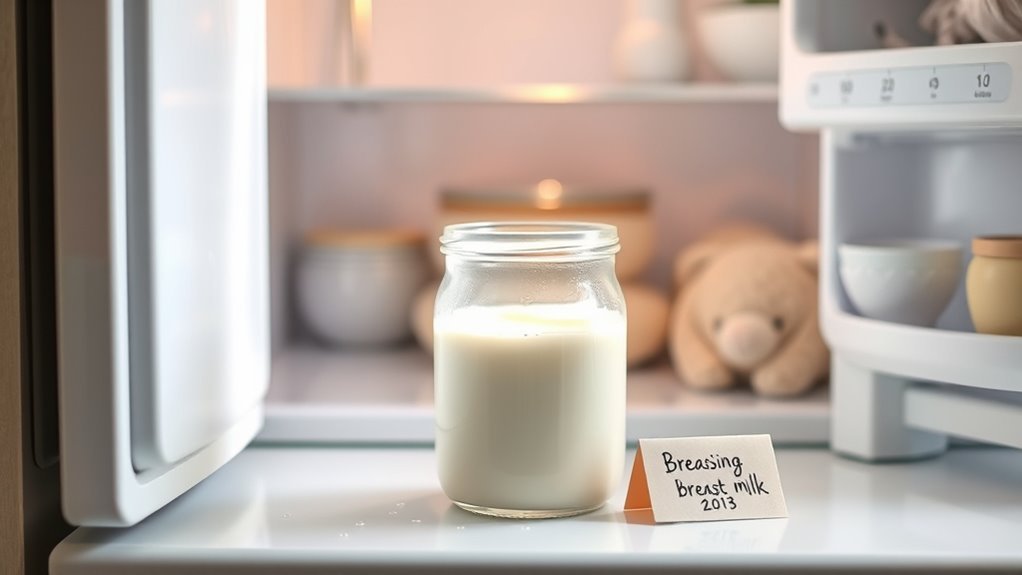
Remember to label each container clearly with the date of expression using waterproof labels or a permanent marker.
Also, leave some space at the top of containers for milk expansion during freezing.
Using the right container lids ensures a secure seal, helping maintain milk quality in the refrigerator or freezer.
Optimal Placement of Breast Milk in the Refrigerator

Although storing breast milk in the refrigerator seems straightforward, placing it in the right spot is vital to keep it fresh and safe.
For ideal refrigerator placement, store your milk in the back of the refrigerator, ideally on the middle shelf above the vegetable drawer. This storage location offers the best temperature stability, which is essential for milk safety.
Avoid the refrigerator door since frequent opening causes temperature fluctuations that risk spoilage.
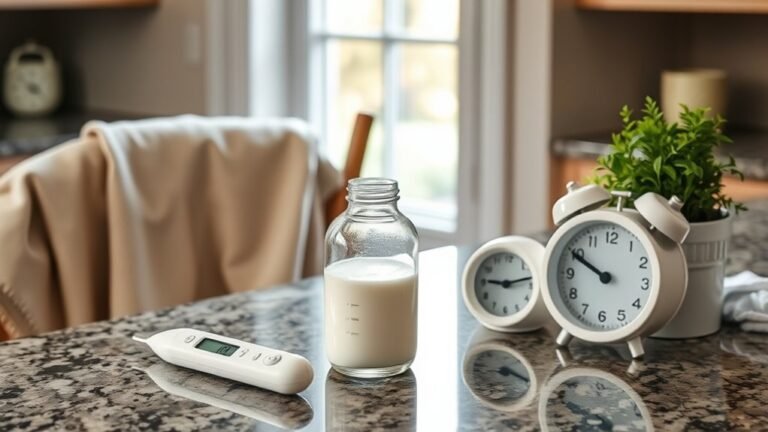
Use an appliance thermometer to monitor that the temperature stays at or below 4°C (39°F).
Always position containers upright and avoid stacking them to guarantee proper storage and cooling circulation. These steps help maintain consistent cooling, reducing spoilage and preserving the quality of your expressed breast milk effectively.
Labeling and Portioning Expressed Breast Milk

Properly labeling and portioning your expressed breast milk guarantees safety and convenience during feeding times. Always label each container with the pumping date using waterproof ink, and include your child’s name if stored at a childcare facility.
Divide milk into small portions of 2 to 4 ounces to match feeding needs and reduce waste. When adding more milk to a container, re-label with the most recent date to track freshness.
Use the FIFO (first in, first out) method to ensure you use the oldest milk first, following storage guidelines.
| Labeling Tips | Portioning Tips |
|---|---|
| Waterproof ink & date | 2-4 oz portions |
| Child’s name for childcare | Minimizes waste |
| Re-label when milk is added | Matches feeding needs |
| FIFO method for expiration | Ensures freshness |
Safe Storage Durations for Breast Milk at Various Temperatures
After labeling and portioning your expressed breast milk, understanding how long it can safely stay in the fridge is key to maintaining its quality. Stored breast milk keeps best in the refrigerator at or below 39°F (4°C), with a safe storage duration of up to 4 days.
For ideal milk safety, place your storage container at the back of the refrigerator, where temperature control is most consistent.
If breast milk sits at room temperature, the expiration time shortens to about 24 hours, so use it quickly.
Following these storage guidelines ensures freshly expressed milk retains nutrients and stays safe for your baby. Always monitor your refrigerator’s temperature to maintain milk safety and prevent spoilage, keeping your baby’s nutrition reliable.
Combining Fresh and Previously Stored Breast Milk
When you combine fresh breast milk with previously stored milk, make sure the fresh milk has cooled to room temperature or below first.
Adding warm or hot milk directly to refrigerated storage can cause partial thawing and increase bacterial growth risks.
Follow these safety guidelines to combine milk properly:
-
- Cool freshly expressed breast milk in the fridge before mixing to maintain safe milk temperature.
- Label the container with the date of the oldest milk to track milk expiration accurately.
- Use the combined milk within 24 hours to stay within safe storage time.
Signs to Check Breast Milk Freshness Before Use
Although breast milk can look different from one batch to another, you should always check its smell and appearance before feeding.
A sour odor or rancid smell signals spoilage, so discard the milk immediately.
Discoloration and separation of fat are common and usually safe if the smell is normal. Watch for clumping or changes in texture, which often mean the milk isn’t fresh.
Mold or unusual particles are clear signs of contamination and mean you should not use the milk.
| Sign | What to Check For | Action |
|---|---|---|
| Smell | Sour odor, rancid smell | Discard if present |
| Appearance | Discoloration, separation | Usually okay if no bad smell |
| Texture | Clumping, curdling | Discard if accompanied by bad odor |
| Contamination | Mold, unusual particles | Always discard |
Best Practices for Thawing and Warming Breast Milk
Because thawed breast milk can spoil quickly, you should refrigerate it immediately and use it within 24 hours.
When thawing breast milk, follow these best practices to ensure feeding safety and nutrient preservation:
- Thaw breast milk in the fridge or under warm water; avoid microwave use to prevent hot spots and nutrient loss.
- Warm breast milk by placing the bottle in warm water or running warm water over it gently.
- Before feeding, perform temperature testing by placing a few drops on your wrist to avoid burns.
Always practice safe storage by never refreezing thawed breast milk and discarding leftover milk after feeding.
These steps protect your baby and maintain the quality of refrigerated breast milk.
Handling Leftover Breast Milk After Feeding
After feeding, you might wonder how to handle any leftover breast milk safely. It’s important to store leftover milk in a clean, airtight container and label it with the date to maintain milk safety and protect infant health.
You can keep refrigerated storage of leftover milk for up to 2 hours after feeding; if not used within that time, discard it to prevent bacterial growth.
If you refrigerate the leftover milk within this 2-hour window, you can safely reuse it for the next feeding or within 24 hours.
Always check that your baby shows no signs of illness before reusing milk. Proper handling of leftover breast milk ensures your baby gets safe, nutritious feedings every time.

Maintaining Refrigerator Temperature for Milk Safety
To keep breast milk safe, you need to maintain your refrigerator’s temperature at 4°C (39°F) or below. Proper temperature control is essential to prevent bacterial growth and preserve the nutritional quality of your milk.
Here’s how you can guarantee ideal breast milk safety:
- Use a refrigerator thermometer to regularly check the storage temperature, especially during power outages or after adjusting settings.
- Store milk in the coldest spot, typically the back of the refrigerator, to maintain consistent refrigerator temperature.
- Avoid placing milk in the door where temperature fluctuates frequently, risking milk preservation.
Frequently Asked Questions
Is Breast Milk Ok After 5 Days in the Fridge?
No, breast milk isn’t safe after 5 days in the fridge. You should discard it to avoid bacteria that can harm your baby.
Always store milk properly and use it within 4 days to keep it fresh.
What Is the 4 4 4 Rule for Breast Milk?
The 4-4-4 rule means you can keep freshly expressed breast milk for 4 hours at room temp, 4 days in the fridge, and up to 4 months in the freezer.
It helps you store milk safely and effectively.
What Is the 6 6 6 Rule for Breast Milk?
Don’t panic. You can safely store breast milk for 6 hours at room temp, 6 days in the fridge, and 6 months in the freezer. The 6 6 6 rule keeps your milk fresh and your baby happy!
What Is the 5 5 5 Rule for Breast Milk?
The 5 5 5 rule means you can keep breast milk at room temperature for 5 hours, in the fridge for 5 days, and freeze it for 5 months.
It helps you store milk safely and effectively.
Conclusion
Imagine reaching into your fridge, the cool air wrapping around your hand as you carefully grab a neatly labeled bottle of breast milk. To keep that precious milk fresh and safe, store it in the back of your fridge at or below 4°C, and use it within 4 days.
By following these simple steps, you’re not just preserving milk—you’re nurturing your baby’s health with every drop.
Stay mindful, stay safe, and trust your care to ensure how long breast milk can stay in the fridge safely.