How Long Can You Leave Breast Milk Out Safely? Storage Guidelines
You might be surprised to learn that leaving breast milk out at room temperature isn’t as simple as it seems. How long you can leave breast milk out safely depends on several important factors. If you’re pumping or feeding on the go, knowing exactly how long that milk stays safe can make a big difference for your baby’s health.
The answer depends on a few key factors you might not have considered yet. Let’s explore what those are and how you can keep your milk fresh and safe. Understanding these guidelines will help ensure your baby gets the best nutrition without risk.
Understanding Room Temperature Storage Limits

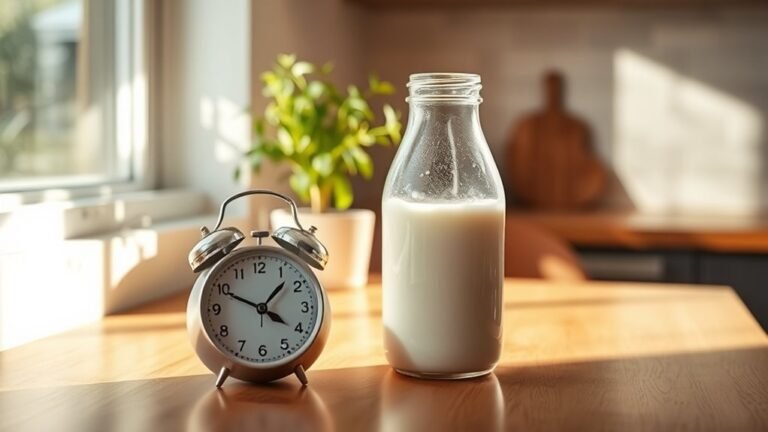
Although breast milk can sit safely at room temperature (around 77°F or 25°C) for up to 4 hours, you should aim to utilize it within 2 to 4 hours to guarantee freshness.
Breast milk stays safe at room temperature for up to 4 hours but is freshest within 2 to 4 hours.
At room temperature, bacterial growth accelerates, raising spoilage risks and threatening infant safety.
If the ambient temperature climbs above 77°F, the safe storage limit shortens to about 1 to 2 hours.
To ensure safe storage, fresh milk should be refrigerated if not used within the recommended expiration time.
Leaving breast milk out longer than 4 hours can lead to contamination, so discard any milk past this point.
Understanding these storage limits helps you protect your baby from illness and maintain the nutritional quality of breast milk.
Always prioritize refrigeration when you can.
Choosing the Right Containers for Breast Milk

When storing breast milk, choosing the right container is vital to keep it safe and fresh. Use clean, capped glass or BPA-free hard plastic containers designed specifically for breast milk storage. These storage containers prevent contamination and withstand freezing breast milk without compromising quality.
Special plastic bags made for milk collection are also acceptable, but avoid household plastic bags or disposable liners. Always guarantee cleanliness by thoroughly washing containers before use to reduce bacterial growth.
Proper sealing is key to maintain milk freshness and prevent spills. Label each container with the date expressed and your child’s name if needed, helping you track storage duration accurately.
Selecting the right container material and following these guidelines ensures your breast milk stays safe and retains its nutritional value during storage.
Best Practices for Storing Expressed Breast Milk

To keep your expressed breast milk safe and nutritious, you should store it properly right after pumping. Use clean, capped glass or BPA-free plastic containers and label each with the date and your baby’s name if needed. Store milk at the back of the refrigerator or freezer where temperatures stay consistent.
Freeze in small portions to match feeding needs and reduce waste.
- Store milk in small batches (1-4 oz) for easy thawing and minimal waste
- Freeze leaving space for expansion; never fill containers to the brim
- Keep thawed milk refrigerated and use within recommended expiration times
- Avoid storing milk at room temperature for long to prevent spoilage
Following these best practices guarantees your baby gets fresh, safe milk every time.
Combining Fresh and Previously Stored Breast Milk
Since combining fresh and previously stored breast milk requires care, you should always cool freshly expressed milk to refrigerator temperature before mixing it with stored milk. This temperature matching is vital to prevent bacterial growth and ensure milk safety.
Never add warm freshly expressed milk directly to frozen milk, as the temperature difference can cause partial thawing and contamination. Instead, cool your freshly expressed milk for at least 30 minutes in the refrigerator before mixing breast milk.
When both the freshly expressed milk and stored milk are at safe storage temperatures, at or below 39°F (4°C), you can combine them safely. After mixing, use the combined milk within 24 hours to maintain its quality and safety.
Following these steps helps you manage storage temperatures effectively while guaranteeing your baby’s milk stays fresh and safe.
Safe Duration for Refrigerating Breast Milk
Proper temperature control is key not only for combining breast milk but also for storing it safely over time. When you refrigerate breast milk at 39°F (4°C), it stays safe for up to 4 days. To guarantee maximum freshness and avoid bacterial growth, store it properly in the back of the refrigerator, away from the door.
After 4 days, you should discard any leftover milk to prevent expiration risks.
Keep in mind:
- Breast milk at room temperature (77°F) is safe for up to 4 hours.
- If room temperature is higher, use milk within 1-2 hours.
- Never store milk past the 4-day refrigerator maximum.
- Proper storage prevents bacterial growth and keeps milk safe. Following these guidelines ensures your milk remains safe and nutritious.
Freezing Guidelines and Storage Duration
While freezing breast milk extends its shelf life considerably, you should follow specific guidelines to keep it safe and nutritious. Use proper storage containers that aren’t filled completely, as frozen breast milk expands.
Store your milk in the back of the freezer where the freezer temperature stays consistent, avoiding the door. The storage duration depends on your freezer type: up to 9 months in a standard freezer at 0°F (−18°C), ideally within 6 months, and up to 12 months in a deep freezer at −4°F (−20°C).
Always follow the first in first out rule to use older milk before newer batches. Remember, once you remove frozen milk and start thawing breast milk, don’t refreeze it or leave it at room temperature for long to maintain safety and quality.
Proper Thawing and Warming Techniques
After freezing your breast milk, thawing and warming it correctly guarantees your baby gets the full nutritional benefit without compromising safety.
When thawing breast milk, transfer it to the refrigerator overnight or use warm water. Never use a microwave.
For warming breast milk, place the bottle in warm water or run warm water over it to avoid hotspots. Always swirl gently to mix separated fat and test the feeding temperature on your wrist to ensure it’s comfortably warm.
- Use refrigeration immediately after thawing breast milk and consume within 24 hours
- Avoid microwave to prevent uneven heating and hotspots
- Never refreeze thawed milk; practice safe storage
- Perform temperature testing before feeding to protect your baby’s mouth
Following these steps ensures proper thawed milk usage and maintains safety.
Recognizing Changes in Thawed Breast Milk
Even though thawed breast milk often changes in appearance and texture, you shouldn’t worry immediately. Color change, like a yellowish or creamy tint, and separation of fat on top are normal.
Gently swirl the milk to restore its consistency without shaking vigorously. However, pay close attention to the smell. If the thawed breast milk has a sour or off odor, it’s a clear sign of spoilage, and you should discard it.
Temperature plays a key role in freshness; always store thawed milk in the refrigerator at 39°F (4°C) and use it within 24 hours.
Changes in texture, such as clumping or curdling, don’t always mean the milk is unsafe, but combined with an unpleasant smell or odd appearance, they indicate it’s time to discard the milk to keep your baby safe.

Frequently Asked Questions
How Long Can I Leave Breastmilk Out After Taking It Out of the Fridge?
You can leave breast milk out after taking it from the fridge for 1 to 2 hours at room temperature. Use it within that time to keep it safe, and discard any leftover milk afterward.
What Is the 4 4 4 Rule for Breast Milk?
You’ll love the 4-4-4 rule: breast milk stays safe 4 hours at room temp, 4 days in the fridge, and 4 months in the freezer. It’s a simple way to keep your baby’s milk fresh and nutritious!
What Happens to Breast Milk After 4 Hours Room Temperature?
After 4 hours at room temperature, your breast milk starts growing harmful bacteria, reducing its safety and nutritional value.
You shouldn’t use it afterward because it risks your baby’s health and can cause foodborne illness.
What Is the 3-3-3 Rule for Breast Milk?
You store it, you chill it, you freeze it. That’s the 3-3-3 rule. Keep fresh milk at room temp for 3 hours, refrigerated milk for 3 days, and frozen milk up to 3 months for safety and quality.
Conclusion
Think of leaving breast milk out like leaving fresh bread on the counter—after a few hours, it starts to lose its freshness and can spoil. Since breast milk can safely sit at room temperature for up to 4 hours, it’s best to use or refrigerate it within that window to keep your baby safe.
Just like you wouldn’t serve stale bread, don’t risk your baby’s health by using milk that’s been left out too long. Properly handling breast milk ensures it remains nutritious and safe for your little one.
In conclusion, knowing how long you can leave breast milk out safely helps prevent spoilage and protects your baby’s health. Always remember to store or use breast milk within the recommended timeframe for the best care.