How Long Does Breast Milk Keep at Room Temperature? Storage Guide
You might think breast milk’s safety at room temperature is straightforward, but it’s more nuanced than you’d expect. Knowing exactly how long you can leave expressed milk out without risking spoilage is essential for your baby’s health and your peace of mind. Understanding how long breast milk keeps at room temperature and the factors affecting its freshness can help you handle it confidently.
Let’s explore what you need to keep in mind to ensure your baby gets safe, nourishing milk every time.
Safe Storage Duration for Breast Milk at Room Temperature

Although breast milk can be kept at room temperature (up to 77°F or 25°C) for up to 4 hours, you should use it within 2 to 4 hours if the environment is warm or humid.
The storage duration depends heavily on the temperature; in cooler rooms, breast milk may stay safe for up to 6 hours, but following the 4-hour guideline is best for safety.
Always handle freshly expressed milk carefully, and never leave it out beyond these limits. After 4 hours at room temperature, the risk of spoilage increases, so discard any milk left out longer to prevent bacterial growth.
Check your milk for any sour smell or changes in appearance before feeding.
Adhering to these storage guidelines helps guarantee your baby receives safe, fresh nutrition.
Recommended Containers for Storing Expressed Breast Milk

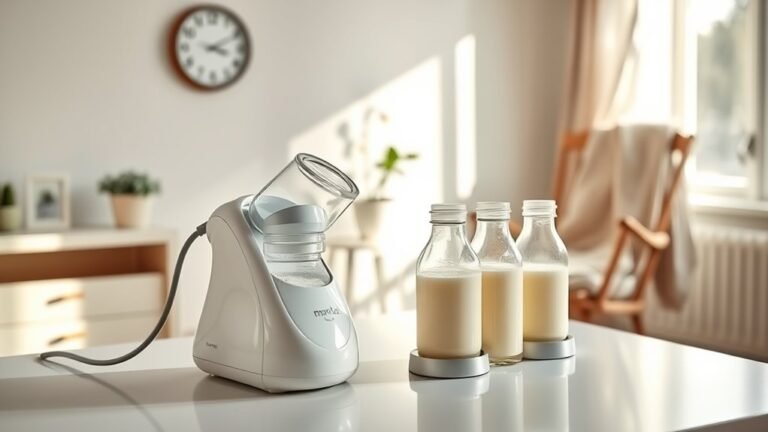
When you store expressed breast milk, choosing the right container is essential to keep it safe and fresh. Use clean containers made from food-grade glass or BPA-free plastic, as these materials support storage safety and maintain milk quality.
Use clean, food-grade glass or BPA-free plastic containers to safely store expressed breast milk.
Sterile containers prevent contamination, so wash and sterilize them thoroughly before use. Plastic milk bags designed specifically for breast milk storage are also acceptable, but avoid household plastic bags or liners since they aren’t guaranteed sterile and can compromise storage guidelines.
Make sure your chosen storage containers are suitable for freezing breast milk if you plan to keep it longer.
Following these recommendations guarantees your breast milk stays fresh and safe for your baby, aligning with proper breast milk storage practices and protecting your little one’s health.
Best Practices for Handling and Combining Fresh and Stored Milk

Since combining fresh and stored breast milk requires careful temperature management, you should always cool freshly expressed milk to refrigerator temperature before adding it to previously stored milk.
Avoid adding warm or hot fresh milk to stored milk, as this can cause partial thawing and spoilage.
Verify both fresh milk and stored milk stay below 4°C (39°F) before combining to maintain safety.
Combine fresh milk with stored milk within 24 hours of expression to optimize breast milk storage safety.
After combining, label the container with the date and time of the earliest expressed milk to track storage duration accurately.
Proper handling and combining prevent bacterial growth and ensure your baby receives safe, high-quality milk without risking contamination from room temperature fluctuations.
Effects of Prolonged Room Temperature Storage on Breast Milk Quality
You should limit breast milk storage at room temperature to no more than 4-6 hours to preserve its quality and safety. Extended storage at room temperature accelerates bacterial growth, raising the risk of feeding contamination.
It also reduces the nutritional quality of breast milk, particularly decreasing vitamin C levels and damaging immunoglobulins, which support your baby’s immune system. After this time, changes in smell and appearance may signal that the milk is no longer safe to use.
To keep your baby healthy, be mindful of these effects:
- Rapid bacterial growth after 4-6 hours
- Significant loss of vitamin C during extended storage
- Decreased immunoglobulin activity
- Altered smell and appearance indicating spoilage
- Overall decline in nutritional quality and safety
Limiting storage time helps maintain breast milk’s benefits and safety.

Guidelines for Using and Discarding Breast Milk Left Out
Although freshly expressed breast milk can sit safely at room temperature for up to 4 hours, you should modify this time based on the environment and storage conditions to keep it safe for your baby.
If the room temperature exceeds 77°F or the milk is in an uncovered container, reduce the storage duration to 2-3 hours to prevent bacterial growth.
Thawed milk left at room temperature must be used within 24 hours, while any leftover milk in a bottle should be discarded after 2 hours to ensure milk safety during infant feeding.
When you don’t plan to use fresh breast milk within 4 hours, refrigeration is essential.
Following these guidelines for using and discarding breast milk left out helps maintain safe use and protects your baby’s health.
Frequently Asked Questions
How Long Can Breast Milk Sit Out Before Going in the Fridge?
You should refrigerate breast milk within 1 to 2 hours after expressing it. If the room is cooler and conditions are clean, it can sit out up to 4 hours, but don’t leave it longer.
What Happens to Breast Milk After 4 Hours?
After 4 hours, breast milk starts to lose nutrients and bacteria can grow, so you shouldn’t feed it to your baby. It’s like a ticking clock. After that, it’s safer to toss it out.
What Is the 2 Hour Rule for Breast Milk?
The 2-hour rule means you shouldn’t use breast milk left out longer than 2 hours because bacteria can grow.
If you don’t feed your baby within that time, it’s safer to discard the milk.
What Is the 6 6 6 Rule for Breast Milk?
The 6 6 6 rule means you can safely keep freshly expressed breast milk at room temperature for up to 6 hours, refrigerate it for 6 days, or freeze it for 6 months.
Stick to these to keep milk safe.
Conclusion
When it comes to breast milk, you know that “better safe than sorry” truly applies. Keep your expressed milk at room temperature no longer than 4 hours—less if it’s warm or humid—to protect its quality and your baby’s health. Always store it in clean, recommended containers and use it promptly.
If it smells sour or looks off, don’t risk it—discard it. Following these steps helps you provide the safest, most nutritious milk for your little one.
In conclusion, understanding how long breast milk keeps at room temperature is crucial. Proper storage and timely use ensure the milk remains safe and nutritious for your baby.