How Long Does Coconut Milk Last in the Fridge €“ Simple Guide
You can keep opened coconut milk fresh in your fridge for about 5 to 7 days if you store it properly. Proper storage is essential to extend the shelf life of coconut milk and maintain its quality. Transfer it to an airtight container, keep it in the coldest part of your fridge, and use a clean spoon to avoid contamination.
Shake it well before use, since it often separates. Watch out for sour smells or changes in texture, as those mean it’s spoiled. Want to know how to store it better and the difference between canned and carton types?
Understanding the Shelf Life of Coconut Milk

Although coconut milk is a versatile ingredient, you might wonder how long it stays fresh after opening or when stored unopened. Unopened cans or cartons of coconut milk usually last six to twelve months past their printed expiration date if stored in a cool, dry place.
Once opened, you need to refrigerate it immediately and use it within 5 to 7 days for the best quality. Keep it in an airtight container to prevent contamination and absorption of other fridge odors.
Refrigerate opened coconut milk immediately and use within 5 to 7 days, storing in an airtight container for freshness.
If you’re dealing with homemade coconut milk, it won’t last as long—typically 2 to 3 days refrigerated.
Understanding these timeframes helps you plan your recipes and avoid waste, ensuring you enjoy coconut milk at its freshest.
Signs Coconut Milk Has Spoiled

Knowing how long coconut milk lasts is helpful, but recognizing when it’s gone bad guarantees you don’t consume spoiled product.
You’ll notice a sour or off smell, which is a clear sign the milk has spoiled.
If the texture turns unusually thick, clumpy, or separates into watery layers that don’t mix back together after shaking or stirring, it’s time to discard it.
Also, watch for any discoloration, such as dark spots or mold on the surface or container.
Trust your senses. If the taste is bitter or strange, don’t risk it.
Consuming spoiled coconut milk can cause stomach discomfort, so it’s better to err on the side of caution and throw it out when you spot these signs.
Best Practices for Storing Coconut Milk

To keep your coconut milk fresh for as long as possible, store it properly right after opening. Transfer any unused milk from the can or carton into an airtight container to prevent exposure to air, which accelerates spoilage.
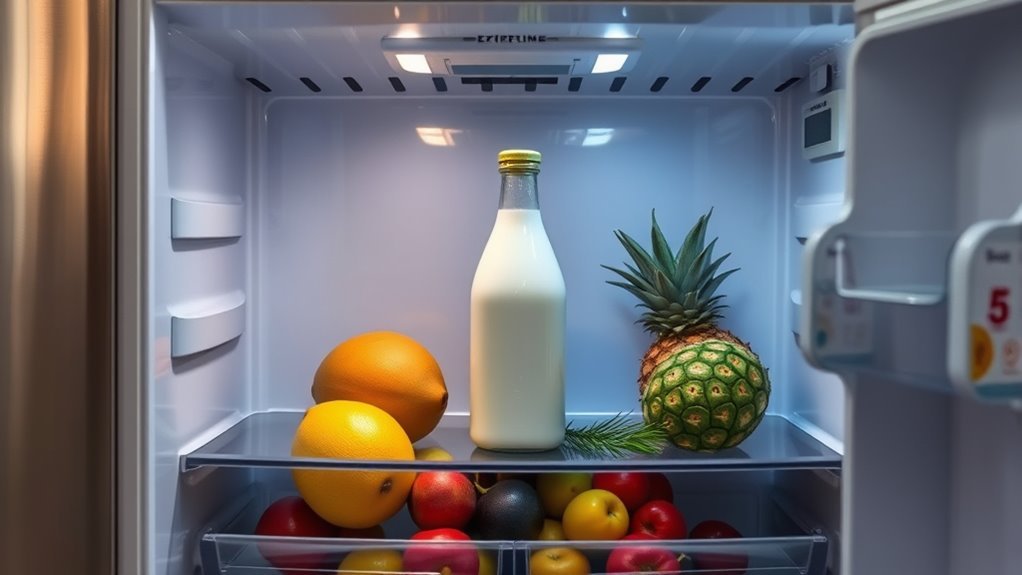
Keep the container in the coldest part of your fridge, typically near the back, avoiding the door where temperatures fluctuate. Always use a clean spoon when scooping out coconut milk to prevent contamination.
If you notice separation, simply stir or shake the container before use. Label the container with the date you opened it to keep track.
Following these practices helps maintain the milk’s flavor and texture, extending its usability and reducing waste. Proper storage is key to enjoying fresh coconut milk in your recipes.
Differences Between Canned and Carton Coconut Milk
Storing coconut milk properly depends partly on whether you’re using canned or carton varieties, as each has distinct characteristics. Canned coconut milk usually contains more fat, giving it a creamier texture, while carton coconut milk tends to be thinner and often diluted.
Proper storage varies as canned coconut milk is creamier, while carton versions are thinner and more diluted.
You’ll find differences in shelf life too, with canned versions generally lasting longer unopened. Also, the packaging affects storage after opening; cans require transferring to another container, whereas cartons often come with resealable tops.
- Canned coconut milk is richer and thicker, ideal for cooking.
- Carton coconut milk is lighter and often used for drinking or cereals.
- Unopened cans last longer than cartons at room temperature.
- After opening, cartons usually stay fresh for fewer days than refrigerated canned milk.
Tips to Extend the Freshness of Coconut Milk
Although coconut milk spoils relatively quickly once opened, you can take simple steps to keep it fresh longer. First, transfer any unused coconut milk from the can or carton into an airtight container to prevent exposure to air and bacteria.
Store it in the coldest part of your fridge, usually the back, to maintain a consistent temperature. Avoid leaving it out at room temperature for extended periods.
Before sealing, place a piece of plastic wrap directly on the surface of the milk to minimize oxidation.
Give it a good shake or stir before using, as separation is natural.
Finally, consider freezing leftover coconut milk in ice cube trays for up to two months, allowing you to thaw small portions as needed without waste.
Frequently Asked Questions
Can Coconut Milk Be Frozen and Still Taste Good?
Yes, you can freeze coconut milk, but it might separate and change texture. You’ll want to shake or blend it well after thawing to restore creaminess, ensuring it still tastes good in your recipes.
Is Coconut Milk Safe for Babies and Toddlers?
You’d need a mountain of caution with coconut milk for babies and toddlers! It’s safe in small amounts, but always check with your pediatrician first, as it can cause allergies or digestive upset in little ones.
How Does Coconut Milk Affect Keto or Low-Carb Diets?
Coconut milk fits well into keto and low-carb diets since it’s low in carbs and high in healthy fats.
You can use it to add creaminess to dishes without kicking yourself out of ketosis or your carb limits.
Can You Use Coconut Milk in Baking Recipes?
Just like a magic wand in a baker’s kitchen, you can definitely use coconut milk in baking recipes. It adds moisture and a subtle tropical flavor, making your cakes, muffins, or breads richer and more delicious.
Does Homemade Coconut Milk Last Longer Than Store-Bought?
Homemade coconut milk usually lasts shorter than store-bought because it lacks preservatives. You should use it within 3-4 days.
Store-bought can last up to a week once opened if refrigerated properly.
Conclusion
Just like a delicate treasure, coconut milk’s freshness won’t last forever once opened. Keep it chilled, sealed tight, and watch for changes in smell or texture—like a fading sunset hinting at night’s arrival.
Whether canned or carton, treat it with care to extend its life and savor its creamy goodness longer.
Follow these simple steps, and you’ll enjoy your coconut milk as fresh as a tropical breeze every time. Remember, proper storage is key to how long coconut milk lasts in the fridge, ensuring you get the best flavor and quality.