How Long Does Frozen Breast Milk Last Safely? Storage & Safety Guide
When you freeze breast milk, you want to make sure it stays safe and nutritious for your baby. Knowing how long frozen breast milk lasts safely is essential for maintaining its quality. But how long can you actually keep it frozen without risking quality or safety?
The answer isn’t as simple as you might think, since storage conditions and proper handling play a big role. Understanding these details can help you make the best choices for your little one’s health and your peace of mind.
Recommended Storage Times for Frozen Breast Milk

Although you can store breast milk for up to 12 months in a deep freezer at -18°C (0°F), it’s best to use it within 6 months to maintain ideal quality. When freezing breast milk, understanding recommended storage times is key to preserving optimal quality and safety.
In a standard freezer, frozen breast milk should ideally be used within 6 months to minimize nutrient loss. While milk stored beyond 12 months remains safe, its nutrient content declines considerably.
To manage storage duration effectively, label each container with the expression date and follow the “first in, first out” method to use older milk first. Proper labeling prevents confusion about expiration and helps you maintain freshness, ensuring your baby receives the best nutrition possible from stored breast milk.
Choosing the Right Containers for Freezing

To keep your frozen breast milk safe and maintain its quality, choosing the right containers matters just as much as knowing how long to store it. Use pre-sterilized storage containers like BPA-free bottles, glass bottles, or specially designed plastic bags made for freezing.
Selecting pre-sterilized, BPA-free bottles or freezer-safe bags is key to preserving frozen breast milk quality.
Avoid thin plastic bags that can crack or leak, compromising the milk’s safety. Always leave at least an inch of space at the top of containers to allow for expansion during freezing.
Opt for leak-proof options to prevent spills in your freezer. For space maximization, arrange milk flat to fit more in your freezer and speed up thawing.
Proper labeling is essential but will be discussed separately. Choosing the right containers helps preserve milk freshness and makes managing your freezer space easier and more efficient.
Proper Labeling and Organization of Frozen Milk

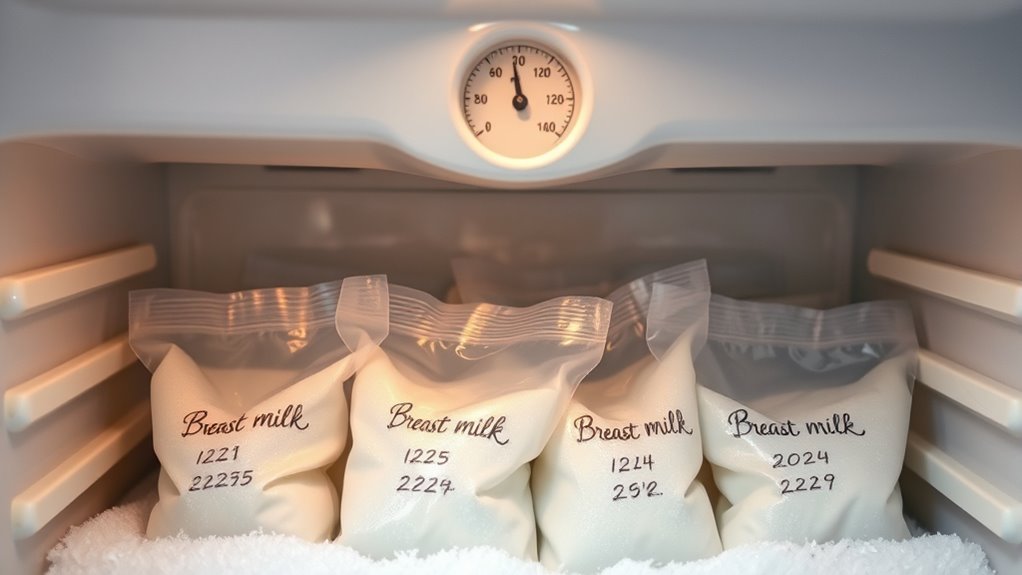
When you freeze breast milk, labeling each container clearly with the date and time of expression helps you use the oldest milk first and track freshness easily. Develop a consistent labeling system using waterproof markers or labels that include the date, time, and volume of milk in each container.
If the milk is for childcare or shared care, add the baby’s name to avoid mix-ups. Organize your freezer storage by placing containers or bags in bins or trays, allowing easy access and proper rotation.
Lay milk bags flat to save space and ensure even thawing. This organization and labeling system maximizes shelf life, prevents waste, and helps you manage your frozen milk efficiently.
Proper rotation of containers ensures you always use milk within its safe storage timeframe.
Best Freezing Practices to Maintain Milk Quality
If you want to preserve your breast milk’s nutrients and safety, freezing it properly is key. Follow storage guidelines by freezing breast milk at 0°F (-18°C) or lower, ideally in a deep freezer, to maintain ideal storage quality for up to 12 months.
Use small, sterilized storage containers or storage bags, leaving room for expansion to avoid leaks and nutrient loss. Label each with the date and your child’s name to track expiration and prioritize older milk.
Store breast milk in sterilized containers with space for expansion; label with date and child’s name for freshness.
Store frozen breast milk in the back of the freezer, not the door, to ensure consistent freezer temperature and prevent thawing cycles.
Remember, avoid refreezing thawing breast milk, as it compromises safety and quality.
These freezing practices maximize storage time while keeping milk safe and nutritious.
How to Thaw Frozen Breast Milk Safely
Although thawing frozen breast milk requires patience, doing it gradually preserves its nutrients and safety. To thaw frozen breast milk safely, use refrigerator overnight or warm water thaw methods. Avoid microwave heating to prevent nutrient loss and hot spots.
After thawing, gently swirl the milk and use it within 24 hours, never refreezing.
| Method | Process | Notes |
|---|---|---|
| Refrigerator Overnight | Thaw gradually at 4°C | Best maintains nutrients |
| Warm Water Thaw | Place sealed container in warm water | Faster, but monitor closely |
| Microwave | Not recommended | Destroys nutrients, uneven heat |
| Use Time | Use within 24 hours post-thaw | Ensures safe breast milk storage |
Following these safe thawing methods helps you sustain milk quality and feed your baby confidently.
Signs That Frozen Breast Milk Has Spoiled
Because frozen breast milk can spoil despite careful storage, you should watch for specific signs before feeding it to your baby. After thawing, check the milk’s smell and odor; a sour or rancid scent often indicates bacterial growth and spoilage.
Also, look for any change in color. Yellowish or brownish tints suggest the milk may be spoiled.
Pay attention to texture, too; if the milk feels slimy or clumpy, it’s a strong sign it’s no longer safe.
These signs are vital for ensuring your baby’s safety. Milk stored too long or at improper temperatures increases the risk of spoilage. Always inspect thawed breast milk thoroughly to avoid feeding spoiled milk and protect your child’s health.
Can You Refreeze Thawed Breast Milk?
When you thaw breast milk, you should handle it carefully to decide whether refreezing is safe. Thawed breast milk can only be refrozen if it has been continuously refrigerated at 39°F (4°C) and hasn’t sat out at room temperature longer than 2 hours.
Even then, it’s best to use the milk within 24 hours to maintain its safety and quality. Refreezing thawed breast milk after it’s been warmed or partially fed from the container isn’t recommended due to bacterial risks.
Proper handling and storage suggest avoiding refreezing altogether to preserve nutrient integrity. To minimize waste and the need to refreeze, freeze breast milk in small portions.
Careful storage and handling ensure you provide safe, nutritious milk for your baby without compromising quality.
Tips for Using Frozen Breast Milk Efficiently
To make the most of your frozen breast milk, label each container with the date it was expressed and use the oldest milk first.
Store expressed breast milk in small portions of 2-4 ounces to reduce waste and help you thaw only what you plan to use.
For ideal milk storage, keep the containers at 0°F or below in the back of the freezer, away from the door.
When you need to thaw milk, do so in the refrigerator or under warm running water.
Never use a microwave, as it can damage nutrients.
Once thawed, use it within 24 hours.
Properly storing your breast milk and planning to use thawed milk promptly ensures you provide the best nutrition for your baby while minimizing waste.

Frequently Asked Questions
How Long Is Breastmilk Good After You Freeze It?
You can safely use frozen breast milk up to 12 months if stored in a deep freezer, but aim to utilize it within 6 months for the best nutrients.
Always label and use the oldest milk first to ensure freshness.
What Is the 4 4 4 Rule for Breast Milk?
The 4-4-4 rule means you can keep breast milk 4 hours at room temperature, 4 days in the fridge, and 4 months in a standard freezer.
It helps you store milk safely and keep nutrients intact.
What Is the 6 6 6 Rule for Breast Milk?
The 6 6 6 Rule means you store breast milk up to 6 months in a regular freezer, 6 months in a deep freezer, and use it within 6 months for best quality. It helps keep milk safe and nutritious.
What Is the 3-3-3 Rule for Breast Milk?
The 3-3-3 rule means you can keep expressed breast milk at room temp for 3 hours, in the fridge for 3 days, and in the freezer for 3 months.
It helps you store milk safely and fresh.
Conclusion
You want the best for your baby, so freezing breast milk properly is key. Imagine Sarah, who stored milk in BPA-free containers, labeled each bag, and used it within six months. Her baby thrived with nutrient-rich feeds every time.
By following proper freezing, thawing, and storage tips, you’ll keep milk fresh and safe. Remember, using frozen breast milk wisely guarantees your little one gets all the goodness, even when you’re apart.
Understanding how long frozen breast milk lasts safely helps you provide the best nutrition. Proper handling ensures the milk retains its quality and supports your baby’s health every time.