How Long Does Frozen Breast Milk Last Safely
You can safely store your frozen breast milk in a freezer at or below 0°F (-18°C) for up to 6 months to keep its quality and nutrients intact. Using a thermometer helps maintain the right temperature and prevent spoilage.
Thaw milk gently in the fridge and use it within 24 hours, never refreezing it. Proper storage and handling guarantee your milk stays fresh and nourishing.
Keep exploring for tips on thawing, signs of spoilage, and more storage advice.
Recommended Storage Duration for Frozen Breast Milk

Although freezing breast milk preserves its nutrients and antibodies, you should follow specific storage guidelines to guarantee its safety and quality.
Generally, you can store breast milk in a standard freezer for up to six months without significant loss of nutritional value.
Breast milk can be safely stored in a regular freezer for up to six months without losing nutrients.
If you’re using a deep freezer that maintains a consistent temperature of -20°F (-29°C), you can safely store milk for up to 12 months. However, for practical reasons, it’s best to use frozen milk within six months to assure the best taste and nutrient retention.
Always label your milk with the date it was expressed so you use the oldest supply first.
Avoid refreezing thawed breast milk, as this can degrade its quality and increase bacterial risk.
Stick to these guidelines to provide safe, nourishing milk for your baby.
Optimal Freezer Temperatures for Breast Milk Storage

When you store breast milk, keeping your freezer at the right temperature is essential to preserving its quality and safety. Freezers that maintain a consistent temperature prevent spoilage and help keep nutrients intact.
Aim for these guidelines to guarantee ideal storage conditions:
Keep your freezer at or below 0°F (-18°C) to safely store breast milk for several months. Avoid frequent temperature fluctuations by using a freezer separate from your refrigerator, if possible.
Use a thermometer to monitor your freezer regularly, ensuring it stays within the safe range.
Effects of Freezing on Breast Milk Nutritional Quality

Since freezing breast milk slows down enzymatic activity, it helps preserve many of its essential nutrients, but some nutritional components may still degrade over time. You’ll find that freezing generally maintains the protein content and most fats, which are vital for your baby’s growth and brain development.
However, certain immune-protective factors, like some antibodies and enzymes, can diminish slightly with prolonged storage. Vitamins such as vitamin C and some B vitamins may also reduce in concentration after freezing.
Despite these changes, frozen breast milk remains highly beneficial and is far superior to formula in providing tailored nutrition and immune support. To maximize nutrient retention, you should store milk at consistent, ideal freezer temperatures and limit storage time according to guidelines.
Safe Thawing Methods for Frozen Breast Milk
To preserve the quality and safety of your frozen breast milk, you need to thaw it properly. Thawing breast milk slowly and gently helps maintain its nutrients and reduces the risk of bacterial growth. Avoid microwaving or boiling as these can create hot spots and destroy valuable components.
Use these safe thawing methods:
Use gentle, safe methods like refrigeration or warm water to thaw your frozen breast milk properly.
- Place the frozen milk in the refrigerator overnight to thaw gradually.
- Run the sealed container under warm (not hot) water until thawed.
- Set the container in a bowl of warm water, changing the water as needed.
Once thawed, use the milk within 24 hours and never refreeze it. Proper thawing keeps your milk safe and nutritious for your baby.
Signs That Frozen Breast Milk Has Gone Bad
Proper thawing helps keep your frozen breast milk safe, but it’s just as important to recognize when it’s no longer good to use. You should check for any sour or off smell. Fresh milk has a mild, sweet scent, so a strong sour odor is a clear warning.
Also, look at the milk’s appearance; if you see clumps, curdling, or unusual discoloration, it’s best to discard it. Trust your senses. If the milk smells or looks odd, don’t risk feeding it to your baby.
Additionally, if the milk has been frozen for longer than recommended, its quality and safety might be compromised. Always prioritize your baby’s health by carefully inspecting thawed milk before use.
Best Practices for Labeling and Organizing Frozen Milk
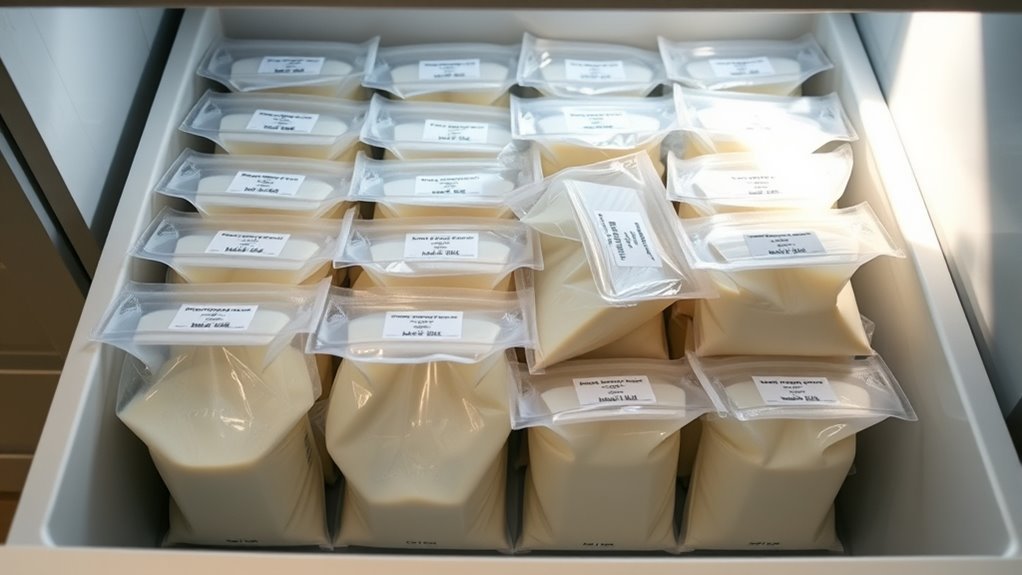
Although freezing breast milk preserves its nutrients, organizing your milk properly guarantees you use the oldest milk first and avoid waste. Start by labeling each container with the date you expressed the milk. This simple step helps you track freshness easily.
Next, store your milk in small portions to minimize waste and thaw only what you need.
Finally, arrange milk containers in your freezer so the oldest are at the front and easiest to grab.
- Label each container with the date and time of expression
- Freeze milk in small, manageable portions
- Organize containers by date, placing oldest in front
How to Refreeze Breast Milk Safely
Once you’ve organized and frozen your breast milk, you might wonder if it’s safe to refreeze any thawed milk. Generally, it’s best not to refreeze breast milk once it’s thawed.
It’s generally best to avoid refreezing thawed breast milk for safety and quality reasons.
When milk thaws, bacteria can begin to grow, and refreezing may increase the risk of contamination.
If you thawed milk in the refrigerator and haven’t warmed it, you can keep it for up to 24 hours but still avoid refreezing.
However, if milk was thawed quickly at room temperature or warmed, don’t refreeze it. Instead, use it within two hours.
To minimize waste, thaw only what you need.
Prioritize safety by planning your milk storage carefully to avoid the need for refreezing, ensuring your baby gets the best-quality milk every time.
Transporting Frozen Breast Milk Without Compromising Safety
When you need to transport frozen breast milk, keeping it at the right temperature is essential to preserve its quality and safety. Here’s how you can do it effectively:
Use a cooler bag with ice packs to maintain a consistent cold temperature during transport.
Minimize the time the milk spends outside of a freezer or cooler; aim to keep it cold for no longer than 24 hours.
Avoid opening the cooler frequently, as this lets warm air in and can cause partial thawing.
Comparing Storage Guidelines From Health Organizations
Because breast milk storage can impact your baby’s health, it’s important to understand how different health organizations recommend handling frozen milk.
The CDC suggests using frozen breast milk within 6 months for best quality but says up to 12 months is acceptable.
The American Academy of Pediatrics (AAP) recommends using frozen milk within 3 to 6 months to preserve nutrients.
Meanwhile, the World Health Organization (WHO) advises using frozen milk within 3 months to ensure safety.
You should also consider your freezer type; deep freezers keep milk safe longer than standard freezer compartments.
Frequently Asked Questions
Can Frozen Breast Milk Be Used in Baby Formula Recipes?
You can’t use frozen breast milk in baby formula recipes because it’s meant to be fed directly to your baby. Mixing it with formula isn’t recommended since formula has specific nutritional content already balanced for infants.
Is There a Difference in Storage Time Between Expressed and Pumped Milk?
You’ll find no difference in storage time between expressed and pumped milk. Both can last up to 6 months frozen.
Imagine a half-year supply of liquid gold, ready whenever your baby needs it.
How Does Freezing Affect Breast Milk’s Taste and Smell?
Freezing can slightly change breast milk’s taste and smell because of fat separation and enzyme activity, but you won’t notice much. When thawed properly, it still smells and tastes close to fresh milk, keeping your baby happy.
Can Medications in Breast Milk Change During Freezing?
Medications in breast milk generally remain stable during freezing, but some might slightly change in concentration.
You should always consult your healthcare provider to guarantee it’s safe for your baby before freezing expressed milk containing meds.
Are There Specific Containers Recommended for Freezing Breast Milk?
You should use BPA-free, freezer-safe containers or breast milk storage bags designed for freezing. Make sure they’re clean, airtight, and labeled with the date to keep your milk fresh and safe for your baby.
Conclusion
Think of frozen breast milk like a treasure chest—you want to keep it safe and fresh to protect its precious nutrients. Just like a treasure map guides pirates to their gold, following storage times (up to 6 months in a standard freezer) and proper thawing methods guarantees your milk stays valuable and safe.
By labeling and organizing carefully, you’ll always know exactly when to use it, keeping your little one’s nutrition secure and sound. Remember, proper handling and storage are key to maintaining the quality and safety of frozen breast milk.
In conclusion, understanding how long frozen breast milk lasts safely helps ensure your baby receives the best nutrition possible. Always follow recommended guidelines for storage duration and thawing to preserve the milk’s beneficial properties.