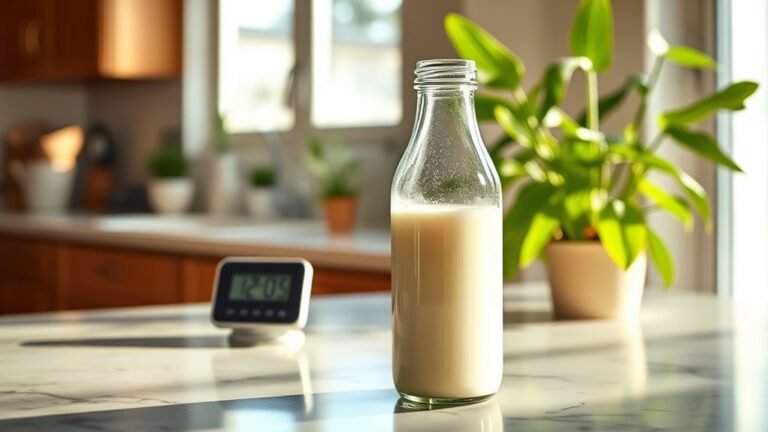
How Long Is Breast Milk Good in the Fridge
You can safely keep fresh breast milk in your fridge for up to four days at or below 4°C (39°F). Proper breast milk storage is essential to maintain its quality and safety. Always use clean, airtight containers to store the milk.
Place the containers in the back of the fridge to maintain a steady temperature. Label your milk with the date and time it was pumped to keep track of freshness. If the milk smells sour or looks clumpy, it’s best to discard it.
Keep handling tips and storage details in mind to guarantee your milk stays fresh and safe for your baby. Proper storage ensures the nutritional and immunological benefits of breast milk are preserved.
Recommended Storage Duration for Fresh Breast Milk

Although fresh breast milk is a valuable source of nutrition, you should store it properly to keep it safe for your baby.
When you refrigerate freshly expressed breast milk, aim to use it within 4 days at a temperature of 39°F (4°C) or below.
This timeframe helps preserve the milk’s nutrients and protects against bacterial growth.
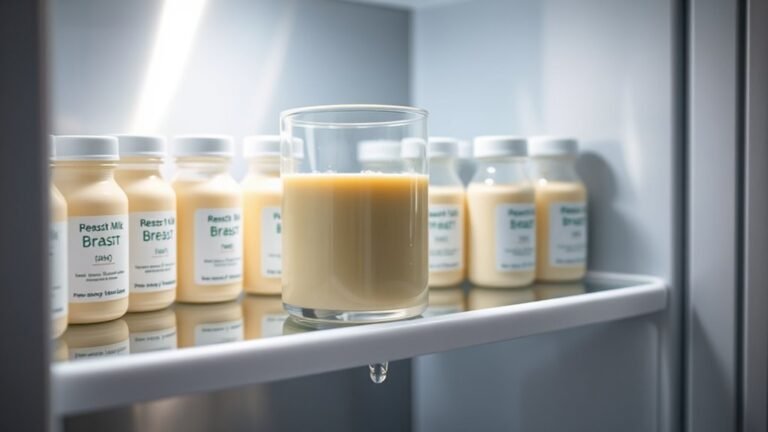
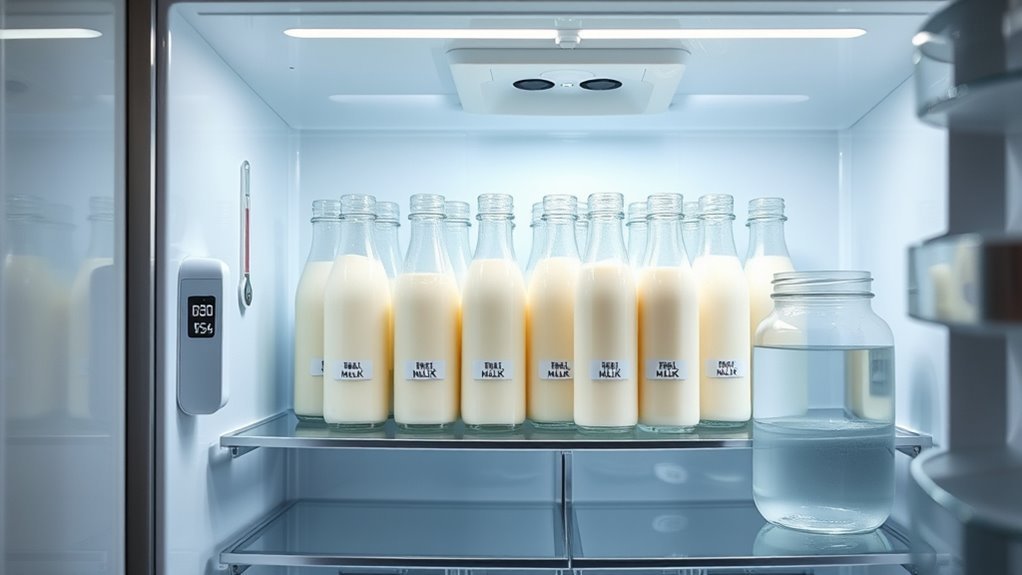
Make sure you place the milk in the back of the fridge, where the temperature is most stable, rather than in the door.
Always store milk in clean, BPA-free containers, and label each with the date and time it was expressed.
If you won’t use the milk within four days, consider freezing it to maintain quality and safety for your little one.
Factors Affecting Breast Milk Freshness in the Fridge

Because several factors influence how long breast milk stays fresh in the fridge, you need to pay attention to storage conditions. The temperature of your fridge, the cleanliness of storage containers, and how quickly you refrigerate the milk after pumping all play key roles.
Even the fridge’s placement of the milk affects freshness. Keep it away from the door to avoid temperature fluctuations. Here’s a quick overview:
| Factor | Impact on Freshness | Tips |
|---|---|---|
| Temperature | Cooler preserves longer | Keep fridge at ~4°C (39°F) |
| Container Cleanliness | Prevents bacterial growth | Use sterile, airtight containers |
| Time to Refrigerate | Faster chilling slows bacteria | Refrigerate within 2 hours |
| Fridge Location | Stable temp avoids spoilage | Store milk in the back |
How to Properly Store Breast Milk in the Refrigerator

When storing breast milk in the refrigerator, you’ll want to use clean, BPA-free containers to keep it safe and fresh. Follow these steps to guarantee proper storage:
- Label each container with the date and time you expressed the milk. This helps you use the oldest milk first.
- Store the milk in small portions (2-4 ounces) to avoid wasting leftovers and make thawing easier.
- Place the containers in the back of the fridge, not in the door, to maintain a consistent cold temperature.
Avoid overfilling containers, leaving space for expansion during freezing if you plan to freeze later.
Signs That Breast Milk Has Spoiled
If you notice a sour or rancid smell coming from your stored breast milk, it’s a strong sign that it has spoiled. You might also see changes in texture or color. Trust your senses. If the milk looks clumpy or discolored, it’s best to discard it.
Here’s a quick guide to spotting spoiled breast milk:
| Sign | What It Means |
|---|---|
| Sour or rancid smell | Milk has gone bad |
| Clumpy texture | Milk proteins have separated |
| Unusual color | Possible contamination or spoilage |
| Off taste | Unsafe for feeding |
Always check your milk before feeding to ensure your baby’s safety. When in doubt, throw it out.
Differences Between Fresh and Thawed Breast Milk Storage Times
Although both fresh and thawed breast milk provide essential nutrients, their storage times differ markedly to preserve safety and quality. When you store fresh milk, it’s best kept in the fridge for up to 4 days.
Thawed breast milk, however, needs more careful handling because freezing and thawing can affect its properties.
Here’s what you should know:
- Fresh milk stays safe up to 4 days refrigerated; thawed milk lasts only 24 hours.
- Once thawed, never refreeze breast milk; it can compromise nutrient quality.
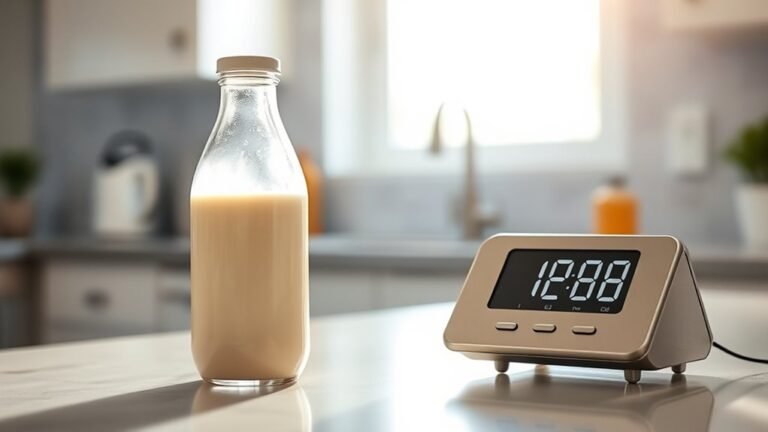
- Thawed milk shouldn’t be left out at room temperature for more than 1-2 hours.
Best Practices for Handling Breast Milk Safely
To keep breast milk safe and nutritious, you should handle it with care at every step. Always wash your hands thoroughly before expressing or handling milk.
Use clean, sterilized containers designed for breast milk storage, and label each with the date and time of expression.
Avoid touching the inside of lids or containers to prevent contamination.
When thawing frozen milk, do it in the fridge or under warm running water. Never use a microwave, as it can destroy nutrients and create hot spots.
Gently swirl the milk to mix, avoiding vigorous shaking that can break down proteins.
Use thawed milk within 24 hours and never refreeze it.
Following these simple steps helps preserve milk quality and keeps your baby safe and healthy.
Tips for Organizing Breast Milk Storage Containers
Keeping breast milk safe doesn’t stop at proper handling. It also involves organizing your storage containers efficiently. When you arrange your breast milk storage, you reduce waste and make feeding time smoother.
Here are three tips to help you stay organized:
- Label each container with the date and time you expressed the milk. This way, you always use the oldest milk first.
- Use stackable containers or bags designed for breast milk to save fridge space and keep things tidy.
- Designate a specific fridge area for breast milk, separate from other foods, to avoid contamination and keep track easily.
When to Discard Breast Milk From the Fridge
Since breast milk can spoil if stored too long, you need to know when to discard it to keep your baby safe.
Generally, breast milk stays fresh in the fridge for up to four days at 4°C (39°F) or lower. If it’s been longer, it’s best to throw it away.
Also, check for signs like sour smell, unusual color, or clumps. These indicate spoilage.
Never refreeze thawed breast milk, and avoid mixing freshly expressed milk with older milk unless both are chilled.
When in doubt, trust your senses and err on the side of caution.
Keeping a clear labeling system with dates helps you use the oldest milk first and prevents accidental use of expired milk.
Prioritize safety to ensure your baby gets the best nutrition.
Frequently Asked Questions
Can Breast Milk Be Stored in the Fridge Door?
No, you shouldn’t store breast milk in the fridge door because it’s less cold and temperature fluctuates.
Instead, keep it in the main body of the fridge where it stays consistently cold and safe for your baby.
Is It Safe to Mix Freshly Expressed and Refrigerated Milk?
Yes, you can mix freshly expressed and refrigerated milk safely. Just cool the fresh milk in the fridge before combining.
Always use the oldest milk first to keep everything fresh and safe for your baby.
How Does Freezing Breast Milk Affect Its Nutritional Value?
Freezing breast milk slightly reduces some immune factors but keeps most nutrients intact. You’ll still provide your baby with valuable nourishment, so don’t worry. It’s a safe way to store milk for longer periods.
Can Refrigeration Kill Bacteria in Breast Milk?
Refrigeration doesn’t kill bacteria in breast milk; it only slows their growth. In fact, bacteria can multiply by 10 times if milk’s left too long.
What Is the Best Type of Container for Storing Breast Milk?
You should use BPA-free plastic or glass containers with tight-fitting lids for storing breast milk. Breast milk storage bags designed specifically for freezing also work well.
Make sure they’re clean and labeled with dates for safety.
Conclusion
You want to keep your baby safe, and that means knowing how long breast milk stays fresh in the fridge. You store it right, check for signs of spoilage, and toss it when in doubt.
You organize containers, separate fresh from thawed, and follow best practices without fail.
Because when freshness meets safety, your baby gets the best every time—and that’s exactly what you’re aiming for, isn’t it? Understanding how long breast milk is good in the fridge helps ensure your baby receives safe and nutritious feeding every time.