How Long Is Fresh Breast Milk Good for Storage
You can keep fresh breast milk safely at room temperature for up to 4 hours, as long as it’s stored in clean, sealed containers away from heat and sunlight. Proper breast milk storage is essential to maintain its quality and safety for your baby.
If you refrigerate it at 39°F (4°C) or below, it stays good for up to 4 days. Freezing extends that time even further, but proper thawing is key to preserving nutrients and preventing spoilage.
Want to know how to spot spoilage and organize your milk storage better? Understanding these tips can help you manage your breast milk effectively and ensure your baby gets the best nutrition.
Understanding Fresh Breast Milk Composition

Although it may seem simple, fresh breast milk contains a complex mix of nutrients, antibodies, and enzymes that adapt to your baby’s needs.
When you feed your baby, you’re providing more than just calories; you’re offering proteins, fats, carbohydrates, vitamins, and minerals designed specifically for their growth and development.
The antibodies in your milk help protect your baby from infections, boosting their immune system.
Enzymes aid digestion, making it easier for your baby to absorb nutrients.
The composition even changes throughout the day and over time, matching your baby’s evolving requirements.
Understanding this helps you appreciate why fresh milk is best used promptly to preserve these valuable components, ensuring your baby gets the full benefits with every feeding.
Safe Storage Guidelines at Room Temperature

To keep your fresh breast milk’s nutrients and protective qualities intact, you need to store it properly. When storing breast milk at room temperature (up to 77°F or 25°C), it’s important to follow safe guidelines to prevent bacterial growth.
Freshly expressed milk can safely sit out for up to 4 hours. Beyond this, bacteria can multiply, risking your baby’s health.
Fresh breast milk is safe at room temperature for up to 4 hours before bacteria risk increases.
Remember these key points for room temperature storage:
Use clean, sterilized containers with tight-fitting lids. Store milk away from direct sunlight and heat sources. Label each container with the date and time of expression.
Refrigerating Fresh Breast Milk: Time Limits

When you refrigerate fresh breast milk, you can safely store it for up to 4 days at a temperature of 39°F (4°C) or lower. Make sure to place the milk in the back of the fridge, where the temperature stays more consistent.
Avoid storing it in the door, as frequent opening causes temperature fluctuations.
Use clean, BPA-free containers or breast milk storage bags, and label each with the date you expressed it.
Before feeding, gently swirl the milk to mix the fat that may have separated; don’t shake it vigorously.
If you don’t plan to use the milk within 4 days, consider other storage options.
Always trust your senses; if the milk smells sour or looks curdled, it’s best to discard it to keep your baby safe.
Freezing Fresh Breast Milk: Best Practices
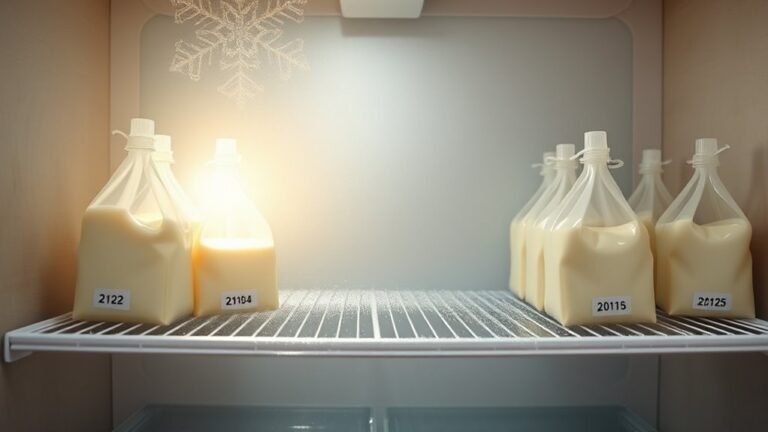
If you want to preserve fresh breast milk for longer than refrigeration allows, freezing is a reliable option. To maintain milk quality and nutrients, freeze your milk as soon as possible after expression. Use clean, BPA-free containers or breast milk storage bags designed specifically for freezing. Label each container with the date you expressed the milk to keep track of freshness.
Freeze breast milk promptly in clean, BPA-free containers labeled with the expression date to preserve quality and nutrients.
Here are some freezing best practices:
- Freeze in small portions (2-4 ounces) to avoid waste and make thawing easier.
- Leave some space at the top of the container since milk expands when frozen.
- Store milk in the back of the freezer where temperature is most stable, not in the door.
Following these tips helps ensure your breast milk stays safe and nutritious for your baby.
Thawing and Using Frozen Breast Milk Safely
Although freezing preserves breast milk for later use, you’ll need to thaw it carefully to maintain its quality and safety. The best method is to thaw breast milk in the refrigerator overnight or by placing the container in a bowl of warm water.
Avoid using a microwave, as it can create hot spots and destroy nutrients. Once thawed, gently swirl the milk to mix the separated fat; don’t shake vigorously, which can break down proteins.
Use thawed milk within 24 hours and never refreeze it.
If you need to speed up feeding, warm the milk by running it under warm water, not hot. Always check the temperature before feeding and discard any milk left in the bottle after a feeding to prevent bacterial growth.
Signs That Breast Milk Has Spoiled
Since breast milk is a natural substance, it can spoil if not stored or handled properly. You need to watch for signs that indicate your milk is no longer safe for your baby. Spoiled breast milk can affect your child’s health, so it’s vital to recognize these signs quickly.
Look for these key indicators of spoiled breast milk:
Sour or rancid smell: Fresh milk usually has a mild, sweet smell. A strong sour odor means it’s gone bad.
Curdled or separated texture: While some separation is normal, milk that looks chunky or unusually thick may be spoiled.
Unpleasant taste: If you’re comfortable tasting a small amount, spoiled milk will taste sour or off.
Always trust your senses to keep your baby safe.
Tips for Labeling and Organizing Stored Milk
When you store breast milk, labeling and organizing it properly helps you keep track of freshness and guarantees your baby always gets safe milk. Use waterproof labels or a permanent marker to write the date and time you expressed the milk on each container. Include your baby’s name if others handle the milk.
Store older milk at the front of the freezer or refrigerator and place newly expressed milk behind it so you use the oldest first. Group milk in small, manageable portions to avoid waste. Keep an inventory list to monitor supply and expiration dates easily.
Consistently following these steps makes feeding time smoother and prevents confusion or accidental use of expired milk. Staying organized ensures your baby always receives the freshest milk possible.
Impact of Storage Conditions on Nutrient Quality
Proper storage conditions play a crucial role in preserving the nutrient quality of breast milk. When you store milk correctly, you help maintain essential vitamins, proteins, and antibodies that support your baby’s growth and immune system.
However, temperature fluctuations or extended storage times can degrade these nutrients, making the milk less beneficial. To keep the milk’s nutrients intact, consider these key points:
- Store milk at recommended temperatures: use the fridge (4°C/39°F) for short-term and freezer (-18°C/0°F) for long-term.
- Avoid frequent opening of storage containers to prevent temperature changes and contamination.
- Use clean, BPA-free containers designed for breast milk storage to minimize nutrient loss.
Special Considerations for Breast Milk Storage During Travel
Although traveling can disrupt your usual routine, you can still store breast milk safely by planning ahead and using the right equipment. Pack insulated cooler bags with ice packs to keep milk cold for up to 24 hours if refrigeration isn’t available.
Label each container with the date and time of expression so you can use the oldest milk first. Avoid opening the cooler frequently to maintain a consistent temperature.
If you’re flying, check airline regulations about carrying breast milk through security; most allow it but require you to declare it.
When you reach your destination, transfer the milk to a refrigerator or freezer promptly.
Frequently Asked Questions
Can I Mix Freshly Expressed Milk With Previously Frozen Milk?
Yes, you can mix freshly expressed milk with previously frozen milk, but make sure the fresh milk is cooled first. Combine them in the fridge, not at room temperature, to keep everything safe and fresh for your baby.
How Does Diet Affect the Taste of Stored Breast Milk?
You know what they say, you are what you eat! Your diet can change stored breast milk’s taste, making it sweeter or bitter.
Is It Safe to Microwave Breast Milk for Warming?
You shouldn’t microwave breast milk because it heats unevenly, risking hot spots that can burn your baby and destroy valuable nutrients. Instead, warm it gently using a bowl of warm water or a bottle warmer for safety and quality.
Can Breast Milk Be Stored in Glass Containers Instead of Plastic?
Can glass containers keep your breast milk safe and fresh? Absolutely, you can store breast milk in glass containers, just make certain they’re clean and BPA-free.
Glass is durable, easy to sterilize, and won’t absorb odors like plastic might.
How Long Can Breast Milk Be Kept in a Cooler Bag With Ice Packs?
You can keep breast milk in a cooler bag with ice packs for up to 24 hours. Make sure the ice packs stay frozen and the bag remains closed to maintain a consistently cold temperature.
Conclusion
Storing fresh breast milk is like preserving a precious treasure—handle it with care and respect. By following safe storage times and proper techniques, you’re keeping your baby’s nourishment at its freshest, like catching morning dew before it fades.
Remember, your careful steps guarantee every drop holds the love and nutrients your little one needs. Trust your instincts, label well, and your milk will be ready whenever your baby’s tiny hands reach out for it.
Understanding how long breast milk is good for storage helps ensure your baby always receives the best. Proper storage keeps the milk fresh and safe, preserving its vital nutrients and benefits.