How Long Is Warmed Breast Milk Good For? Safe Feeding Guidelines
You want to warm breast milk safely, ensure it stays fresh, and feed your baby without worry. Knowing how long warmed breast milk is good for is essential to keep your baby healthy and prevent any risks. Understanding the time limits and proper handling of warmed milk helps you maintain its quality and safety.
But what exactly happens if you keep warmed milk too long? The milk can spoil or lose important nutrients. How can you guarantee you’re following the safest practices every time? By learning the recommended guidelines for storage and use, you can confidently provide the best for your baby.
Understanding Breast Milk Storage Durations

Although storing breast milk properly can seem complex, understanding the recommended durations helps you keep your milk safe and nutritious.
Freshly expressed breast milk can be safely kept as refrigerated breast milk for up to four days, following refrigeration guidelines closely to maintain an ideal milk temperature.
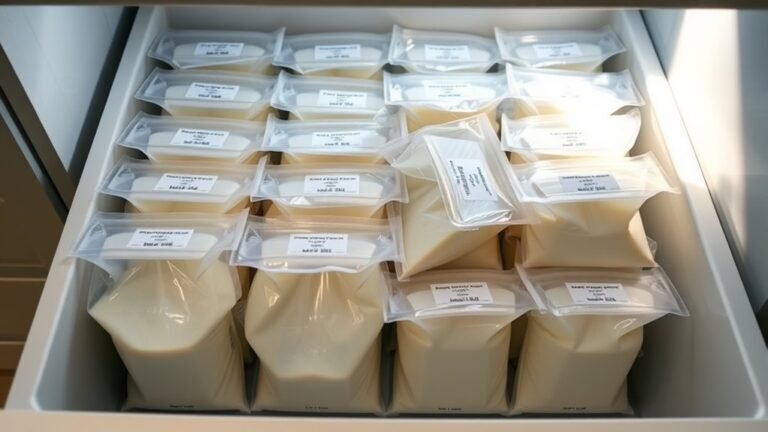
When breast milk is frozen, it retains quality for about six months, sometimes up to 12 in a deep freezer.
Once you thaw breast milk, it’s important to use it quickly. Warmed breast milk should be used within 2 hours to ensure breast milk safety and prevent bacterial growth.
Proper breast milk storage includes labeling with expression dates to monitor milk shelf life effectively.
Safe Practices for Warming Breast Milk

When you warm breast milk, you need to do so carefully to keep it safe and nutritious for your baby. Follow these guidelines to ensure proper warmth and safety:
- Reheat milk gently using a warm water bath or bottle warmer. Avoid microwaves to prevent uneven temperature and hot spots.
- Only warm the amount your baby will consume in one feeding to reduce leftover milk and limit waste.
- Use warmed milk within 2 hours to minimize bacteria growth and maintain nutrient quality.
- Discard any leftover milk after 2 hours to avoid contamination and ensure feeding safety.
Recommended Timeframes for Using Warmed Breast Milk

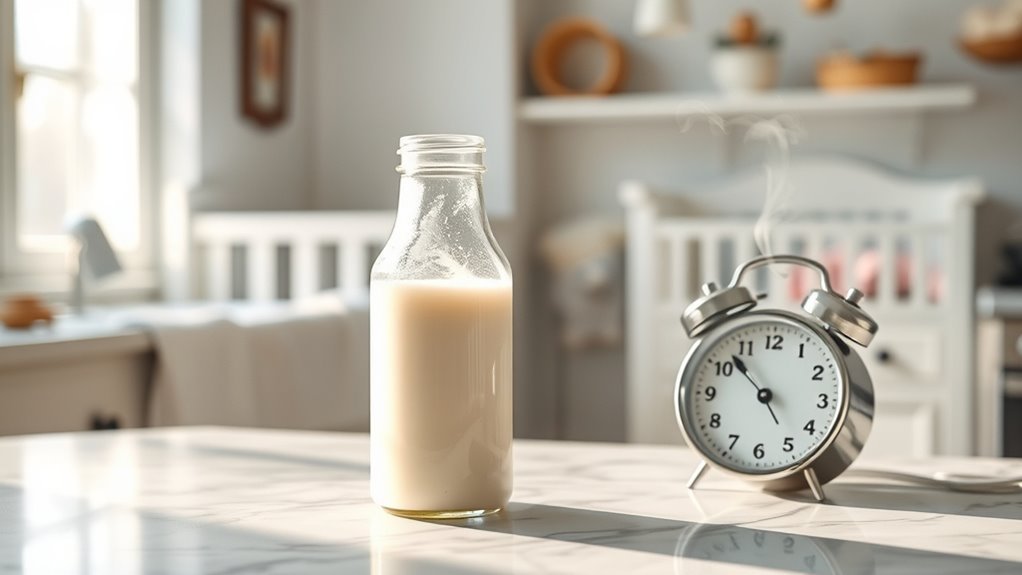
Keeping warmed breast milk safe doesn’t stop at the warming process. You also need to use it within a specific timeframe. Follow the 2-hour rule: once breast milk is warmed, you have two hours at room temperature to feed your baby.
For feeding safety, avoid reheating warmed breast milk or placing it back in refrigeration after warming. Leftover milk after the feeding should be discarded to prevent bacterial growth.
These storage guidelines apply regardless of how you warmed the milk or the room temperature.
To minimize waste and maintain safety, only warm the amount your baby will consume in one feeding.
Adhering to these feeding practices ensures your baby gets the best nutrition without risking contamination from improperly handled milk.
Risks of Using Breast Milk After the Safe Period
Because warmed breast milk provides a nutrient-rich environment, bacteria can multiply quickly if you use it after the safe 2-hour period. Ignoring this safe period raises contamination risk and threatens infant health due to bacterial proliferation. You must understand these dangers:
- Bacterial growth accelerates at room temperature, even if milk looks and smells normal.
- Reheating warmed milk repeatedly encourages bacterial proliferation and reduces milk safety.
- Leftover milk touched by saliva during feeding can harbor harmful bacteria, increasing contamination risk during storage time.
- Feeding breast milk beyond 2 hours after warming may cause stomach upset or infections in your baby.
To protect your infant, always discard any warmed milk that exceeds the safe period. Prioritizing milk safety helps prevent health complications linked to bacterial growth.
Proper Handling and Feeding Techniques
Although handling breast milk properly requires attention to detail, following the right techniques guarantees your baby receives safe and nutritious feedings. Use safe warming methods like a bottle warmer or warm water bath, never a microwave, to avoid hot spots and nutrient loss.
Once warmed breast milk is offered, finish feeding within 2 hours to prevent bacterial growth. Discard any leftover milk after this time. Sanitation is essential: clean all bottles and equipment thoroughly.
Keep track of storage time by labeling milk with date and time, helping you follow a consistent feeding schedule and meet safety guidelines.
| Proper Handling | Feeding Techniques |
|---|---|
| Use safe warming methods | Feed within 2 hours |
| Sanitize equipment | Discard leftover milk timely |
| Label milk date/time | Follow feeding schedule |
Guidelines for Storing Breast Milk Before and After Warming
Proper handling and feeding techniques set the foundation for safe breast milk use, but knowing how to store milk before and after warming is just as important. Follow these storage guidelines to ensure feeding safety and minimize bacterial growth:
- Keep breast milk refrigerated or frozen until you’re ready to warm it; avoid leaving it at room temperature too long.
- Warm breast milk just before feeding using safe warming practices. Never microwave.
- Use warmed breast milk within 2 hours; don’t refrigerate or reheat it afterward.
- Discard any leftover warmed breast milk after the 2-hour discard time to prevent bacterial growth.
Label milk containers with date and time to manage storage duration effectively. These steps support breast milk preservation and help keep your baby safe during feeding.
Signs of Spoiled or Unsafe Breast Milk
When you notice unusual smells, tastes, or appearances in breast milk, it’s a clear sign the milk may have spoiled or become unsafe. Spoiled breast milk often develops a sour or rancid smell caused by bacterial growth. If the milk has an off flavor, like bitterness, don’t risk feeding it.
Discoloration, such as yellowing or cloudiness, is another spoilage sign indicating reduced milk quality. Watching for curdling or clumping is vital, as these changes often point to bacterial contamination.
To guarantee safety, discard any milk that smells off or looks different from fresh milk.
Recognizing these spoilage signs helps protect your baby by preventing ingestion of unsafe breast milk and maintaining feeding safety.
Special Considerations for Premature or Ill Infants
Noticing signs of spoiled breast milk is especially important if you’re caring for a premature or ill infant. Their weaker immune system means you must follow strict feeding guidelines to guarantee feeding safety.
Caring for premature infants requires vigilant attention to spoiled breast milk to ensure their safety.
To protect these vulnerable babies, remember:
- Use warmed milk within 1-2 hours to minimize infection risk.
- Discard any leftover milk immediately to prevent bacterial growth.
- Prefer freshly expressed or carefully thawed milk to maintain nutrient retention.
- Adhere strictly to safe storage and thawing milk practices to reduce contamination.
Premature infants need extra caution because even slight mishandling can lead to health issues.

Consulting Healthcare Providers for Personalized Advice
Because each baby’s needs can vary widely, you should always consult your healthcare provider for personalized advice on breast milk storage and safety. A healthcare professional tailors feeding recommendations and warming practices to protect your infant’s health, especially if they have a weakened immune system.
Following safety guidelines minimizes the risk of breast milk bacteria growth. Keep regular communication with your healthcare provider to stay updated on best practices.
| Aspect | Consideration | Healthcare Professional Role |
|---|---|---|
| Breast Milk Storage | Duration, temperature | Provide personalized advice |
| Warming Practices | Methods, timing | Ensure safe feeding |
| Infant Health Status | Immune system, prematurity | Adjust guidelines accordingly |
Frequently Asked Questions
How Long Does Breast Milk Last After Warming?
You should use warmed breast milk within 2 hours. After that, bacteria can grow, so don’t save leftovers.
Always discard any unused milk after 2 hours to keep your baby safe and healthy.
What Is the 3-3-3 Rule for Breast Milk?
Imagine a sundial measuring time. You follow the 3-3-3 rule by keeping freshly expressed breast milk at room temp for 3 hours, refrigerated for 3 days, and frozen for 3 months to keep it safe and fresh.
Can I Put Breast Milk Back in the Fridge After It’s Been Heated?
No, you shouldn’t put breast milk back in the fridge once it’s been heated. Doing so risks bacterial growth and nutrient loss.
Warm only what your baby will drink to keep it safe and nutritious.
How Long Can Baby Milk Sit Out After Being Warmed?
Think of warmed baby milk as a ticking clock. Once heated, you’ve got 2 hours before it’s time’s up. Use or discard it within that window to keep your little one safe and sound.
Conclusion
Think of warmed breast milk like a ticking clock—once it’s ready, you’ve got about two hours to feed your baby before it’s time to let it go. Using it within this window keeps your little one safe and healthy.
Reheating or saving leftovers can invite unwanted risks, so it’s best to avoid these practices altogether. By handling milk properly and feeding promptly, you’re nurturing your baby with the freshest, safest nourishment possible.
Trust your instincts and keep that rhythm steady. Remember, warmed breast milk is best used within two hours to ensure your baby receives the highest quality nutrition.