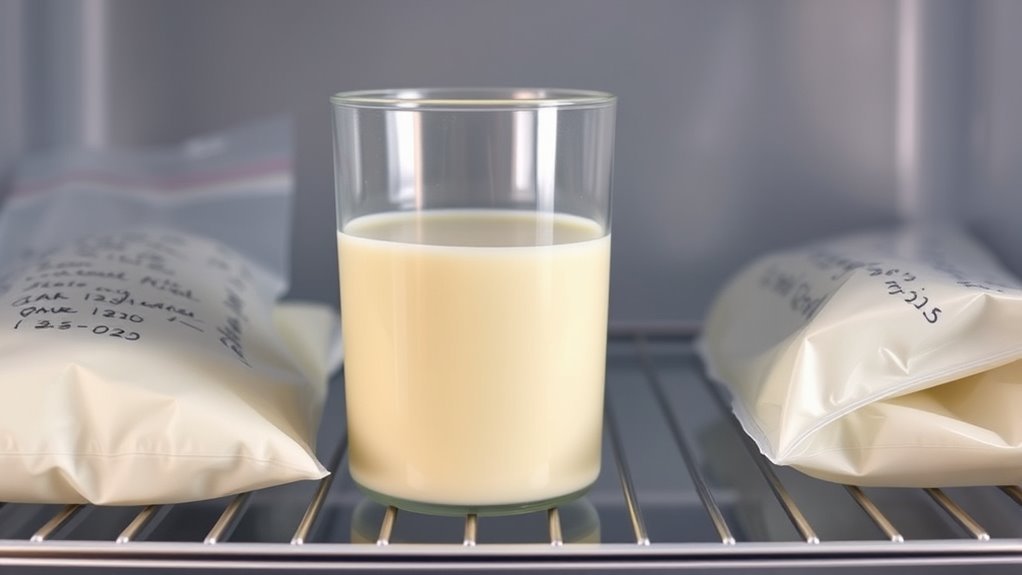
How Long Will Breast Milk Last in the Refrigerator? Storage Guidelines Explained
When you store breast milk in your refrigerator, knowing how long breast milk lasts in the refrigerator is essential. You might think it stays good for a week or more, but that’s not always true. Temperature, container choice, and placement all affect its freshness.
If you don’t get these details right, you could compromise the milk’s quality or safety. Understanding the recommended storage duration can help you protect your baby’s health—and avoid unnecessary waste.
Recommended Storage Containers for Breast Milk

When storing breast milk, you should use clean, food-grade glass or BPA-free hard plastic containers to keep it safe and fresh. These storage containers are ideal for breast milk storage because they don’t leach harmful chemicals and can be sterilized easily.
Glass containers offer durability and are perfect for both refrigerator and freezing. Meanwhile, plastic containers are lightweight and convenient. Specially designed breast milk storage bags are another excellent option, provided they’re properly sanitized before use.
Avoid disposable bottle liners or household plastic bags to prevent contamination. Always ensure your sterilized containers are thoroughly washed and dried before filling them.
Choosing the right containers helps maintain milk quality whether you’re refrigerating or freezing, ensuring your baby gets the best nutrition every time.
Optimal Refrigerator Placement for Milk Storage

Choosing the right containers is only part of keeping your breast milk fresh; how you position them in your refrigerator also matters. For ideal refrigerator placement, store milk at 39°F (4°C) in the back, where temperature consistency is best.
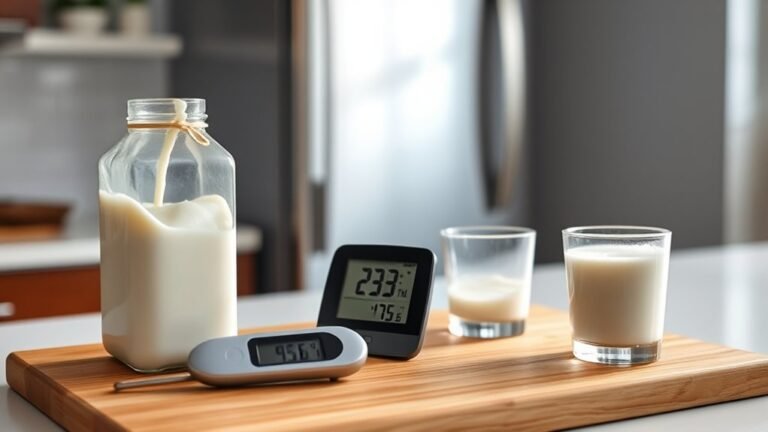
Avoid door storage, since frequent opening causes fluctuations. Use an appliance thermometer to ensure the fridge stays at or below 40°F.
Keep milk away from cooling vents and organize milk so older milk is used first. Don’t overload the fridge to maintain proper airflow and follow storage guidelines for maximum storage duration.
| Location | Temperature Consistency | Storage Tips |
|---|---|---|
| Back of fridge | High | Best for long storage |
| Door storage | Low | Avoid due to fluctuations |
| Near cooling vents | Variable | Avoid for stability |
| Organized shelves | Consistent | Use older milk first |
Labeling and Portioning Breast Milk for Storage

Properly labeling and portioning breast milk plays a crucial role in maintaining its freshness and ensuring efficient use. When storing your milk, follow these key steps to improve organization and tracking:
Proper labeling and portioning breast milk ensures freshness and helps manage storage effectively.
- Label each container with the expression date using waterproof labels and ink. If the milk is shared or stored at a childcare facility, include your child’s name to prevent mix-ups and maintain freshness tracking.
- Portion milk into small amounts of 2-4 ounces to match feeding needs and reduce waste during thawing or feeding.
- Organize containers by date, placing the oldest milk at the front or top for easy access.
Always update labels if you transfer milk to new containers to keep your storage records accurate.
Maximum Safe Storage Duration in the Refrigerator
Although breast milk can be stored safely in the refrigerator for up to 4 days at 39°F (4°C) or lower, you should always aim to use it within this timeframe to maintain its quality and safety. Proper labeling with the expression date helps you track the maximum safe storage duration and prevents confusion.
Store breast milk in the back of the refrigerator, where temperatures remain most consistent. Following these storage guidelines ensures the milk stays fresh and safe until the expiration date.
Avoid leaving breast milk at room temperature for extended periods, as it diminishes the safe storage duration considerably.
| Storage Condition | Maximum Safe Storage Duration |
|---|---|
| Room Temperature | Up to 24 hours |
| Refrigerator (back) | Up to 4 days |
| Refrigerator (door) | Less than 4 days |
| Freezer (not covered) | Not recommended |
| Labeling Importance | Track expiration date |
Effects of Room Temperature on Milk Freshness
When you leave breast milk at room temperature, its freshness depends heavily on the surrounding temperature. Safe storage at room temperature (77°F or colder) lasts up to 6 hours, but using it within 4 hours guarantees maximum freshness.
Warm temperatures speed up bacterial growth, shortening how long breast milk stays safe. Keep these tips in mind:
- If room temperature exceeds 77°F, reduce storage time and refrigerate milk quickly.
- Avoid leaving breast milk out longer than 6 hours to prevent spoilage.
- When not using immediately, store breast milk in the refrigerator to preserve freshness and safety.
Combining Fresh and Stored Breast Milk Safely
If you want to combine fresh breast milk with stored milk safely, make sure the fresh milk has cooled to room or refrigerator temperature first. Adding warm milk directly to stored milk can increase bacterial growth and spoilage.
Always cool fresh milk to 39°F (4°C) or below before mixing. Use the combined milk within 24 hours and label it with the date of the oldest milk to maintain safe combination and prioritize use.
| Step | Reason |
|---|---|
| Cool fresh milk | Prevent bacterial growth |
| Mix with stored milk | Maintain nutrient quality |
| Label & use in 24h | Avoid spoilage and contamination |
Following these steps ensures your milk stays safe and nutritious in the refrigerator.
Freezing Guidelines for Extended Milk Preservation
Because breast milk contains valuable nutrients that you want to preserve, freezing it properly is essential for extending its shelf life. Storage can be confusing, but following these freezing guidelines helps you store breast milk safely and maintain its quality.
-
- Store expressed breast milk in containers with space left for expansion to prevent leaks or breakage when freezing breast milk.
- Place frozen breast milk in the back of your freezer, not near the door, to keep a consistent temperature and prolong freshness.
- Label each container with the date you expressed it and use the oldest milk first to ensure safe feeding.
Proper Thawing Methods for Frozen Breast Milk
Although freezing preserves breast milk’s nutrients, proper thawing is crucial to maintain its safety and quality. The best way to thaw frozen breast milk is to place it in the refrigerator overnight, which usually takes 12-24 hours depending on the volume.
If you need it faster, you can thaw the milk by placing the sealed container in warm water or running warm water over it until fully thawed. Once thawed, gently swirl the breast milk to mix any separated fat. Avoid shaking vigorously.
Remember, thawed breast milk is safe to use for up to 24 hours and should never be refrozen.
Never leave breast milk to thaw at room temperature for more than 24 hours to prevent bacterial growth and ensure your baby’s safety.
Recognizing Changes in Thawed Breast Milk Appearance and Smell
Once you’ve properly thawed breast milk, you’ll notice it may look or smell different than when it was fresh. These changes don’t always mean the milk is spoiled.
To verify safety, focus on these visual cues and smell:
Check visual cues and smell to ensure thawed breast milk is safe for your baby.
- Appearance: Separation of fat layers or slight cloudiness is normal. A yellowish tint can occur but isn’t a sign of spoilage.
- Smell: A soapy or mild odor is typical, but a sour or rancid smell means the milk is spoiled and should be discarded.
- Consistency: Changes in thickness or slight clumping are normal after thawing and don’t affect safety.
Always trust your senses. If the smell or appearance seems off, discard the milk to keep your baby safe.
Best Practices for Handling Leftover Breast Milk
When you have leftover breast milk after a feeding, it’s important to handle it properly to keep it safe and nutritious for your baby. Always store leftover milk in clean, airtight containers and refrigerate it promptly to preserve freshness.
Fresh breast milk should be refrigerated immediately if not used right away. Remember, leftover milk must be used within 24 hours when kept in the refrigerator.
Any milk remaining two hours after feeding should be discarded to prevent bacterial growth.
When reheating, avoid microwaving; instead, warm the milk by placing the container in warm water.
Following these best practices for storage and handling ensures your baby gets the highest quality nutrition while minimizing waste and health risks.

Frequently Asked Questions
How Long Does Breast Milk Last When Taken Out of the Fridge?
When you take breast milk out of the fridge, you should use it within 2 hours.
If it’s warmed to room temperature, you’ve got up to 4 hours before it needs to be refrigerated or discarded.
What Is the 4 4 4 Rule for Breast Milk?
You’ll find the 4-4-4 rule gently guides you: breast milk stays fresh 4 hours at room temp, 4 days in the fridge, and up to 9 months frozen. This keeps your baby’s nourishment safe and sound.
What Is the 6 6 6 Rule for Breast Milk?
The 6 6 6 rule means you can store breast milk for 6 hours at room temperature, 6 days in the fridge, and up to 6 months in the freezer. It helps you keep milk safe and fresh for your baby.
What Is the 3-3-3 Rule for Breast Milk?
Imagine a clock ticking gently: the 3-3-3 rule means you can keep fresh breast milk at room temperature for 3 hours, chill it in the fridge for 3 days, or freeze it up to 3 months safely.
Conclusion
When storing breast milk in your fridge, remember to keep it at 39°F (4°C) or below and place it in the back for a steady chill. Label each container with the date to use the oldest milk first—don’t let it gather dust!
Use it within four days for the best nutrition and safety, and always toss leftovers after feeding. With these simple steps, you’ll keep your milk fresh and ready when your little one needs it most.
By following these guidelines, you can ensure your breast milk lasts safely in the refrigerator, preserving its quality and nutritional value for your baby’s health.