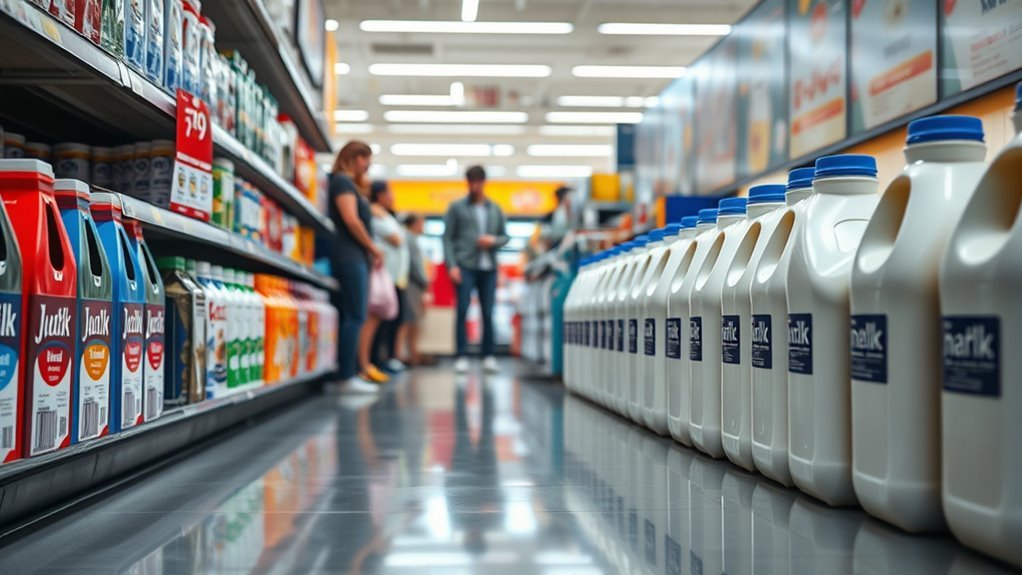
5 Factors Affecting How Much a Gallon of Milk Does Cost
Ever wonder why the price tag on a gallon of milk isn’t the same everywhere? The cost of a gallon of milk can vary widely depending on several key factors. You might assume it’s just supply and demand, but that’s only part of the story.
From the cost of feed to regional regulations and even how retailers set their prices, many factors quietly shape what you pay. Understanding these layers reveals just how complex a simple gallon of milk can be.
Production and Feed Costs Impacting Milk Prices

Although you mightn’t see it directly, production and feed costs play a huge role in determining the price you pay for a gallon of milk. Feed costs are a major part of dairy production expenses, especially as organic feed can cost up to 50% more than conventional options.
Feed costs significantly impact milk prices, with organic options costing up to 50% more than conventional feed.
For instance, organic soybean meal prices soared from $632 to $1,900 per ton between 2020 and 2022 due to supply issues.
Rising feed prices, combined with increased fuel costs, up 75% in 2022, push farm expenses higher.
Drought conditions have also driven hay prices up by 25-30%, adding to input costs.
These escalating feed expenses and certification requirements markedly raise production costs, making milk prices reflect the true cost of sustainable dairy farming.
Influence of Federal Milk Marketing Orders and Regional Differentials

When you buy milk, the price you see often reflects regulations set by Federal Milk Marketing Orders (FMMOs), which establish minimum regional prices for different milk classes. The Class I Price, used for beverage milk, is calculated monthly based on Class III or IV prices plus regional differentials that vary by location.
These differentials are typically lower in the upper Midwest and far West and higher in the East and South, reflecting regional advantages in dairy farming and proximity to markets. While transportation costs influence these regional variations, market dynamics and competitive market strategy play a bigger role in shaping retail milk prices.
Understanding how Federal Milk Marketing Orders and regional differentials work helps you grasp why milk prices fluctuate across regions and why price calculation isn’t just about farm-level costs.
Transportation and Logistics Expenses Across Locations

Federal Milk Marketing Orders set regional price baselines, but transportation and logistics expenses play a big role in shaping the final cost you pay for milk. Transportation costs vary widely because of regional variation in transportation distance from dairy farms to processing facilities and stores.
If you live near major dairy regions like the Midwest, you generally face lower logistics expenses due to shorter delivery distances and better transportation infrastructure. Rising fuel prices increase delivery costs everywhere, pushing prices up.
Logistics efficiency also affects costs; congested routes and less developed supply chain networks can delay shipments and raise expenses. These regional disparities mean that where you live appreciably impacts how much transportation and logistics contribute to your milk’s price, reflecting the complex supply chain behind every gallon on your shelf.
Retail Pricing Strategies and Consumer Demand Effects
Since retailers often use milk as a loss leader, you might find prices lower than expected in some stores as a way to draw you in and boost overall sales. Retail pricing varies widely due to consumer behavior and regional prices shaped by retail competition and marketing tactics.
Milk prices often drop as stores use them to attract shoppers and increase sales.
You’ll notice discount strategies and promotional discounts heavily influence your buying decisions, especially in areas with high store traffic. Keep in mind:
- Retailers use milk discounts to increase store visits.
- Consumer demand shifts pricing based on income levels.
- Regional price variation reflects local marketing fees.
- Competitive retail strategies drive promotional discounts.
Understanding these dynamics helps you see why milk prices fluctuate beyond just production costs, directly linked to how retailers respond to your shopping habits.
Organic Milk Premiums and Sustainable Farming Expenses
Although organic milk offers health and environmental benefits, you’ll pay a premium because of higher costs in sustainable farming. Organic dairy farms face increased production expenses due to costly organic feed costs, which can be up to 50% more than conventional feed.
Meeting USDA organic standards involves certification expenses and rigorous record-keeping that add ongoing financial burdens. Additionally, farm operation costs rise with the need for well-maintained pastures and infrastructure to support sustainable practices.
These combined factors push organic milk’s retail prices substantially above conventional options. When you buy organic milk, those premium prices reflect the higher investment organic farms make to maintain sustainability and quality.
Understanding these expenses helps explain why organic milk costs 50% to 100% more, emphasizing the true value behind its production.

Frequently Asked Questions
What Are the Two Main Factors That Affect the Price of Milk?
You’ll find that supply and demand mainly affect milk prices. When production is high or demand drops, prices fall.
Conversely, lower supply or higher demand drives prices up, shaping what you pay at the store.
What Are 5 Factors That Affect Milk Production?
You should know that dairy farms producing over 85% of milk rely on herd size, feed quality, climate, proximity to farms, and government policies. These factors directly impact how much milk you get and its production cost.
Why Is a Gallon of Milk so Expensive?
A gallon of milk seems expensive because you’re paying for transportation, packaging, and retail markups.
Plus, regional demand and production costs like feed and labor push prices up, even though farm-level prices stay relatively low.
Are There Price Controls on Milk?
No, you won’t find price controls on milk in the U.S. Retail prices fluctuate based on supply and demand, with federal orders setting minimum wholesale prices but not capping what you pay at the store.
Conclusion
When you pick up a gallon of milk, you’re holding more than just a simple drink—you’re carrying the weight of production costs, regional rules, and rising fuel prices. Like threads woven into a complex tapestry, retail strategies and organic premiums intertwine to shape that price tag.
So next time you shop, remember: every drop reflects a blend of factors working behind the scenes, making that milk more than just a daily staple. Understanding these factors can help you appreciate the true cost behind your gallon of milk.