What Happens If You Drink Spoiled Milk? Symptoms and What to Do
Imagine taking a sip of spoiled milk that smells sour and tastes off, leaving an unpleasant aftertaste in your mouth. You might wonder what happens inside your body when you drink spoiled milk. While it might seem harmless at first, consuming spoiled milk can lead to uncomfortable and sometimes serious health effects.
Understanding the risks and how to handle the situation can make a big difference in how you feel afterward. Drinking spoiled milk may cause digestive discomfort, nausea, or even food poisoning in some cases. Being aware of these potential outcomes helps you respond appropriately if it happens to you.
Why Milk Spoils

Although pasteurized milk is treated to kill most bacteria, some residual bacteria remain and can multiply if the milk isn’t kept cold. These bacteria feed on milk’s natural sugars and proteins, breaking them down and producing lactic acid.
Pasteurized milk still contains bacteria that multiply and produce lactic acid if not kept cold.
This acid causes the milk to sour and curdle, which leads to the unpleasant smell, taste, and lumpy texture you associate with spoiled milk. Even when refrigerated properly at 36-38°F, bacterial growth slows but doesn’t stop entirely, so milk will eventually spoil.
Drinking spoiled milk puts you at risk of food poisoning because the bacteria and their byproducts can upset your stomach and cause nausea, vomiting, or diarrhea.
Understanding why milk spoils helps you recognize the importance of keeping milk cold and consuming it before it goes bad.
How to Identify Spoiled Milk

Knowing why milk spoils helps you recognize the signs that indicate it’s no longer safe to drink. When checking for spoiled milk, start by using your senses. Here are three key indicators:
- Smell: Spoiled milk has a strong, sour odor that grows more pungent over time. If it smells off, don’t taste it.
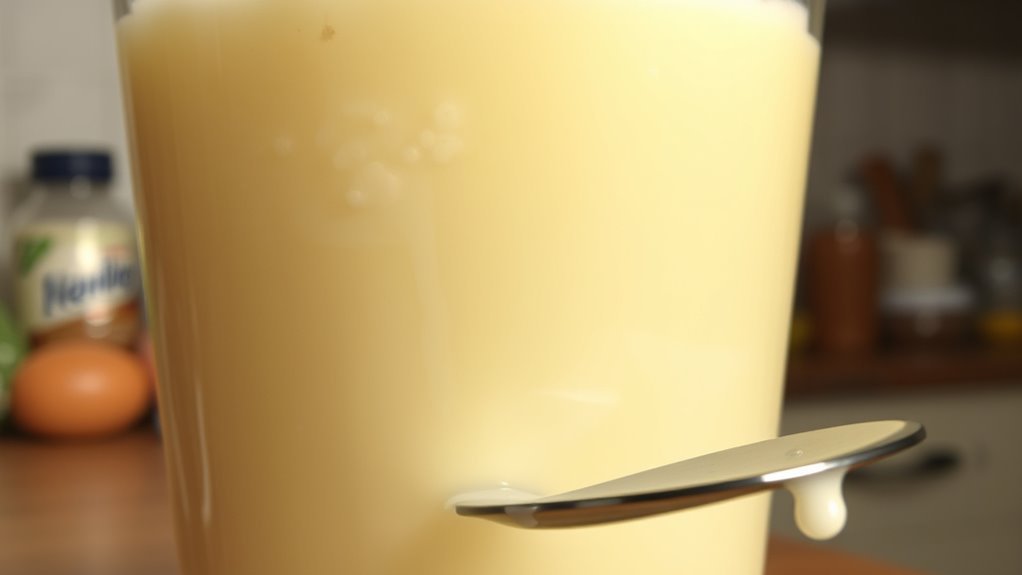
- Appearance: Look for curdling, lumps, or a slimy texture. These changes show bacterial growth.
- Color: Fresh milk is white, so any dull yellow or dingy hue suggests spoilage.
If you notice any mold or unusual discoloration, throw the milk away immediately. Trust these signs to avoid consuming spoiled milk and the potential health risks it brings.
Differences Between Sour Milk and Spoiled Milk

How can you tell the difference between sour milk and spoiled milk?
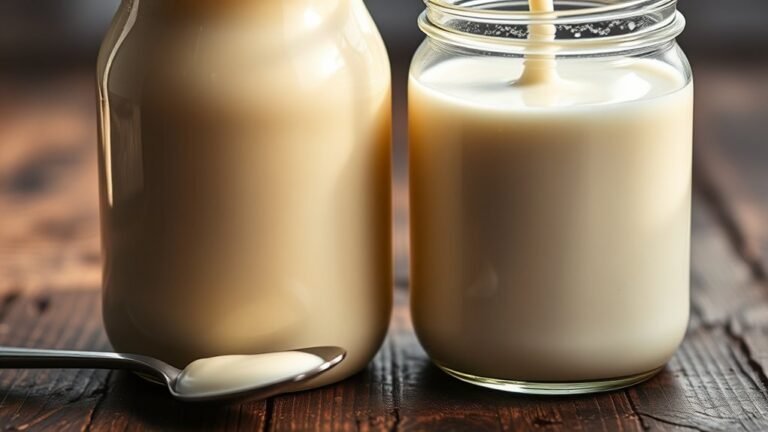
Sour milk results from the fermentation of raw milk by lactic acid bacteria, giving it a tangy flavor and increased acidity. This acidity helps inhibit harmful bacteria, making sour milk generally safe to consume in small amounts and sometimes beneficial due to probiotics.
Spoiled milk, however, usually involves pasteurized milk that has gone bad because of bacterial overgrowth, leading to unpleasant odors, off taste, and a curdled texture. Unlike sour milk, spoiled milk may contain dangerous bacteria and should be discarded immediately.
Health Risks of Consuming Spoiled Milk
If you drink spoiled milk, you risk food poisoning that can cause stomach pain, nausea, vomiting, and diarrhea. The harmful bacteria in spoiled milk, like Salmonella and E. coli, can lead to serious foodborne illness.
Here are the main health risks you should know:
- Gastrointestinal discomfort: Even small amounts can irritate your digestive system, causing cramps and upset stomach.
- Severe symptoms: Consuming large quantities increases the chance of intense vomiting, diarrhea, and dehydration.
- Increased vulnerability: Raw or heavily spoiled milk may contain dangerous pathogens, posing serious risks especially if you have a weakened immune system.
Avoiding spoiled milk helps protect you from these health issues caused by harmful bacteria and foodborne illness.
What to Do After Drinking Spoiled Milk
Although drinking spoiled milk can cause unpleasant symptoms, you can take steps to ease your discomfort and recover quickly.
If you notice gastrointestinal symptoms like nausea, vomiting, diarrhea, or stomach cramps, start by rinsing your mouth and drinking plenty of fluids to stay hydrated and soothe your stomach.
Rest is essential, as most mild cases resolve within 12-24 hours.
Avoid taking anti-diarrheal medications unless your healthcare provider advises it, since these can slow toxin elimination.
However, if your symptoms persist, worsen, or you experience severe discomfort, seek prompt medical care.
Contact a healthcare professional to ensure you receive appropriate treatment and prevent complications related to spoiled milk ingestion.
Safe Storage Practices to Prevent Milk Spoilage
To keep your milk fresh and safe to drink, you need to store it properly. Following good storage practices helps prevent spoiled milk and ensures food safety in your home. Here are three key tips:
- Store milk at or below 40°F (4°C) in the main fridge compartment to slow bacterial growth. Use a thermometer to check the temperature regularly.
- Keep the milk container tightly sealed to avoid exposure to air, light, and contaminants that cause spoilage.
- Don’t leave milk out at room temperature for over 2 hours (or 1 hour on hot days above 90°F/32°C). If you won’t use unopened milk before its expiration, freeze it and consume within a month after thawing.
These steps reduce the risk of spoiled milk, protecting your health and maintaining food safety.
Frequently Asked Questions
What Should I Do if I Drank Spoiled Milk?
If you drank spoiled milk, drink plenty of water, rest, and monitor your symptoms.
If you feel worse, like severe pain or vomiting, don’t hesitate to contact a healthcare professional for advice or emergency care.
How Long Does It Take to Get Sick From Spoiled Milk?
Like a ticking time bomb, you’ll start feeling sick from spoiled milk anywhere between 1 to 12 hours after drinking it.
Your symptoms depend on how much you drank and how your stomach handles the mess.
What Does Spoiled Milk Do to Your Body?
Spoiled milk irritates your stomach, causing nausea, vomiting, cramps, and diarrhea. It introduces harmful bacteria that inflame your digestive tract, potentially leading to dehydration and food poisoning if you consume a large amount.
What Happens if You Drink Milk That’s a Little Sour?
About 10% of people may feel mild stomach discomfort if they drink a little sour milk. You’ll likely just experience temporary indigestion or slight throat irritation, but it usually won’t cause serious problems unless you’re sensitive or immunocompromised.
Conclusion
So, what happens if you drink spoiled milk? You might face stomach pain, nausea, or worse, thanks to harmful bacteria like Salmonella. While mild symptoms often pass with rest and hydration, ignoring severe signs can be risky.
Why take chances with your health? Always check your milk before drinking and store it properly to avoid spoilage. When in doubt, throw it out—your body will thank you for it.
Remember, drinking spoiled milk can lead to foodborne illnesses. Prioritize safety by avoiding spoiled milk and practicing good storage habits.