How Long Is Milk Good After the Expiration Date? Safety & Storage Tips
You might have heard that milk is still safe to drink days after its expiration date, but is that really true? If you’ve ever wondered how long milk is good after the expiration date, you’re not alone. The answer depends on several factors, including how the milk was stored and whether the container has been opened.
Before you pour that carton down the drain, it’s worth understanding what signs to look for to avoid waste or risk. Checking for sour smell, changes in texture, or off taste can help determine if milk is still good. Proper refrigeration and keeping the container sealed can extend milk’s freshness beyond the printed date.
Understanding Milk Date Labels

Although milk date labels like “Best if used by,” “Sell by,” and “Use by” can guide you, they mainly indicate quality rather than safety. These milk date labels don’t guarantee food safety, especially since expiration dates vary by state and aren’t federally mandated for most pasteurized milk.
“Best if used by” tells you when unopened milk is at its peak freshness and flavor, while “Sell by” helps stores manage shelf life, not your consumption timeline.
To judge milk safety, rely on sensory checks. Look for spoilage signs such as off smells or changes in texture.
Proper storage plays a key role in extending milk’s usability beyond the printed expiration dates. So, instead of trusting labels alone, use your senses to decide if the milk is still good.
How to Tell If Milk Has Spoiled

When you want to know if milk has spoiled, trust your senses first. Sour smell is the strongest spoilage indicator, signaling bacterial growth and compromised milk freshness.
Always check visual cues. Yellowish color or mold means it’s unsafe. Texture change like lumps or curdling also shows spoilage.
Even a small off taste confirms it’s time to discard. Don’t rely solely on the expiration date; spoilage signs reveal true food safety status.
| Spoilage Indicator | What to Look For | Food Safety Tip |
|---|---|---|
| Sour Smell | Sharp, unpleasant odor | Discard immediately |
| Visual Cues | Yellow hue, mold | Avoid consumption |
| Texture Change | Lumps, curdling | Indicates bacterial growth |
| Off Taste | Sour or unusual flavor | Stop drinking right away |
Typical Shelf Life of Milk After Expiration

If you store pasteurized milk properly in your refrigerator, it usually stays good for 5 to 7 days after the expiration date unopened. The shelf life depends heavily on storage conditions and whether the milk is opened or unopened.
Once opened, pasteurized milk typically lasts 2 to 3 days beyond the expiration date if there are no spoilage signs.
To help you avoid food waste while ensuring your milk is safe to drink, remember:
- Check unopened milk up to a week past the expiration date.
- Consume opened milk within 2 to 3 days after the expiration date.
- Always inspect for spoilage signs like sour smell or curdling before use.
Tips for Extending Milk Freshness
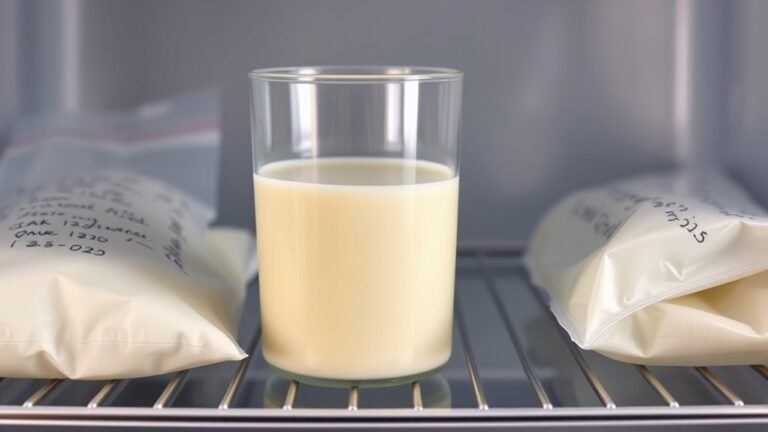
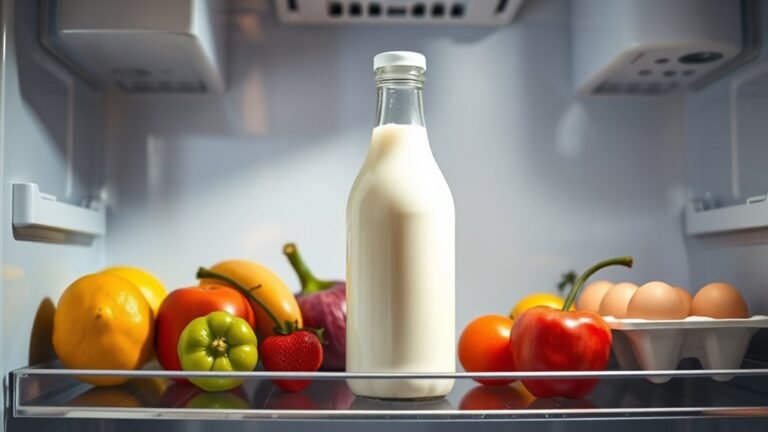
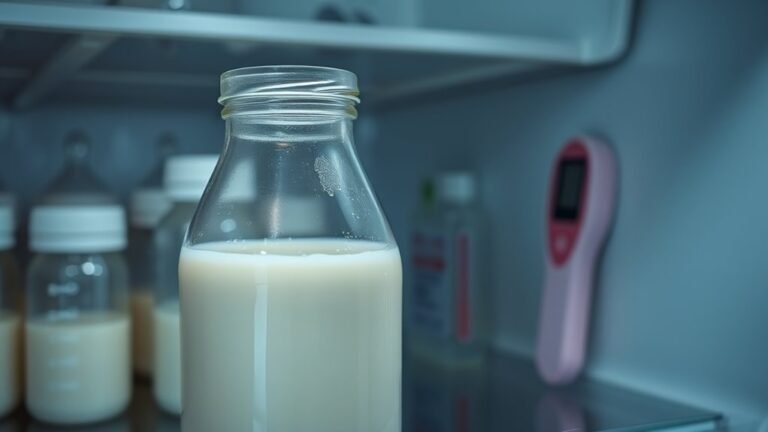
To keep your milk fresh longer, you should store it in the coldest part of your fridge, ideally between 38°F and 40°F, and avoid leaving the door open unnecessarily. To store milk properly, seal the carton tightly after each use and return it to the fridge promptly.
You can extend shelf life by freezing milk in small airtight containers for up to three months. Pay attention to milk spoilage signs like sour smell or curdling, even if the expiration date hasn’t passed.
| What You Do | What Happens |
|---|---|
| Keep fridge cold | Preserves milk freshness |
| Seal milk tightly | Prevents contamination |
| Freeze milk | Extends shelf life |
Following these refrigeration tips ensures your unopened milk and opened milk stay fresh longer with less waste.
Health Risks of Consuming Spoiled Milk
Although milk might look and smell fine, drinking spoiled milk can quickly lead to food poisoning, causing nausea, vomiting, diarrhea, and stomach cramps.
Consuming milk past its expiration date increases your risk of exposure to harmful bacteria like Salmonella, E. coli, and Listeria, which cause serious foodborne illness.
Even small amounts can trigger gastrointestinal distress and contamination symptoms. For your safety, keep in mind:
- Spoiled milk contains bacteria that multiply rapidly, increasing illness risk.
- Vulnerable groups, such as children, pregnant women, and immunocompromised individuals, face higher dangers.
- Severe symptoms may lead to dehydration and require medical attention.
Don’t gamble with milk spoilage. Always check the expiration date and avoid consuming milk that shows signs of contamination to protect your health.
Frequently Asked Questions
How Long Will Milk Last in the Fridge?
You’ll find milk lasts about 5 to 7 days unopened and 2 to 3 days once opened, as long as you keep it cold around 36-40°F. Store it away from the fridge door to stay fresh longer.
How to Tell if Milk Is Bad?
If your milk smells like a science experiment gone wrong or looks like it’s forming tiny monsters, it’s bad.
Don’t risk it. Trust your senses, especially if it tastes sour or lumpy. Toss it immediately!
How to Tell if Milk Is Still Good After the Expiration Date?
You can tell if milk’s still good after the expiration date by smelling it for sourness, checking for color changes or lumps, and tasting a small amount.
If it smells or tastes off, don’t use it.
How Long Until Milk Is Actually Bad?
Milk usually goes bad 5-7 days after the expiration date if unopened, or 2-3 days once opened. Always check for sour smell, lumps, or discoloration. You’ll know it’s time to toss it out.
Conclusion
Think of milk like a ticking clock in a delicate dance—once unopened, it keeps time gracefully for about a week past its date. But once you break the seal, the rhythm quickens, and you’ve got just a couple of days to enjoy the dance before it stumbles.
Trust your senses as your dance partner—if the smell or look feels off, don’t hesitate to bow out early. Staying mindful keeps your health in step and your kitchen safe.
In conclusion, understanding how long milk is good after the expiration date is key to preventing waste and ensuring safety. Always check the smell, appearance, and taste before consuming milk past its date. This mindful approach helps you enjoy milk safely and avoid foodborne illness.