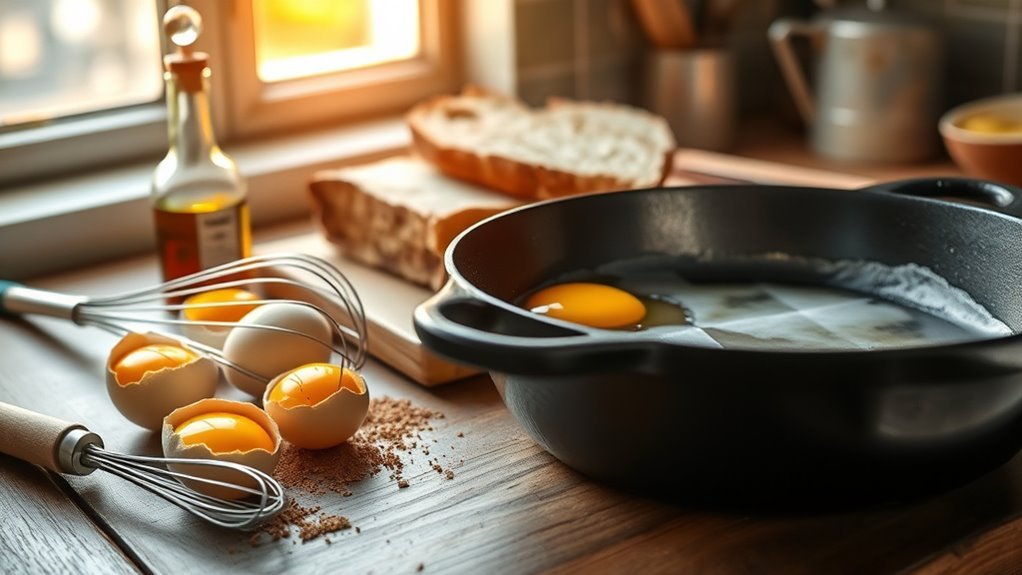
How You Make French Toast Without Milk
You can make French toast without milk by swapping in water, juice, or dairy-free milks like almond or oat milk for moisture and flavor. These alternatives keep your French toast tender and delicious without the need for dairy. Just whisk eggs with half a cup of your chosen liquid per two eggs, adding cinnamon or vanilla if you like.
Soak slightly stale bread for about 20-30 seconds to absorb the mixture. This timing helps the toast stay golden and prevents it from becoming dry. If you want to get creative or perfect the texture, there’s plenty more to explore.
Understanding the Role of Milk in French Toast

Why does milk play such a key role in French toast? When you soak bread in a milk and egg mixture, milk adds moisture and richness, helping the bread absorb the custard without falling apart. It also contributes to the creamy texture and tender crumb you expect in French toast.
The proteins and fats in milk help create a golden-brown crust when cooked, enhancing flavor and appearance. Without milk, your French toast might turn out dry or less tender.
Milk balances the egg’s intensity, softening the overall taste and adding subtle sweetness. Understanding this role helps you appreciate why recipes usually include milk but also prepares you to explore alternatives that replicate these qualities if you can’t or don’t want to use dairy.
Best Dairy-Free Milk Alternatives for French Toast

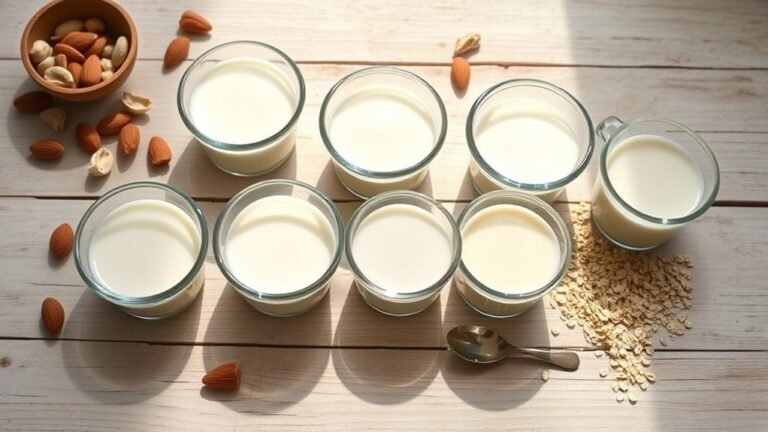
Several dairy-free milk alternatives can help you make delicious French toast without compromising texture or flavor. Almond milk offers a subtle nutty taste and a creamy consistency that soaks bread nicely.
Almond milk provides a creamy, nutty base that perfectly soaks bread for delicious dairy-free French toast.
Coconut milk adds a rich, tropical flavor, perfect if you want a hint of sweetness. Oat milk provides a smooth, slightly sweet base that thickens well, giving your French toast a tender bite.
Soy milk, with its neutral flavor and protein content, mimics dairy milk’s texture closely, making it an excellent all-around substitute. Cashew milk is another creamy option, lending a mild, buttery flavor.
When choosing your alternative, pick unsweetened versions to control sweetness and enhance your recipe’s balance. These options ensure your French toast stays flavorful and satisfying without dairy.
Using Water or Juice to Make French Toast

Wondering how to make French toast without milk or dairy alternatives? You can use water or juice as simple substitutes. Water keeps things neutral, letting the egg and bread’s flavor shine.
Just whisk your eggs with about half a cup of water per two eggs, add cinnamon or vanilla for extra taste, and soak your bread.
If you want a bit more sweetness and a fruity twist, swap water for juice like orange or apple.
The juice adds natural sugar and flavor, which can make your French toast more vibrant and tasty. Just be mindful that juice might caramelize faster, so cook on medium heat to avoid burning.
Both options work well when you’re out of milk and want a quick fix.
Incorporating Yogurt or Sour Cream as Milk Substitutes
Although yogurt and sour cream aren’t traditional milk substitutes, you can easily use them to make French toast richer and creamier without dairy milk. Both add a tangy flavor that complements the sweetness of your dish. Use plain or vanilla-flavored varieties to keep it balanced.
Here’s a quick guide:
| Substitute | How to Use |
|---|---|
| Yogurt | Dilute with water (1:1 ratio) |
| Sour Cream | Thin with a splash of water |
| Benefit | Adds creaminess and slight tang |
| Tip | Whisk well to avoid lumps |
How to Adjust the Egg Mixture Without Milk
When you skip milk in your French toast recipe, you’ll need to tweak the egg mixture to keep it smooth and flavorful. Start by beating your eggs thoroughly to create a uniform base.
Then, add a splash of water, juice, or even brewed tea to thin the mixture slightly, ensuring it soaks evenly into the bread.
Don’t forget to include a pinch of salt and a bit of vanilla extract or cinnamon to boost flavor.
If you want extra richness, try mixing in a dollop of yogurt or a spoonful of applesauce.
Whisk everything well until combined and smooth.
This approach helps maintain the right consistency and taste, so your French toast turns out tender and delicious without relying on milk.
Tips for Achieving the Perfect Texture Without Milk
Even without milk, you can achieve a perfectly tender and crispy French toast by focusing on the soaking time and cooking temperature. Soak your bread just long enough to absorb the egg mixture without becoming soggy.
Cook on medium heat to allow the inside to set while the outside crisps up nicely. Using day-old or slightly stale bread helps absorb the mixture better.
| Tip | Why It Matters |
|---|---|
| Soak Bread 20-30 seconds | Prevents sogginess, keeps texture firm |
| Medium Heat Cooking | Ensures even cooking, crisp exterior |
| Use Stale Bread | Better absorption, avoids mushiness |
Follow these tips, and your milk-free French toast will have an ideal balance of softness and crunch.
Flavor Enhancements When Skipping Milk
Mastering the texture sets a strong foundation, but boosting flavor becomes especially important without milk. You can easily enhance your French toast by adding ingredients that bring depth and richness.
Try these simple flavor boosters:
- Vanilla Extract: Just a teaspoon adds warmth and aroma, making your toast taste more indulgent.
- Cinnamon or Nutmeg: A pinch of these spices adds a cozy, comforting note that pairs perfectly with sweet toppings.
- Sweeteners like Maple Syrup or Honey: Incorporate these directly into your egg mixture for a subtle sweetness throughout.
These tweaks help you create a flavorful, satisfying French toast even without milk, ensuring every bite is deliciously memorable.
Cooking Techniques for Dairy-Free French Toast
Although skipping milk changes the texture of your French toast batter, you can still achieve a perfectly cooked, golden exterior by adjusting your cooking techniques.
Start by preheating your pan or griddle over medium heat to ensure even cooking without burning.
Preheat your pan over medium heat for even cooking and a perfectly golden finish.
Use a non-stick skillet or lightly grease your surface with oil or dairy-free butter to prevent sticking.
Dip your bread thoroughly but avoid soaking it too long, as dairy-free batters can be thinner and soak faster.
Cook each side for about 2-3 minutes until golden brown, flipping gently to keep the bread intact.
Keep the heat moderate; too high and the outside burns before the inside cooks.
With these tweaks, your dairy-free French toast will be just as delicious and visually appealing.
Frequently Asked Questions
Can I Make French Toast Without Eggs?
Yes, you can make French toast without eggs by using substitutes like mashed bananas, applesauce, or flaxseed mixed with water. These alternatives help bind the bread and add moisture for a delicious, egg-free French toast.
How Long Should I Soak the Bread Without Milk?
Did you know French toast dates back over 4,000 years? Soak your bread for about 20 to 30 seconds per side to absorb the egg mixture well, ensuring a soft, flavorful toast without milk.
What Bread Types Work Best for Dairy-Free French Toast?
You’ll want to use sturdy bread like brioche, challah, or sourdough since they soak up your dairy-free batter well without falling apart.
Day-old bread works best, giving you a crispy, flavorful French toast every time.
Can I Freeze French Toast Made Without Milk?
Yes, you can freeze French toast made without milk! Don’t worry about texture changes. Just cool completely, freeze in a single layer, then reheat in a toaster or oven for a quick, delicious breakfast anytime.
Is French Toast Without Milk Suitable for Allergies?
Yes, French toast without milk can be suitable for those with dairy allergies. Just make sure you use allergy-friendly bread and substitute milk with almond, soy, or oat milk to keep it safe and delicious for you.
Conclusion
So, you’ve survived making French toast without milk—congratulations, you’re basically a culinary rebel now. Who needs milk anyway? Just grab your favorite alternative, ditch the dairy drama, and get cracking.
Whether it’s juice, yogurt, or even water (yes, really), you’ve got this. Remember, perfect texture is just a whisk away, and flavor’s all about your creative flair.
Now, go impress your taste buds and confuse your breakfast guests! Making French toast without milk is easier than you think, and the delicious results prove it.