How Long Is Breast Milk Good After Pumping and Safe to Store
You can keep freshly pumped breast milk at room temperature for up to four hours safely. Proper breast milk storage is essential to maintain its quality and safety. If you refrigerate it promptly at 40°F (4°C) or below, it stays good for up to five days.
For longer storage, freeze milk in small portions for up to six months. Use thawed milk within 24 hours without refreezing to ensure safety and nutrition. Proper labeling and clean equipment help maintain freshness.
Understanding these basics ensures your milk stays safe and nutritious. There’s more to learn about ideal storage and handling techniques to optimize breast milk use.
Factors Affecting Breast Milk Storage Duration

Although breast milk is a natural and nutritious food, several factors affect how long it stays fresh after pumping. You need to contemplate temperature, as milk stored in the fridge lasts longer than at room temperature.
Breast milk freshness depends greatly on storage temperature, lasting longer when refrigerated versus room temperature.
The cleanliness of your pumping equipment plays a critical role; if your bottles or pump parts aren’t sanitized properly, bacteria can grow faster, reducing milk’s freshness.
The initial quality of the milk matters too—if you pump right after feeding, the milk may contain more bacteria.
Also, how quickly you cool the milk impacts its shelf life; the sooner you refrigerate or freeze it, the longer it stays good.
In the end, the fat content in milk can influence spoilage speed, with higher fat milk spoiling quicker if not stored correctly.
Safe Storage Times at Room Temperature

You should pay close attention to how long breast milk can safely stay at room temperature, especially if you’re on the go or don’t have immediate access to refrigeration.
Generally, freshly pumped breast milk can be kept at room temperature (up to 77°F or 25°C) for about 4 hours.
However, this time can vary depending on the environment and cleanliness. To keep your milk safe:
- Store milk in a clean, sealed container
- Avoid exposing milk to direct sunlight or heat
- Use breast milk within 4 hours if unrefrigerated
- Discard any milk left out beyond the safe time frame
Following these guidelines helps protect your baby from harmful bacteria and ensures the milk retains its nutritional quality until feeding.
Refrigeration Guidelines for Pumped Breast Milk

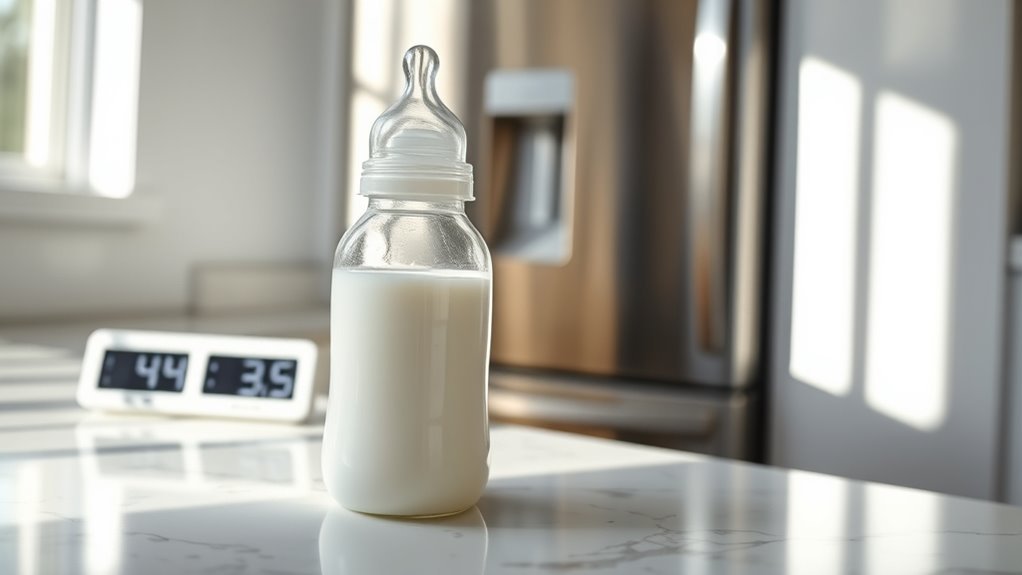
When you refrigerate pumped breast milk, it’s important to store it at the right temperature to keep it safe and nutritious. Aim to keep your refrigerator at or below 40°F (4°C).
Store the milk in clean, BPA-free containers or special breast milk storage bags, and label each with the date you pumped it.
Use the oldest milk first to avoid waste. Refrigerated breast milk is best used within 4 days, though some sources say it can last up to 5 days if kept consistently cold.
Avoid storing milk in the door, where temperature fluctuates more. Instead, place containers toward the back or center of the fridge.
Always check the milk’s smell and appearance before feeding to ensure freshness and safety.
Freezing Breast Milk: Best Practices and Duration
Since freezing breast milk preserves its nutrients and extends its shelf life, knowing the best practices for freezing and how long it stays good is essential.
You can safely store breast milk in a freezer for up to 6 months, but try to use it within 3 months for ideal quality.
Follow these tips to freeze breast milk effectively:
- Use clean, BPA-free storage containers or breast milk bags.
- Label each container with the date you pumped the milk.
- Freeze milk in small portions (2-4 ounces) for easier thawing.
- Place newly pumped milk in the back of the freezer, where temperatures are most consistent.
Thawing and Using Frozen Breast Milk Safely
Although freezing breast milk preserves its quality, properly thawing it is essential to maintain safety and nutrients.
To thaw, place the frozen milk in the refrigerator overnight or hold the container under warm running water.
Avoid using a microwave or boiling water, as these can create hot spots and destroy valuable nutrients.
Once thawed, gently swirl the milk to mix any separated fat; don’t shake it vigorously.
Use thawed breast milk within 24 hours and never refreeze it.
If you thawed it in the fridge, you can keep it there for up to 24 hours before feeding.
Always warm the milk to body temperature by placing the bottle in warm water, and test it on your wrist before feeding your baby.
Signs of Spoiled Breast Milk to Watch For
If breast milk smells sour or has an unusual odor, it’s a clear sign it’s spoiled and shouldn’t be given to your baby. Besides smell, you want to watch for other signs that indicate the milk has gone bad. Trust your senses and always check before feeding.
If breast milk smells sour or odd, it’s spoiled and unsafe—always check before feeding your baby.
Look out for:
- A strange or rancid taste if you’re unsure after smelling.
- Changes in color, such as milk turning yellowish or gray.
- Clumps or separation that don’t mix back together after gently swirling.
- An off texture, like excessive thickness or curdling.
If you notice any of these, it’s safer to discard the milk. Your baby’s health comes first, so always inspect pumped milk carefully before use.
Tips for Labeling and Organizing Stored Milk
When you pump breast milk, labeling and organizing it properly can save you time and prevent waste. Start by writing the date and time of pumping on each container using a waterproof marker or a dedicated label. This helps you use the oldest milk first, ensuring freshness.
Group your milk by storage location, fridge or freezer, and keep containers neatly arranged in order of pumping date. Use clear, BPA-free storage bags or bottles so you can easily see the contents.
Avoid overcrowding to maintain proper airflow and consistent temperature. Regularly check your stash and discard any milk past its safe storage period.
How to Store Breast Milk During Travel or Outings
Since breast milk needs to stay at a safe temperature to preserve its quality, you should plan ahead when traveling or going out.
To keep your milk fresh and safe, use a well-insulated cooler bag with ice packs. Store the milk in sealed, labeled containers to avoid spills and confusion. Avoid opening the cooler frequently, as this lets warm air in.
Once home, refrigerate or freeze the milk promptly.
Here are some tips for storing breast milk during outings:
- Use a dedicated cooler bag or insulated lunch box.
- Pack enough ice packs to maintain a cold temperature.
- Keep the milk away from direct sunlight or heat sources.
- Limit the travel time; milk can stay cool up to 24 hours with proper insulation.
Following these steps helps ensure your baby gets fresh milk wherever you go.
Cleaning and Sterilizing Pumping Equipment
Keeping your breast milk fresh during travel is important, but maintaining clean and sterile pumping equipment is just as essential to protect your baby from harmful bacteria. After each use, disassemble all parts that come into contact with milk.
Wash them in warm, soapy water or use a dishwasher if they’re dishwasher-safe. Sterilize the equipment daily by boiling, using a microwave steam bag, or an electric sterilizer.
| Step | Method | Tips |
|---|---|---|
| Washing | Warm, soapy water | Use a dedicated bottle brush |
| Dishwasher | Top rack, if safe | Check manufacturer instructions |
| Boiling | 5 minutes in boiling water | Use a pot with a lid |
| Sterilizing Bag | Microwave steam bag | Follow package directions |
Frequently Asked Questions
Can I Mix Breast Milk From Different Pumping Sessions?
Yes, you can mix breast milk from different sessions. Just make sure to chill the older milk before adding fresh milk to keep it safe.
Always store the combined milk in the fridge or freezer promptly.
Does Breast Milk Lose Nutritional Value Over Time in Storage?
You might worry breast milk loses nutrients quickly, but it actually retains most of its nutritional value even after storage.
Just make sure to store it properly and use it within recommended timeframes for best benefits.
How Does Maternal Diet Affect Stored Breast Milk?
Your diet can influence some breast milk components like vitamins and fatty acids, but it won’t drastically change stored milk’s safety or overall nutrition.
Eating well helps keep your milk nourishing for your baby.
Are There Differences in Storage Times for Preterm Milk?
Yes, preterm milk can have slightly different storage guidelines because it’s richer in nutrients and more delicate.
You should follow specific recommendations to safeguard its quality and ensure your preterm baby receives the best nutrition safely.
Can Breast Milk Be Safely Stored in a Deep Freezer?
You can safely store breast milk in a deep freezer, just like preserving a rare vintage wine in a cellar.
Keep it for up to 12 months, though using it within six is best for freshness.
Conclusion
Now that you know how to store your precious milk, you’re ready to keep it fresh as a morning breeze. Remember, room temperature storage is short-lived, refrigeration extends its life, and freezing locks in nutrients for months. Always label your milk and trust your senses to spot spoilage.
With clean equipment and smart storage, you’re giving your baby the best—even when you’re apart. Keep these tips close, and you’ll master breast milk storage with ease. Knowing how long breast milk is good after pumping and safe to store ensures your baby receives the safest, most nutritious milk possible.