How Long Is Breast Milk Good After Warming How To Guide
You should use warmed breast milk within two hours and discard any leftovers to keep your baby safe. Proper handling of breast milk after warming is crucial to maintain its quality and safety. Avoid reheating the same milk multiple times, as this can increase the risk of bacterial growth.
Never microwave breast milk to prevent hot spots that can harm your baby or damage nutrients. Always warm breast milk gently, such as by placing the container in warm water. This method helps preserve the milk’s beneficial properties.
Proper storage before and after warming is important. Understanding these steps will make feeding easier and safer for you and your baby. Following these guidelines ensures your baby receives the best nutrition from breast milk.
Understanding the Importance of Proper Breast Milk Handling

Although breast milk provides essential nutrients and antibodies, handling it properly is crucial to keep it safe for your baby. You need to store, thaw, and warm breast milk carefully to prevent bacterial growth and preserve its nutritional quality.
Using clean containers and washing your hands thoroughly before expressing or feeding milk helps reduce contamination risks. Avoid leaving milk at room temperature for too long, and always refrigerate or freeze it promptly.
When thawing frozen milk, do it gently in the refrigerator or under warm running water, never using a microwave. Proper handling ensures your baby receives safe, nutritious milk that supports their growth and immune system.
Safe Time Limits for Using Warmed Breast Milk

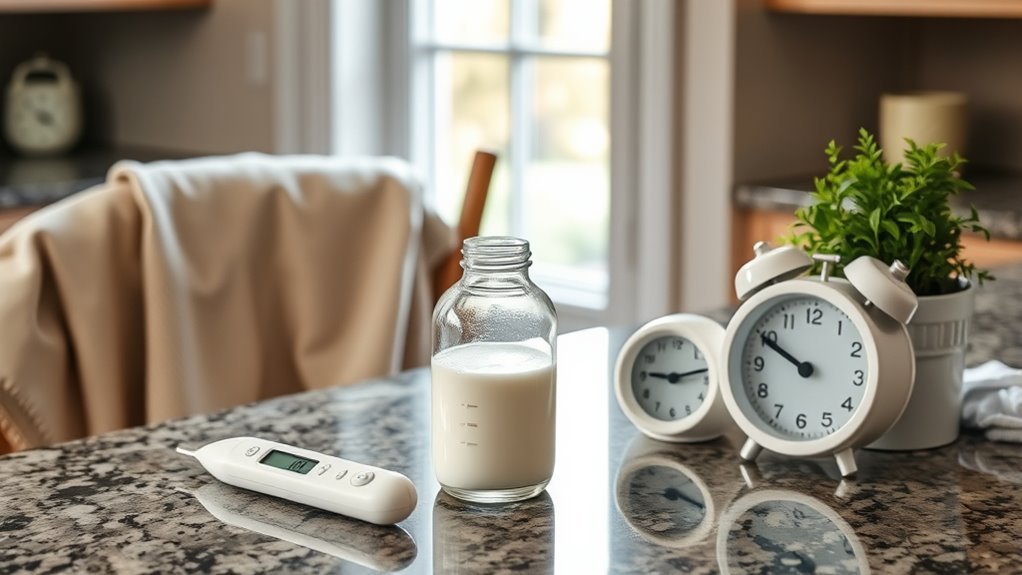
When you warm breast milk, it’s important to use it within a safe timeframe to prevent bacterial growth and maintain its quality. Once heated, you should feed your baby within two hours.
After this period, any leftover milk must be discarded and never reheated again. If your baby doesn’t finish the bottle, it’s best to toss the remaining milk to avoid potential contamination.
Avoid leaving warmed milk at room temperature for extended periods, as this can encourage harmful bacteria to grow. Remember, once warmed, breast milk isn’t safe to refreeze.
Following these time limits ensures your baby receives fresh, nutritious milk every time.
Always prioritize safety to protect your little one’s health and well-being.
Signs That Warmed Breast Milk Has Spoiled

Keeping track of how long warmed breast milk has been sitting is important, but you should also know how to spot if it’s gone bad. Spoiled milk can pose health risks to your baby, so watch for these signs before feeding.
| Sign | What to Look For |
|---|---|
| Smell | Sour or rancid odor |
| Appearance | Clumpy texture or unusual separation |
| Color | Dark yellow or grayish tint |
| Taste | Bitter or off flavor |
If the milk smells sour, looks curdled, or has an unusual color, don’t use it. Trust your senses. When in doubt, throw it out. This helps keep your baby safe and healthy.
Recommended Methods for Warming Breast Milk
To warm breast milk safely, you’ll want to use methods that preserve its nutrients and avoid hot spots that could burn your baby’s mouth. The best way is to place the bottle or bag in a bowl of warm water for a few minutes. Gently swirling the milk helps heat it evenly.
You can also use a bottle warmer designed specifically for breast milk, which maintains a consistent, safe temperature. Avoid microwaving breast milk because it heats unevenly and can destroy important nutrients.
Never boil breast milk or heat it directly on the stove. Always test the temperature by shaking a few drops on your wrist before feeding. These methods ensure your baby gets the best nutrition without any risk of burns.
Best Practices for Storing Breast Milk Before and After Warming
Although storing breast milk properly requires attention both before and after warming, following clear guidelines helps maintain its quality and safety.
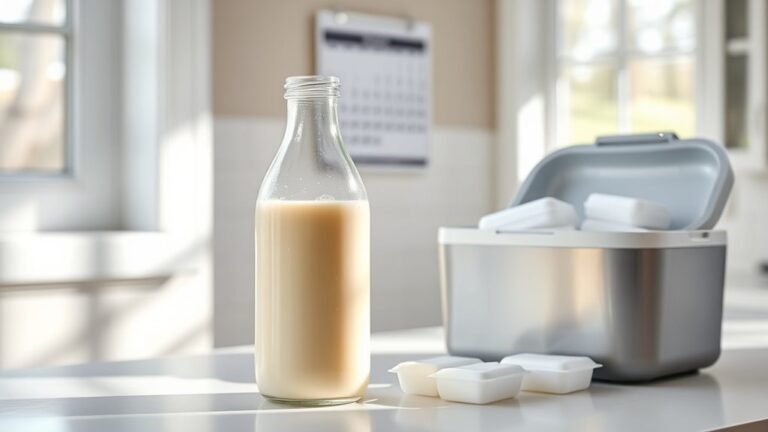
Before warming, label your milk with the date and store it in the back of the refrigerator or freezer to keep it at a consistent temperature.
Use airtight containers to prevent contamination and avoid refreezing thawed milk.
After warming, use the milk within two hours and never refreeze leftover milk.
If your baby doesn’t finish a bottle, discard any remaining milk after feeding to avoid bacterial growth.
Always store breast milk in small portions to minimize waste and make warming easier.
Tips to Avoid Contamination During Breast Milk Handling
Proper handling plays a big role in preventing contamination during breast milk storage and feeding. Always wash your hands thoroughly before touching breast milk or its containers.
Use clean, sterilized bottles and storage bags designed for breast milk. Avoid touching the inside of the bottle or lid to keep germs out.
When expressing milk, ensure your pump parts are clean and sanitized. Label containers with the date and time of expression, so you use the oldest milk first.
Never mix freshly expressed milk with older milk unless both are chilled. After warming, feed your baby promptly and discard any leftover milk to prevent bacterial growth.
Following these simple steps helps maintain your baby’s safety and ensures the milk stays fresh and healthy.
How to Reheat Breast Milk Safely if Needed
When you need to reheat breast milk, doing it safely guarantees your baby gets the best nutrition without harmful bacteria. Start by placing the milk container in a bowl of warm water or use a bottle warmer designed for breast milk.
Avoid microwaving, as it creates hot spots that can burn your baby and damage valuable nutrients. Gently swirl the milk to mix the fat, but don’t shake vigorously, which can break down proteins.
Check the temperature by dropping a few drops on your wrist; it should feel lukewarm, not hot. Use reheated milk within two hours and never reheat it more than once.
These steps help keep the milk safe and nutritious for your little one.
Common Mistakes to Avoid When Warming and Using Breast Milk
Because breast milk requires careful handling, many parents unintentionally make mistakes that compromise its safety and quality. Avoid warming milk in the microwave, which can create hot spots and destroy nutrients. Don’t refreeze thawed milk; use it within recommended times.
Never leave warmed milk out for too long, as bacteria can grow quickly. Also, avoid warming milk repeatedly. Heat only what you’ll feed immediately. Finally, always check the temperature before feeding to prevent burns.
| Mistake | Why It’s Risky | How to Avoid |
|---|---|---|
| Microwave heating | Uneven heat, nutrient loss | Warm in water bath or bottle warmer |
| Refreezing thawed milk | Bacterial growth | Use thawed milk promptly |
| Leaving milk out too long | Bacterial contamination | Feed or refrigerate immediately |
| Rewarming multiple times | Nutrient degradation | Warm once, only what’s needed |
| Feeding without temperature check | Baby burns | Test milk on wrist before feeding |
Frequently Asked Questions
Can I Freeze Breast Milk Again After It Has Been Warmed?
You shouldn’t freeze breast milk again after it’s been warmed because bacteria can grow during thawing. Instead, use it within two hours or discard any leftovers to keep your baby safe and healthy.
How Does the Composition of Breast Milk Change After Warming?
You might be surprised, but warming breast milk can reduce some protective antibodies and enzymes. While the main nutrients stay intact, those immune-boosting components start to break down. Use it promptly for your baby’s best benefit.
Is It Safe to Warm Breast Milk in a Microwave?
You shouldn’t warm breast milk in a microwave because it heats unevenly, creating hot spots that can burn your baby’s mouth and destroy valuable nutrients.
Instead, use a warm water bath or bottle warmer for safety.
Can Warmed Breast Milk Be Used for Older Infants or Toddlers?
Absolutely, you can use warmed breast milk for older infants or toddlers! It’s a fantastic, nutrient-packed option that’s gentle on their tummies.
Just make sure to use it within two hours after warming to keep it safe and fresh.
What Is the Nutritional Difference Between Fresh and Previously Frozen Breast Milk?
You’ll notice fresh breast milk has slightly higher immune factors and enzymes. Freezing reduces some antibodies but keeps most nutrients intact.
Conclusion
You might worry that warming breast milk takes too much time or effort, but it’s really simple and worth it for your baby’s health. Just remember to use warmed milk within two hours to keep it safe and fresh. By following the right warming and storage steps, you’ll avoid spoilage and contamination.
With a little care, handling breast milk becomes second nature, giving your little one the best nutrition every time. Knowing how long breast milk is good after warming helps you provide safe and nutritious milk. Always prioritize proper warming techniques to maintain milk quality and your baby’s wellbeing.