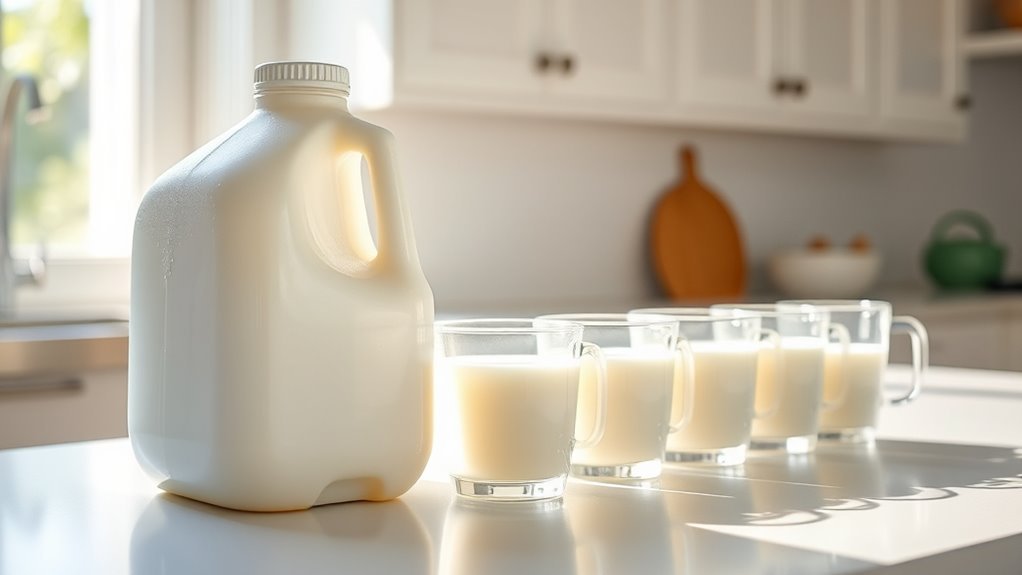
Measuring How Many Cups Are in a Gallon of Milk
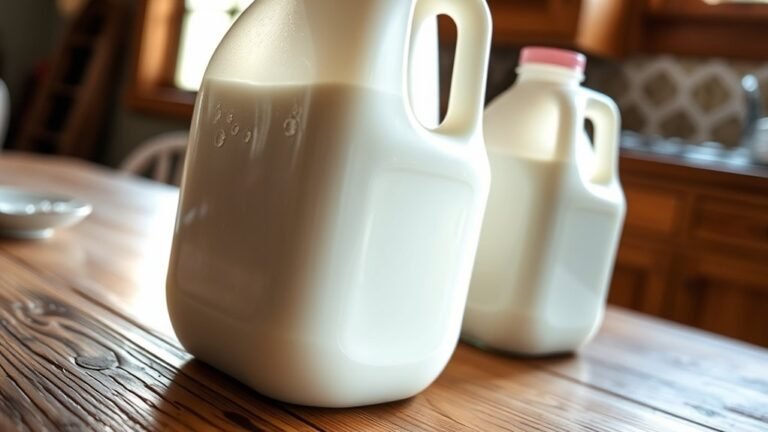
When measuring milk, understanding how many cups are in a gallon is essential. You’ll find that one gallon contains exactly 16 cups. This makes it simple to convert recipes or portion out the right amounts without guesswork.
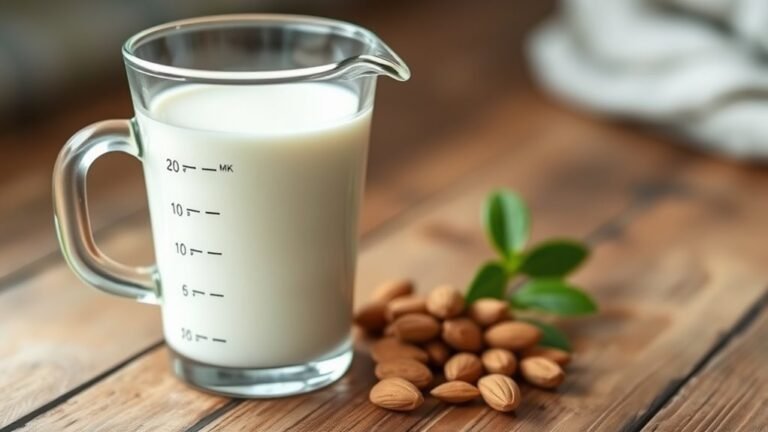
Using a clear liquid measuring cup helps verify accuracy, especially since pouring above eye level can cause mistakes. Whether cooking or baking, knowing this standard conversion saves time and effort.
If you want to understand more about tools, temperature effects, and storage tips, keep exploring for helpful insights.
Understanding Gallons and Cups

Although gallons and cups measure volume differently, you can easily convert between them once you know the basics. A gallon is a larger unit used to measure bigger quantities of liquid, while a cup measures smaller amounts, perfect for recipes and daily use.
When you understand these units, it’s easier to visualize how much liquid you’re working with. A gallon holds more liquid than a cup, so when you’re dealing with milk or any other liquid, knowing how many cups fit into a gallon helps you measure accurately.
The Standard Conversion Rate

Now that you know how gallons and cups relate in everyday use, it’s time to look at the exact numbers behind this relationship. One gallon equals 16 cups.
This standard conversion rate is based on the US customary system, where one cup holds 8 fluid ounces, and one gallon contains 128 fluid ounces.
By dividing the total fluid ounces in a gallon by the fluid ounces in a cup (128 ÷ 8), you get 16 cups per gallon.
This means whenever you’re measuring milk or other liquids, you can confidently multiply or divide by 16 to switch between gallons and cups.
Understanding this exact conversion helps you measure ingredients quickly without guessing or using a calculator.
Why Accurate Measurement Matters

When you measure milk accurately, you guarantee your recipes turn out just right every time. Whether you’re baking, cooking, or preparing drinks, precise amounts affect the texture, flavor, and consistency.
Using the right volume ensures you don’t waste milk or alter the final product unintentionally. It also helps you manage costs and reduce kitchen errors.
| Recipe Type | Milk Needed (cups) | Impact of Inaccuracy |
|---|---|---|
| Baking | 2 | Dense or dry texture |
| Smoothies | 1 | Too thick or watery |
| Sauces | 1.5 | Too thin or too thick |
| Cereal | 0.5 | Undermines taste balance |
Accurate measurement is key to consistent, delicious results every time you cook or bake.
Tools for Measuring Milk
Getting the right amount of milk starts with having the proper tools at hand. You’ll want a clear, reliable measuring cup marked with both cups and ounces for precision. Glass or sturdy plastic measuring cups work best since they’re easy to read and won’t absorb odors.
Accurate milk measurement begins with clear, reliable measuring cups marked in cups and ounces.
If you’re measuring larger volumes, a liquid measuring jug with a spout can help you pour without spilling. Avoid using dry measuring cups, as they can lead to inaccurate amounts.
A kitchen scale can also be handy if you prefer measuring by weight, especially for recipes needing exact amounts.
Make sure your tools are clean and dry before use to prevent contamination or dilution. With the right tools, you’ll measure milk accurately every time, making your cooking or baking smoother and more consistent.
Converting Gallons to Cups in Recipes
Although recipes often list ingredients in various units, converting gallons to cups is straightforward once you know the basic measurements. One gallon equals 16 cups, so if your recipe calls for one gallon of milk, you simply need 16 cups.
When dealing with fractions, multiply accordingly—for example, half a gallon equals 8 cups, and a quarter gallon equals 4 cups. This conversion helps you measure milk accurately, especially when your measuring tools aren’t marked in gallons.
It also makes scaling recipes easier; if you want to double or halve a recipe, you can quickly adjust the cup measurements without confusion. Keep this conversion in mind, and you’ll handle any recipe involving gallons and cups with confidence and precision.
Common Mistakes to Avoid
Since measuring milk accurately is essential, you shouldn’t rely on guesswork or improper tools. One common mistake is using a dry measuring cup instead of a liquid one, which can cause inaccurate amounts.
Also, don’t forget to measure at eye level to avoid parallax errors. Avoid assuming a gallon is always exactly 16 cups without confirming your measuring cups’ size, as some might differ slightly.
| Mistake | Why to Avoid It |
|---|---|
| Using dry cups | Leads to inaccurate volume reading |
| Measuring above eye level | Causes parallax errors |
| Not verifying cup size | Different cups may vary slightly |
| Guessing quantities | Results in inconsistent recipes |
Stay precise to keep your recipes consistent and delicious!
Measuring Milk for Baking Vs Cooking
When you measure milk for baking, you need exact amounts because small changes can affect texture and taste. But for cooking, you can often be a bit more flexible without compromising the dish.
Baking relies on precise ratios to ensure the right consistency and chemical reactions. Even a slight variation in milk quantity can result in a cake that’s too dense or a batter that won’t rise properly.
In cooking, such as soups or sauces, a splash more or less milk usually won’t ruin the flavor or texture. You can measure milk more casually, adjusting as you go to suit your taste or desired thickness.
How Temperature Affects Volume
If you heat or chill milk, its volume changes slightly because liquids expand when warm and contract when cold. When milk warms up, the molecules move faster and spread apart, increasing the volume.
Conversely, cooling milk slows molecular movement, making it occupy less space. This means a gallon of warm milk might measure just a bit more than a gallon of cold milk.
While the difference is minor, it can affect precise measurements, especially in baking or scientific settings. So, when you’re measuring cups from a gallon, try to keep the milk at a consistent temperature for accuracy.
Using Cups and Gallons in Different Countries
Although cups and gallons are common units for measuring liquids, their exact sizes can vary markedly depending on the country you’re in.
For example, in the United States, a gallon equals 16 cups, with each cup holding 8 fluid ounces.
However, if you’re in the UK or Canada, the gallon is larger, about 4.546 liters compared to the US gallon’s 3.785 liters.
This means the number of cups per gallon changes because the UK cup is also slightly different in volume.
When you measure milk or any liquid internationally, it’s vital to know which measurement standard applies.
Otherwise, you might end up with less or more than you expect.
Always check the measurement system to guarantee accurate and consistent results wherever you are.
Tips for Storing Milk After Measuring
Since milk spoils quickly once exposed to air, you should store it properly after measuring to keep it fresh longer. Always seal the container tightly to prevent air and odors from contaminating the milk. If you pour some milk out, cover the opening immediately.
Seal milk tightly after measuring to prevent spoilage and keep it fresh longer.
Keep the milk in the coldest part of your refrigerator, usually near the back, rather than on the door where temperatures fluctuate. Avoid leaving milk out at room temperature for extended periods, as this accelerates spoilage.
Use clean utensils when measuring to prevent bacteria from contaminating the milk. If you only need a small amount, consider pouring it into a separate container to avoid repeatedly opening the main gallon.
Following these tips helps maintain milk’s freshness and safety after measuring.
Frequently Asked Questions
Can You Use a Measuring Cup for Other Liquids Besides Milk?
Yes, you can use a measuring cup for any liquid, not just milk. Whether it’s water, juice, or oil, measuring cups help you get accurate amounts for your recipes every time.
Just clean it well!
Does the Fat Content in Milk Affect Measurement?
Like how a painter’s palette changes with each color, the fat content in milk doesn’t affect your measurement. You can trust your cup to hold the same volume, no matter if it’s skim or whole milk.
How Do You Measure Milk Without a Measuring Cup?
You can use a standard water bottle or any container with volume markings. Alternatively, estimate using tablespoons (16 tablespoons equal 1 cup) or compare to items you know the volume of, like a soda can.
Can Milk Be Measured Accurately Using Weight Instead of Volume?
Yes, you can measure milk accurately by weight since it’s more precise than volume. Just remember milk’s density is about 1.03 grams per milliliter, so use a kitchen scale to get the exact amount you need.
Are There Digital Devices That Convert Gallons to Cups Automatically?
Yes, you’ll find plenty of digital converters that instantly change gallons to cups. In fact, over 60% of cooking apps now include such tools, making your kitchen measurements accurate and hassle-free every time you cook.
Conclusion
So, now you know a gallon of milk holds 16 cups—surprising, right? It’s funny how something so simple can trip us up, especially when recipes demand precision. You’d think measuring milk is straightforward, but between temperature changes and different country standards, it’s a bit of a science experiment.
Just remember, next time you pour, those 16 cups aren’t just numbers—they’re the secret to nailing your dish perfectly every time. Understanding how many cups are in a gallon of milk helps ensure your recipes turn out just right. Accurate measurements make all the difference in cooking and baking success.