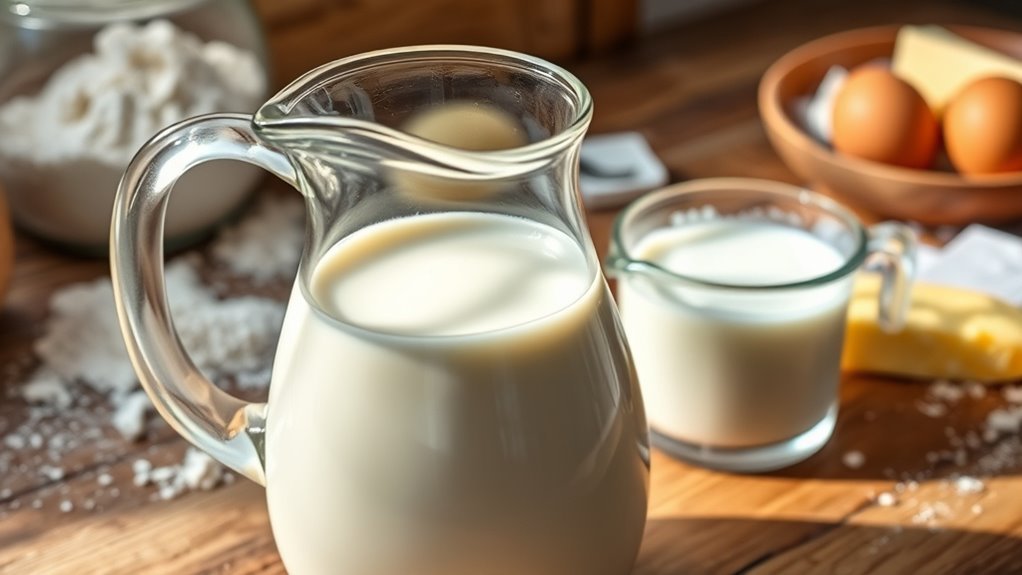
How Can You Substitute Heavy Cream for Milk in Recipes?
Swapping heavy cream for milk in recipes is like trying to fit a square peg in a round hole—it takes a bit of finesse to get it just right. Heavy cream and milk differ significantly in fat content and consistency, which can affect your dish’s texture and flavor. Understanding how to substitute heavy cream for milk effectively is key to maintaining the quality of your recipe.
You might think you can use them interchangeably, but their differences mean you need to make some adjustments. If you’re curious about how to make this substitution work without compromising your dish, keep exploring the key tips and tricks that’ll help you get there.
Understanding the Fat Content Differences Between Heavy Cream and Milk

Although heavy cream and milk might seem similar, their fat content differs drastically, with heavy cream containing about 36-40% milk fat compared to whole milk’s 3-4%. This significant fat content difference means heavy cream adds much more richness and creaminess than milk.
When you choose to substitute heavy cream for milk, you’ll notice the texture and flavor of your dish change because of the higher fat content. Milk’s lower fat level provides a lighter body, so swapping in heavy cream without adjustments can make your recipe denser or richer than intended.
Understanding these fat content variations helps you make smarter substitutions, ensuring your dish maintains the right balance between creaminess and lightness. Always consider fat content before you substitute heavy cream for milk in recipes.
Simple Cream and Water Ratios to Mimic Milk

When you want to substitute heavy cream for milk without sacrificing texture or flavor, mixing it with water is an easy and effective method. By combining equal parts heavy cream and water, you create a liquid with a fat content similar to whole milk.
This 1:1 ratio reduces the richness of the cream while maintaining a consistency close to milk, making it a reliable substitute in most recipes.
If you need to mimic different milk types, simply adjust the water-to-cream ratio: add more water for skim milk or less for 2% milk.
Starting with this simple cream and water ratio gives you control over fat content and ensures your dish turns out just right when you don’t have milk on hand.
Using Evaporated Milk as a Milk Substitute

If you’ve mixed heavy cream and water to mimic milk, you might also consider evaporated milk as a convenient alternative. Evaporated milk is made by removing about 60% of the water from regular milk, leaving a rich, creamy product that’s shelf-stable and ready to use.
When you reconstitute evaporated milk with an equal amount of water, it closely resembles fresh milk in flavor and texture, making it an excellent substitute for heavy cream in many recipes. Its naturally higher fat content provides a richer, creamier taste than regular milk, enhancing your dishes without altering their texture.
Keeping canned evaporated milk on hand ensures you always have a reliable substitute for heavy cream or milk when you need it.
Practical Tips for Adjusting Recipes When Using Heavy Cream
Since heavy cream has a much higher fat content than milk, you’ll want to dilute it with water to replicate milk’s consistency and moisture in your recipes.
A good starting point is mixing heavy cream and water at a 1:1 ratio to mimic whole milk.
Depending on your desired richness, adjust this ratio. Use more heavy cream for a creamier texture or more water for a lighter one.
Keep in mind that substituting heavy cream will make your dish richer and slightly sweeter.
When you adjust the heavy cream and water amounts, also consider reducing other fats or liquids in the recipe to maintain balance.
Effects of Heavy Cream Substitution on Baking and Texture
Although swapping heavy cream for milk boosts fat content, you’ll notice your baked goods turn out richer and denser. Heavy cream adds moisture and tenderness, improving the texture of cakes and muffins. However, the increased fat can weigh down your batter, causing less rise and a heavier final product.
Use heavy cream carefully to maintain balance in baking structure and texture.
| Aspect | Effect of Heavy Cream | Baking Impact |
|---|---|---|
| Texture | More tender and moist | Softer crumb, denser feel |
| Moisture | Higher moisture content | Keeps baked goods moist |
| Rise & Density | Reduced rise, increased density | Heavier, less aerated result |
This substitution enhances texture but may require recipe tweaks for ideal baking results.
Flavor Considerations When Replacing Milk With Cream
When you replace milk with heavy cream, expect your dish to gain a richer, creamier flavor that stands out more prominently. The higher fat content in cream adds extra richness, often introducing a slightly sweeter or buttery note that shifts the overall flavor profile.
This substitution enhances the velvety texture but can sometimes overshadow more delicate flavors, especially in baked goods or beverages. Because of this, balancing the added richness is essential; you might need to adjust seasonings or other ingredients to prevent the dish from becoming too heavy or overly indulgent.
Keep in mind that while cream amplifies flavor intensity, it changes the character of your recipe. Thoughtful balancing will help you make the most of this flavorful substitution without compromising your dish’s original appeal.
Creative Alternatives and Emergency Substitutes for Milk
If you find yourself out of milk, you can still keep your recipe on track by using heavy cream diluted with water as a quick substitute. This mix approximates whole milk well enough for many dishes, including creamy soup.
For emergency substitutes, consider these options:
- Mix half heavy cream with half water to mimic whole milk’s consistency and richness.
- Use evaporated milk diluted with water for a flavor closer to regular milk.
- Reconstitute powdered milk as a reliable pantry backup.
- Try non-dairy alternatives like coconut milk for a different but effective substitute.
These creative alternatives ensure your recipes stay smooth and flavorful, even when milk isn’t available.
Frequently Asked Questions
Can You Substitute Heavy Cream for Milk in a Recipe?
You can substitute heavy cream for milk by diluting it with water, usually half cream and half water. Otherwise, it’ll make your dish too rich and thick, altering texture and flavor considerably.
How to Use Milk if You Don’t Have Heavy Cream?
You’ll notice milk’s 3.25% fat feels lighter than heavy cream’s 36%, so to use milk instead, thicken it with a bit of butter or reduce it gently to boost richness before adding it to your recipe.
How Does Heavy Cream Affect Baking Recipes?
Heavy cream makes your baked goods richer, moister, and denser due to its high fat. It can change texture, slow leavening, intensify flavor, and brown faster, so you’ll need to adjust baking time and temperature accordingly.
How Much Heavy Cream Is Equivalent to 1 Cup of Milk?
You’ll want to mix about 1/4 cup heavy cream with 3/4 cup water to equal 1 cup of milk. This blend mimics milk’s consistency and fat content, perfect for most recipes needing milk.
Conclusion
When you substitute heavy cream for milk, remember that heavy cream contains about 36-40% fat—nearly four times more than whole milk’s 3.5%. Mixing equal parts heavy cream and water helps you mimic milk’s consistency and fat content perfectly.
This simple swap keeps your recipes balanced without sacrificing texture or flavor. So next time you’re out of milk, this easy hack lets you keep cooking without missing a beat! Using heavy cream as a milk substitute is a great trick to maintain the quality of your dishes.