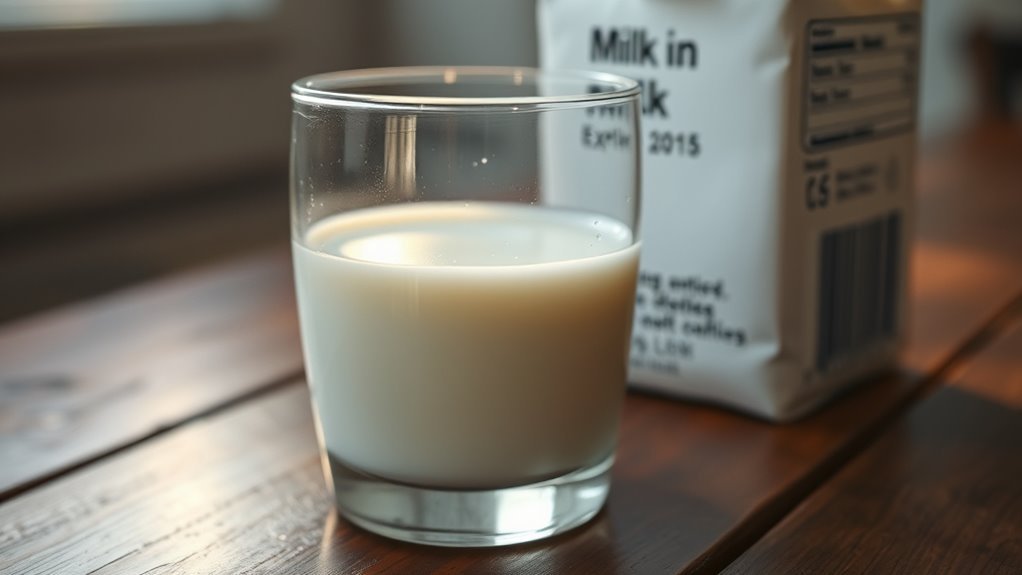
How Long Is Milk Good After the Expiration Date? Safety & Spoilage Guide
You might wonder how long you can safely use milk after its expiration date without risking spoilage or illness. Understanding how long milk is good after the expiration date is important for both safety and reducing waste. Since dates on cartons don’t always tell the full story, it helps to understand what affects milk’s freshness and how to spot when it’s gone bad.
Knowing these details can prevent waste and keep you from drinking something unpleasant—or worse. Let’s explore what really matters when judging milk’s shelf life and how to tell if your milk is still safe to consume.
Understanding Milk Date Labels

Although date labels on milk can guide you, they don’t guarantee safety. The FDA doesn’t regulate most milk date labels like expiration date, best if used by, or sell by, except for infant formula.
Milk date labels guide freshness but aren’t regulated by the FDA, so they don’t ensure safety.
“Best if used by” tells you when milk is at peak quality, but it doesn’t mean the milk is unsafe after that date. The “sell by” date helps stores manage inventory, not whether the milk is still good for you.
To guarantee food safety and avoid spoilage, rely more on your senses—smell, look, and taste—than on these labels alone.
Understanding milk date labels helps you avoid wasting milk unnecessarily while still protecting yourself from drinking spoiled milk.
Factors Influencing Milk Shelf Life

When you store milk properly at temperatures between 36-38°F (2-3°C), you can often extend its freshness beyond the printed expiration date. Several factors affect milk’s shelf life and how quickly it turns into spoiled milk.
Your refrigeration quality plays a key role, as does how you handle the container. Unopened milk usually lasts longer than opened milk, but storage conditions can speed up spoilage.
Consider these points to keep milk fresh:
- Temperature stability in your refrigerator
- Whether the milk is opened or unopened milk
- Exposure to light and air
- Type of milk (pasteurized vs. UHT)
- Container size and sealing quality
Typical Duration Milk Remains Safe After Expiration

Understanding how long milk stays safe after the expiration date depends largely on how well you’ve stored it. Unopened milk typically lasts 5 to 7 days beyond the expiration date if kept at the right temperature.
Once opened, milk usually remains safe to drink for about 2 to 3 days past that date, but this varies with storage conditions.
Since the expiration date mainly signals quality, you should rely on signs of spoilage like sour smell, off taste, or curdling rather than the date alone.
If you notice spoiled milk, discard it immediately to avoid health risks.
How to Properly Store Milk for Maximum Freshness
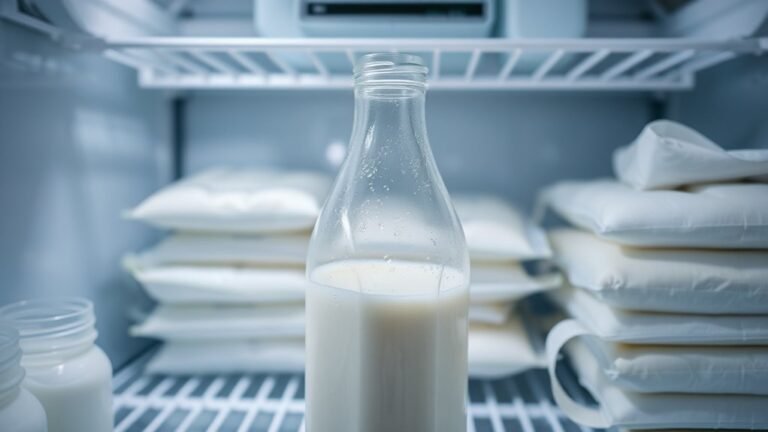
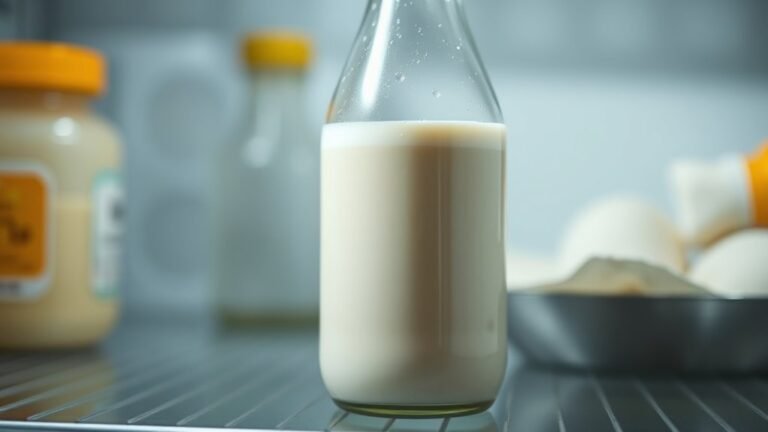
To keep your milk fresh as long as possible, store it in the coldest part of your fridge, ideally between 36°F and 38°F. Properly storing milk slows bacterial growth and helps maintain milk freshness.
Store milk at 36°F to 38°F in the coldest fridge area to keep it fresh longer.
Avoid the fridge door, where refrigerator temperature fluctuates, risking spoilage.
Always seal milk carton tightly after each use to prevent contamination. Pay attention to the expiration date and avoid leaving milk out at room temperature for too long, as this can lead to foodborne illness.
Store milk immediately after purchase in the coldest fridge section. Maintain consistent refrigerator temperature between 36°F and 38°F. Seal milk carton securely to block air and bacteria.
Don’t leave milk out over 2 hours (1 hour if above 90°F). Freeze unused milk in airtight containers before expiration date for up to 3 months.
Identifying Signs of Spoiled Milk
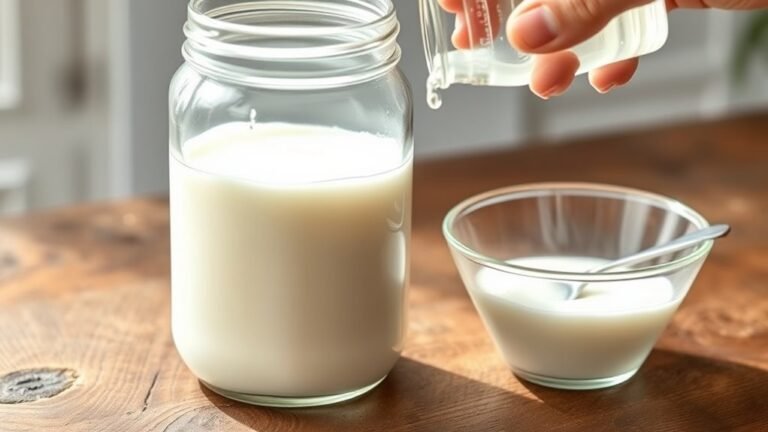
Proper storage helps extend milk’s freshness, but you still need to recognize when it has gone bad. The most reliable signs of spoilage include a sour smell and noticeable changes in texture.
If your milk develops a lumpy or curdled texture, it’s a clear warning that it’s no longer safe to consume.
Color changes, like a yellowish tint, also indicate spoilage.
Always check the odor and appearance before drinking, regardless of the expiration date.
Visible clumping or separation of curds and whey are definite signs of curdled milk.
Trust your senses: if the milk smells off or looks unusual, it’s best to discard it to avoid any health risks associated with spoiled milk.
The Role of Refrigerator Temperature in Milk Preservation
Since milk is highly perishable, keeping your refrigerator temperature between 36°F and 38°F is essential to slow bacterial growth and extend its freshness. Proper storage conditions help minimize milk spoilage and reduce the risk of foodborne illnesses.
Keeping your fridge between 36°F and 38°F slows bacterial growth and keeps milk fresh longer.
Avoid storing milk in the fridge door, where temperature fluctuations are common due to frequent openings. Even slight increases above 40°F can accelerate spoilage and compromise food safety.
Using a refrigerator thermometer lets you monitor and maintain the ideal temperature consistently.
- Maintain refrigerator temperature between 36°F and 38°F
- Store milk in the main body, not the door
- Avoid frequent fridge door openings to prevent temperature fluctuations
- Use a thermometer to ensure stable storage conditions
- Keep fridge settings consistent to prevent milk spoilage and foodborne illnesses
Myths About Milk Use By and Best Before Dates
Although expiration dates on milk cartons serve as important guidelines, many people misunderstand what “use by” and “best before” actually mean, leading them to toss milk prematurely.
The “use by” date signals when milk should ideally be consumed for safety, but it doesn’t mean milk instantly becomes unsafe afterward.
Likewise, the best before date focuses on quality, not safety, so milk can still be good beyond this point.
Instead of relying solely on expiration dates, you should perform a safety assessment by checking the milk’s smell and taste.
This helps you avoid throwing away perfectly fine milk and reduces food waste.
Effects of Drinking Spoiled Milk
Trusting your senses to judge milk’s freshness helps prevent unnecessary waste, but sometimes milk can still spoil unnoticed. Drinking small amounts of spoiled milk usually won’t cause serious issues, but if you consume larger quantities, you risk food poisoning.
Spoiled milk can harbor harmful bacteria like Salmonella, E. coli, and Listeria that cause foodborne illness. Watch for illness symptoms such as nausea, vomiting, diarrhea, stomach cramps, dehydration, and fever.
If these symptoms persist or worsen, seek medical attention promptly.
- Small amounts rarely cause harm
- Larger quantities increase risk of food poisoning
- Harmful bacteria thrive in spoiled milk
- Illness symptoms range from mild to severe
- Prompt care needed for severe or lasting symptoms

Tips for Extending Milk Freshness at Home
To keep your milk fresh longer, you need to store it properly and handle it with care. Always store your milk in the coldest part of the fridge, ideally between 36°F and 40°F, where milk generally stays good the longest. Avoid keeping milk in the fridge door, as frequent temperature changes can speed spoilage.
Store milk in the coldest fridge spot (36°F–40°F) to keep it fresh longer; avoid the fridge door.
Make sure to seal the carton tightly after each use to keep your milk free from contamination. Also, keep the refrigerator door closed as much as possible to maintain a consistent temperature.
If you won’t consume milk before it expires, consider freezing it in airtight containers.
Don’t forget to regularly check for signs of spoilage, like sour smell or curdling, to guarantee your milk stays good and safe to drink.
Differences Between Pasteurized, UHT, and Raw Milk Shelf Life
Knowing how to store milk properly helps you get the most out of its shelf life, but the type of milk you buy also plays a big role in how long it stays good. Pasteurized milk usually lasts 5-7 days beyond the expiration date if refrigerated well.
UHT milk, thanks to ultra-high temperature processing, stays shelf-stable unopened for 2-4 weeks and 7-10 days once opened.
Raw milk has the shortest shelf life, about 2-3 days past the expiration date, since it’s unpasteurized.
- Pasteurized milk needs constant refrigeration at 36-40°F for best shelf life
- UHT milk can be stored at room temperature until opened
- Raw milk spoils faster due to natural bacteria
- Always check smell and appearance before use
- Storage conditions dramatically affect milk safety beyond expiration dates
Frequently Asked Questions
How Long Will Milk Last in the Fridge?
Milk lasts about 5 to 7 days unopened in the fridge, but once you open it, you should use it within 2 to 3 days.
Always check for sour smell or curdling to be safe.
How to Tell if Milk Is Bad?
You can tell milk’s bad if it smells sour, looks yellowish, or has a lumpy texture.
If you taste it and it’s off, or if it’s been out over two hours, toss it immediately.
How to Tell if Milk Is Still Good After the Expiration Date?
Think of milk as a ticking clock; if it smells fresh, looks smooth, and tastes normal, you’re safe to use it past the date.
Trust your senses; they’re the true guardians of freshness, not just numbers.
Conclusion
You can often enjoy milk safely for up to a week past the expiration date if it’s been properly refrigerated. For example, imagine you find a carton dated three days ago—if it smells fresh and looks normal, it’s likely still good. Just remember to always trust your senses over the date.
By storing milk cold and checking for sourness or curdling, you’ll avoid waste and stay safe while enjoying your milk. Knowing how long milk is good after the expiration date helps you make informed decisions and prevent unnecessary disposal. Always inspect milk carefully to ensure freshness and safety.