How You Can Make Mashed Potatoes Without Milk in 7 Easy Steps
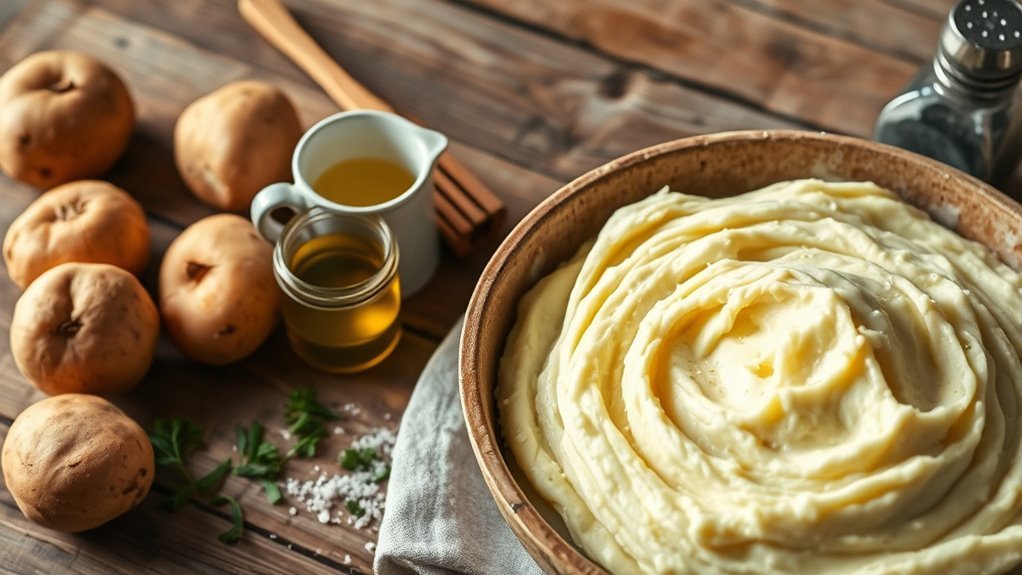
You can make creamy mashed potatoes without milk by choosing starchy potatoes like Russet or Yukon Gold. These varieties give you that perfect fluffy texture we all love. Peel and cut them evenly, then boil in salted water until tender.
Don’t forget to reserve some cooking water before draining. It’s a great trick to keep your mash nice and smooth. Then, mash potatoes gently with dairy-free butter and plant-based milk like oat or soy.
Adjust the texture using the reserved water as needed. Season with your favorite herbs and spices to add extra flavor.
Store leftovers properly and reheat gently to keep them smooth and delicious.
Keep exploring for more tips on flavor boosts and troubleshooting. You’ve got this—dairy-free mashed potatoes can be just as tasty and creamy!
Key Takeaways
- Choose high-starch potatoes like Russet or Yukon Gold for a fluffy, creamy texture without milk. These types work best to get that classic mashed potato feel.
- Boil peeled or scrubbed potatoes that are evenly cut in salted cold water until they’re fork-tender. This helps them cook evenly and get soft enough for mashing.
- Reserve some of the cooking water, then mash the potatoes gently. Add the reserved water little by little to adjust the consistency until it’s just right.
- Use dairy-free fats like vegan butter or olive oil to add richness. You can also stir in unsweetened plant-based milks to make it creamier.
- Season with salt, pepper, and herbs to taste. For extra flavor, try adding nutritional yeast or roasted garlic—it really takes the mashed potatoes up a notch.
Best Potatoes for Creamy Mash Without Milk
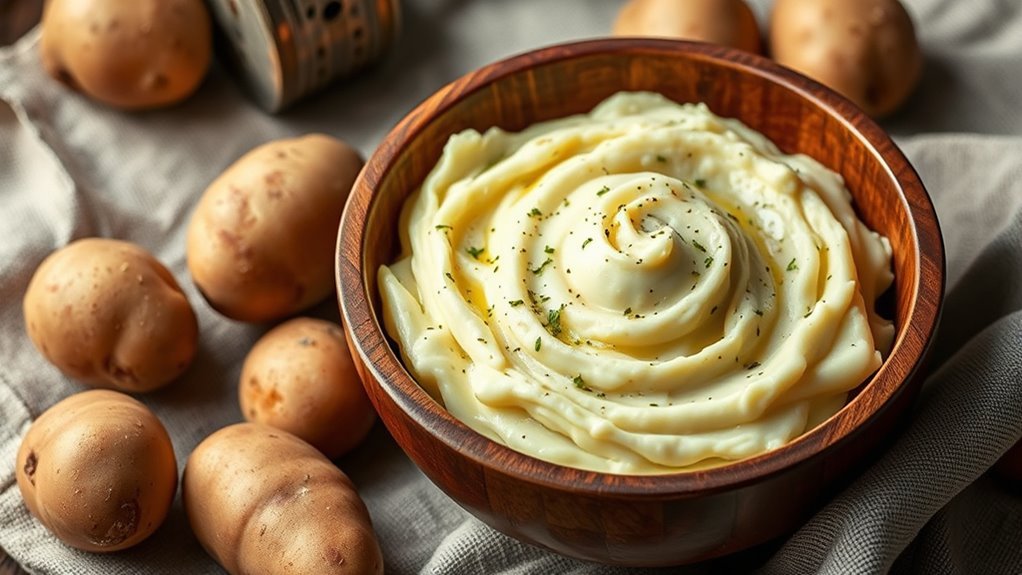
When you want creamy mashed potatoes without milk, choosing the right potato is key. For a dairy-free option, go for high-starch varieties that break down easily, creating a smooth, fluffy texture.
Yukon Gold potatoes are a popular choice because they naturally yield a buttery, creamy mash without needing extra fats. Russet potatoes, known for their high starch content, are another excellent option—they give you that classic light, airy consistency.
Yukon Gold and Russet potatoes deliver naturally creamy, buttery mashed potatoes without added fats.
Avoid waxy potatoes like red or new potatoes since they can turn gluey and dense when mashed. Starchy types like King Edward or Adretta also work well, ensuring your mash stays silky without milk.
Picking the right potatoes sets a solid foundation for perfectly creamy, dairy-free mashed potatoes every time.
Preparing Potatoes for Mashing
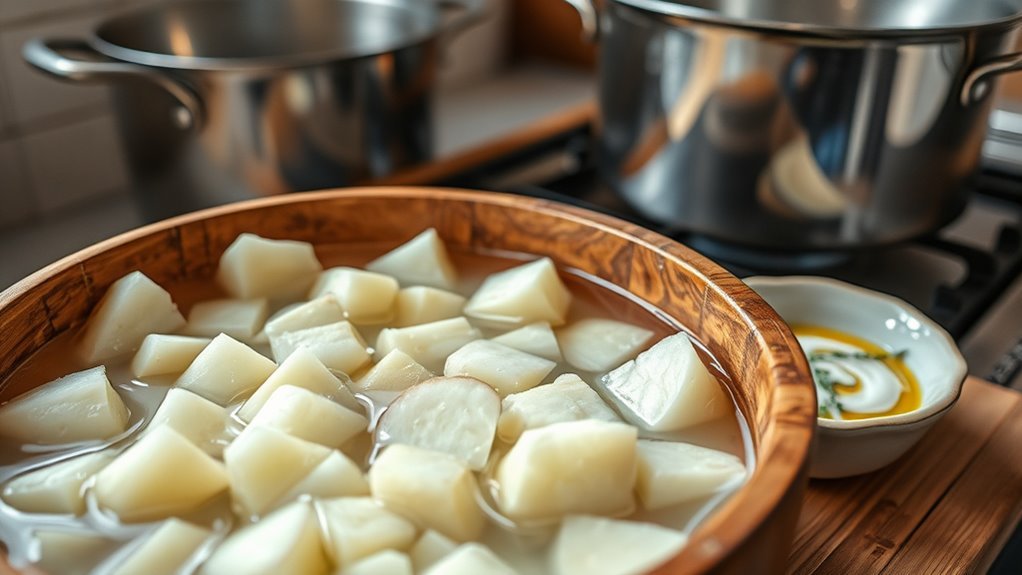
Start by choosing the right potato variety to get the texture you want. Make sure to wash and peel them thoroughly—or leave the skins on if you prefer extra texture and nutrients.
Then, cut the potatoes into even chunks so they cook evenly and mash smoothly. Easy, right? This helps everything cook at the same pace, making your mash perfectly creamy.
Selecting Potato Varieties
Which potato variety you choose can make all the difference in your mashed potatoes’ texture. For fluffy results, go for starchy potatoes like Russet or King Edward.
Yukon Gold offers a slightly creamier texture thanks to its medium starch content. Avoid waxy varieties if you want light, airy mash.
| Variety | Starch Level | Best For |
|---|---|---|
| Russet | High | Light, fluffy mash |
| Yukon Gold | Medium | Creamy, smooth texture |
| King Edward | High | Classic fluffy mash |
| Red Potato | Low | Denser, creamier mash |
| Fingerling | Low | Rustic, textured mash |
Choosing the right starchy potato varieties sets a solid foundation for perfect mashed potatoes without milk. It really makes all the difference!
Washing And Peeling
Although peeling potatoes is optional, you’ll want to rinse them thoroughly under cold water to remove dirt and impurities before cooking. Proper washing is essential, especially if you plan to leave the skins on, as they add texture and nutrients to your mashed potatoes.
Use a vegetable scrubber or brush to clean the surface well, particularly for organic or unwashed potatoes. If you decide to peel, grab a sharp vegetable peeler to remove the skin evenly and safely.
Peeling can give your mashed potatoes a smoother texture, but keeping the skins adds flavor and fiber. Either way, thorough washing and careful peeling prepare your potatoes perfectly for the next step in making delicious mashed potatoes without milk.
Cutting And Size
A key step in preparing potatoes for mashing is cutting them into evenly sized chunks, about 3 cm (1 inch) each. This uniform size guarantees the potatoes cook evenly, avoiding some pieces becoming mushy while others stay firm.
Before cutting, make sure you rinse and scrub your potatoes thoroughly to remove any dirt. If you prefer, peel them with a sharp knife, but leaving the skins on adds extra texture and nutrients.
After cutting, place the potato chunks in a large pot and cover them with cold water, making certain at least an inch of water sits above the potatoes. Don’t forget to salt the water generously—it enhances flavor and helps the potatoes cook evenly.
Proper cutting and size are crucial for perfect mashed potatoes without milk. It really makes all the difference!
Making Mashed Potatoes Without Milk: Step-by-Step
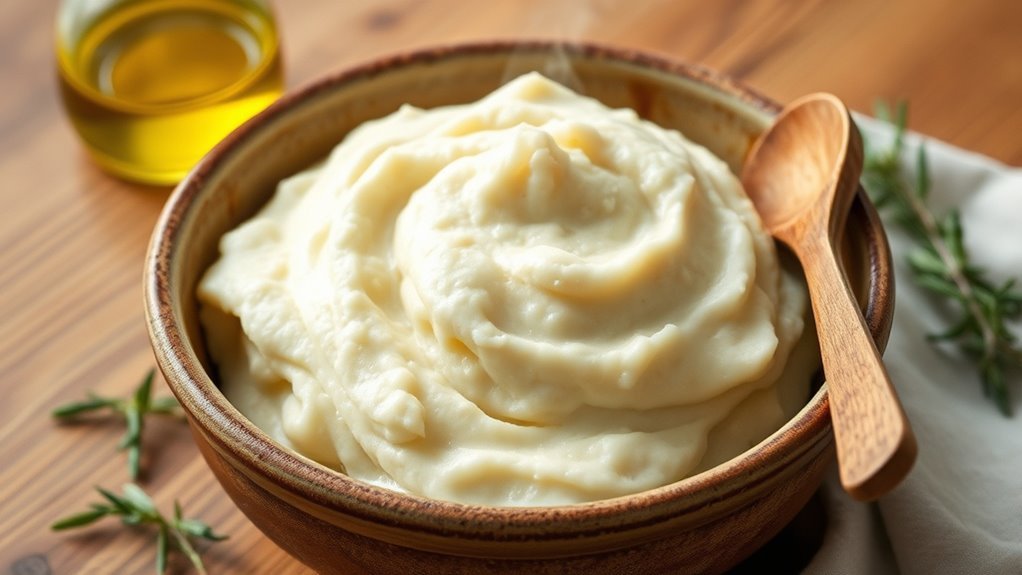
When you want creamy mashed potatoes without using milk, start by boiling peeled or unpeeled potatoes in salted water until they’re fork-tender. This usually takes about 15 to 20 minutes. Don’t forget to reserve 150ml of the cooking water before you drain the potatoes.
Next, mash the warm potatoes, adding the reserved water gradually. You can toss in some butter or dairy-free alternatives as you go. Season with salt and pepper, and be sure to taste as you mix—it makes all the difference.
For an extra boost of flavor in your dairy-free or vegan mashed potatoes, add garlic or herbs. The cooking water helps keep everything nice and creamy, so don’t skip it.
| Step | Action | Tip |
|---|---|---|
| Boil | Cook potatoes in salted water | Peel or leave skin on |
| Mash | Add reserved cooking water | Mash while warm for smoothness |
| Season & Serve | Salt, pepper, herbs | Taste and adjust for perfect flavor |
This mashed potato recipe is simple and dairy-free!
Milk Alternatives for Creamy Mashed Potatoes
You can use plant-based milks like almond, oat, or soy to keep your mashed potatoes creamy without dairy. Unsweetened options work best since they won’t overpower the flavor.
Also, don’t overlook the cooking water—it adds moisture and helps achieve the perfect texture. It’s a simple trick that really makes a difference!
Dairy-Free Milk Options
Although traditional mashed potatoes call for dairy milk, you can easily achieve a creamy texture using various dairy-free alternatives. Choosing the right dairy-free milk helps you maintain that rich, smooth feel without compromising flavor.
Unsweetened plant-based alternatives like almond, soy, coconut, oat, and rice milk each offer unique creaminess and nutritional benefits. Soy and oat milk are great for creamy texture due to their higher protein and fat content.
Coconut milk adds a richer taste with its natural fats. Always pick unsweetened versions to keep your mashed potatoes savory.
| Dairy-Free Milk | Creamy Texture & Flavor |
|---|---|
| Almond Milk | Light, slightly nutty |
| Soy Milk | Creamy, protein-rich |
| Coconut Milk | Rich, tropical, high fat |
| Oat Milk | Smooth, mildly sweet |
| Rice Milk | Thin, mild flavor |
Cooking Water Benefits
Plant-based milk alternatives offer great options for creamy mashed potatoes, but there’s another ingredient you might overlook: the cooking water from your potatoes. This water contains starch released during boiling, which naturally thickens your mash, giving it a smooth, creamy texture without any dairy.
Using cooking water enhances the flavor, too—it carries the earthy taste of the potatoes, making your dish richer and more authentic. Plus, it’s a budget-friendly, dairy-free choice that reduces the need for added milk or plant-based substitutes.
Seasoning Mashed Potatoes Without Milk
When seasoning mashed potatoes without milk, adding salt and pepper during mashing brings out their natural flavor. You can enhance your vegan mashed potatoes by mixing in herbs like chives, rosemary, or thyme to add depth without dairy.
For a savory kick, try garlic powder, roasted garlic, or nutritional yeast—these non-dairy options boost flavor while keeping your dish vegan-friendly. Don’t forget to taste and adjust seasoning before serving, especially if you’re using reserved cooking water as the base.
To customize the flavor further, sprinkle in paprika, cayenne pepper, or drizzle vegan gravy. With these seasoning tips, you’ll create mashed potatoes bursting with rich, satisfying flavor, all without relying on milk or other dairy ingredients.
Storing and Reheating Mashed Potatoes Without Milk
To keep your mashed potatoes fresh, store any leftovers in an airtight container and place it in the refrigerator for up to three days. This helps preserve the flavor and texture of your dairy-free mashed potatoes.
When reheating leftover mashed potatoes, add a splash of water, broth, or dairy-free milk to keep them moist and prevent dryness. You can reheat them in the microwave at medium power, heating in 30-second intervals and stirring in between for even warmth.
For larger amounts, the oven works best—just cover the potatoes with foil and bake at 350°F for 15-20 minutes. Avoid freezing leftover mashed potatoes, as this can change their texture and make them grainy once thawed.
Proper storage and reheating keep your dairy-free mashed potatoes delicious and ready to enjoy. Easy, right?
Customizing and Troubleshooting Mashed Potatoes Without Milk
Although skipping milk might seem to limit your mashed potato options, you can easily customize the dish to suit your taste and fix common issues. If your mashed potatoes turn out too thick or dry, gradually add reserved cooking water or vegetable broth while mashing to reach a creamy consistency.
Mix in dairy-free butter or olive oil for richness without making the texture watery. To boost flavor, try roasted garlic, fresh herbs like chives or rosemary, or nutritional yeast.
When troubleshooting, avoid over-mixing to prevent gluey potatoes—use a ricer or fork and mash gently. Leaving the skins on adds texture and nutrients but scrub them well beforehand.
These tips help you enjoy perfect, dairy-free mashed potatoes every time. Give them a try and see how easy it is to make your mashed potatoes just the way you like!
Frequently Asked Questions
Can I Make My Mashed Potatoes Without Milk?
Yes, you can make mashed potatoes without milk by using reserved cooking water, broth, or dairy-free milk alternatives. Adding olive oil, vegan butter, or herbs helps create a creamy, flavorful dish that suits dairy-free diets perfectly.
What Can I Use Instead of Milk in Mashed Potatoes?
Of course, you simply must use milk—unless you prefer potato water, broth, non-dairy milks, or olive oil. These surprisingly tasty swaps keep your mashed potatoes creamy without the dairy drama you never wanted anyway.
Can I Make Mashed Potatoes With Just Butter?
Yes, you can make mashed potatoes with just butter. Melt it and gradually mix into hot potatoes, mashing thoroughly. For a lighter texture, add some reserved cooking water while blending for a rich, flavorful result.
Can I Use Water Instead of Milk for Mashed Potatoes?
You can think of water as a humble river shaping the land—yes, you can use it instead of milk for mashed potatoes. It keeps them moist, though adding reserved potato water or broth enriches that simple flow with flavor.
Conclusion
Now that you know how to make mashed potatoes without milk, you might wonder if skipping dairy really affects creaminess. Surprisingly, using alternatives like broth or olive oil can create just as smooth and flavorful mash.
So, don’t stress if you’re out of milk or avoiding it—you can still enjoy rich, comforting mashed potatoes. Experiment with seasonings and textures, and you’ll find your perfect dairy-free recipe in no time!
Making mashed potatoes without milk is easier than you think. By using simple ingredients like vegetable broth, olive oil, or even coconut milk, you keep your mash creamy and delicious. Plus, these alternatives add unique flavors that can make your dish stand out.
Whether you’re lactose intolerant, vegan, or just out of milk, this method lets you enjoy classic mashed potatoes without missing the dairy. Give it a try, and you’ll see how easy and tasty dairy-free mashed potatoes can be!