How Long Can Breast Milk Stay at Room Temp?
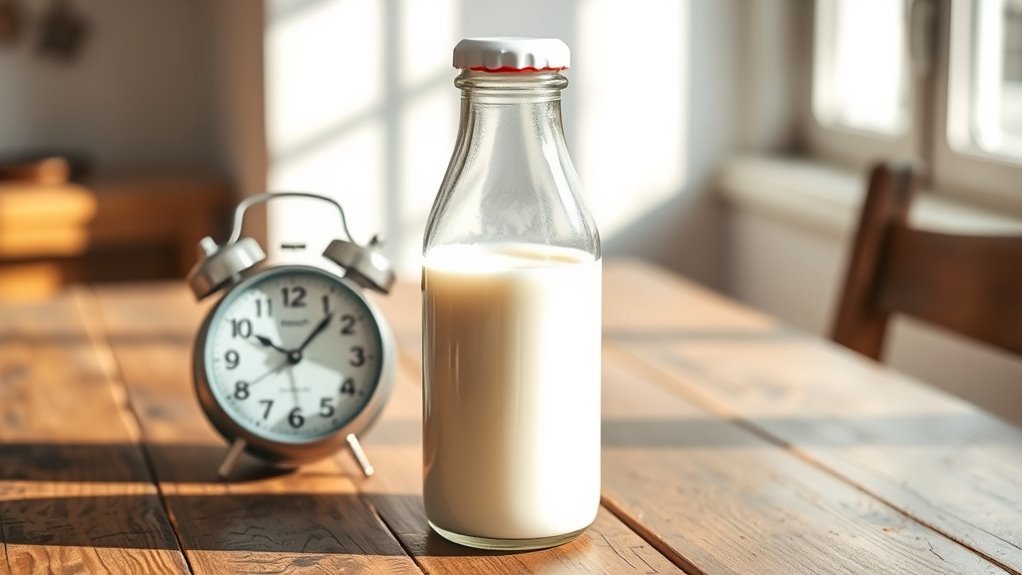
You can keep breast milk safely at room temperature (77°F or cooler) for up to four hours before you need to refrigerate or use it. This is important because breast milk can spoil if left out too long, which might not be safe for your baby.
If you express milk under very clean conditions, it might last a bit longer—around 6 to 8 hours—but it’s best not to take risks.
Leaving milk out longer increases bacterial growth and contamination, so always discard milk past the safe time.
To guarantee your milk stays fresh and safe, there are important handling and storage tips you’ll want to know. Following these guidelines helps ensure your baby gets the best nutrition without any worry.
Key Takeaways
- Breast milk is safe at room temperature (77°F or cooler) for up to 4 hours after expression.
- You can store it a bit longer, around 6-8 hours, but only if it was expressed under very clean conditions.
- Keep in mind, temperatures above 77°F will reduce how long the milk stays safe and can increase the risk of bacterial growth.
- If breast milk has been left out for more than 4 hours, it’s best to toss it to avoid contamination and any health risks.
- Always use clean, BPA-free containers with tight lids to keep the milk safe when storing it at room temperature.
How Long Can Breast Milk Safely Stay at Room Temperature?
Although breast milk can stay safe at room temperature for a short time, you should use or refrigerate it within 4 hours. When you express milk, keeping it at room temperature—77°F or cooler—is vital for safe storage.
If the temperature rises, the storage time shortens, increasing the risk of bacterial growth. Even with very cleanly expressed milk, it’s best not to exceed 4 to 6 hours before refrigerating or using it.
If you leave baby bottles of expressed milk out longer than 4 hours, you should discard them to avoid potential contamination. To protect your baby’s health, always monitor the temperature and storage time carefully, and refrigerate expressed milk promptly to guarantee safety.
How to Safely Store and Handle Breast Milk at Room Temperature
When you express breast milk, storing and handling it properly at room temperature is vital to keep it safe for your baby. Always use clean, BPA-free storage containers with tight-fitting lids to store expressed milk. This helps minimize bacterial growth during breast milk storage.
Keep the milk at room temperature (77°F or colder) and follow the recommended storage duration: up to 4 hours under normal conditions, or up to 6-8 hours if expressed under very clean conditions. Avoid leaving milk out longer, as this increases contamination risk.
If you notice milk has been left out beyond the safe storage duration, discard it immediately to ensure your baby’s health. Practicing safe handling and proper storage guarantees your expressed milk stays fresh and safe at room temperature.
Frequently Asked Questions
What Is the 2 Hour Rule for Breast Milk?
The 2-hour rule means you shouldn’t leave freshly expressed breast milk at room temperature longer than two hours. After that, bacteria can grow, so you need to refrigerate or use it within that timeframe to keep it safe.
What Happens to Breastmilk After 4 Hours?
After 4 hours at room temperature, breast milk’s bacterial risk rises sharply, so you shouldn’t use it. Nutrients like vitamin C start breaking down too, meaning leftover milk loses quality and safety quickly. Don’t risk it!
How Long Can Breast Milk Last After Taking Out From the Fridge?
You can keep breast milk out for up to 2 hours after taking it from the fridge. If the room is warmer than 77°F, use it within 1 hour to keep it safe and fresh for your baby.
What Is the 3-3-3 Rule for Breast Milk?
You might think it’s complicated, but the 3-3-3 rule is simple: breast milk stays safe 3 hours at room temp, 3 days refrigerated, and 3 months frozen. Follow this, and you’ll protect your baby every time.
Conclusion
You can safely keep breast milk at room temperature for up to four hours, which is about the length of a typical movie.
Imagine your milk staying fresh and nourishing your baby throughout that time without losing its precious nutrients. By handling and storing it properly, you’re ensuring your little one gets the best.
Just remember, if it’s been longer than four hours, it’s best to toss it out to keep your baby safe and healthy. Proper storage and timely use are key to maintaining the quality of breast milk. So, when in doubt, it’s always safer to discard breast milk that’s been left out too long to protect your baby’s health and wellbeing.