How Much Milk Should a 1-Year-Old Drink? Complete Guide for Parents
Imagine your toddler finishing a 20-ounce bottle of milk daily, but still seeming unusually tired and pale. How much milk should a 1 year old drink to support their health and development? You might wonder if that amount is helping or harming their health.
Understanding how much milk a 1-year-old truly needs can make a big difference in their growth and nutrition. There’s more to contemplate than just quantity—like the type of milk and how it fits into their overall diet.
Recommended Daily Milk Intake for 1-Year-Olds

Although every child is different, a 1-year-old should typically drink about 16 to 24 ounces of milk daily to support healthy bone development. This recommended intake provides the calcium and vitamin D needed for healthy growth.
A 1-year-old typically needs 16 to 24 ounces of milk daily for healthy bone growth.
You’ll want to offer milk in divided servings throughout the day, such as during meals and snacks, to make it easier for your little one to consume.
Keep in mind that milk should complement solid foods, not replace them, ensuring a balanced diet.
Drinking more than 24 ounces of milk daily can interfere with iron absorption, increasing the risk of anemia.
Benefits of Whole Milk for Toddlers

Besides managing how much milk your 1-year-old drinks, choosing the right type of milk plays a big role in their growth. Whole milk is ideal for toddlers because it provides essential fats that support brain development.
With about 3.25% fat, it meets the higher energy needs of 1-year-olds, helping fuel their active day and promote healthy weight gain. Whole milk is also rich in calcium and vitamin D, nutrients *crucial* for building strong bones during early childhood.
The American Academy of Pediatrics recommends whole milk until age 2 to *ensure* toddlers get enough fat intake for proper growth.
Transitioning From Bottle to Cup

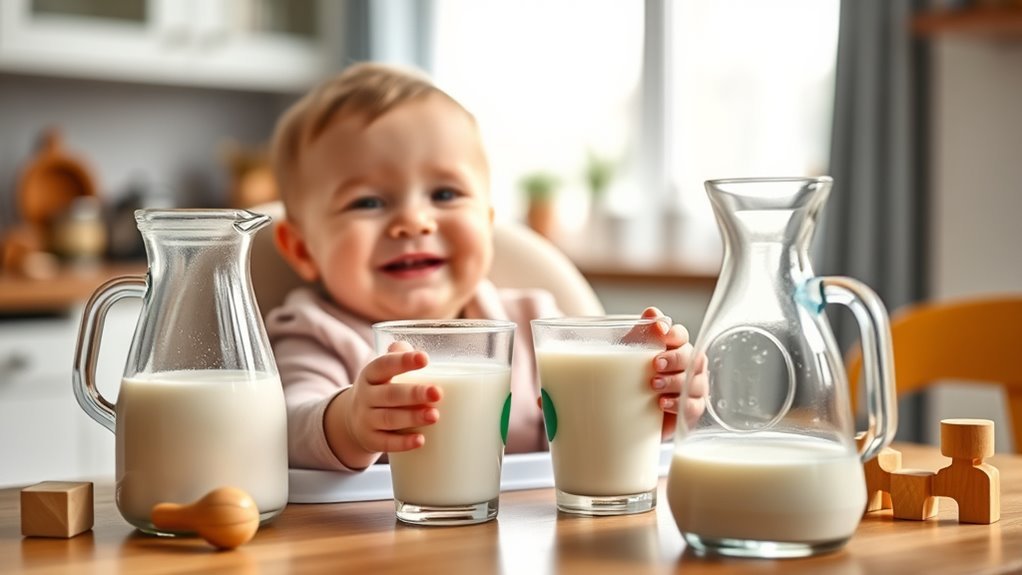
When your child turns one, you should start shifting them from a bottle to a cup by offering small amounts of milk in a sippy cup during meals. This gradual change helps develop independent drinking skills and supports oral development.
Aim to complete the switch by 18 months to reduce the risk of tooth decay and promote good oral hygiene. Limit bottle use after 12 months to avoid prolonged exposure to sugary liquids.
Encourage consistent practice with the cup to establish healthy drinking habits.
| Stage | Focus | Benefit |
|---|---|---|
| 12-15 months | Introduce sippy cup | Develops oral muscles |
| 15-18 months | Reduce bottle use | Prevents tooth decay |
| 18+ months | Full cup transition | Supports oral hygiene & habits |
Preventing Iron Deficiency and Balanced Nutrition
Since milk provides essential nutrients but can also hinder iron absorption if consumed excessively, you should limit your 1-year-old’s milk intake to 16-24 ounces (480-720 mL) per day to help prevent iron deficiency.
Limit your 1-year-old’s milk to 16-24 ounces daily to support healthy iron levels.
Drinking too much milk can lead to anemia by interfering with iron absorption, so balancing milk intake with iron-rich foods like meat, beans, and fortified cereals is vital. Introducing a variety of these foods supports balanced nutrition and healthy weight.
Keep an eye on your child’s dietary habits and consult your pediatrician regularly to monitor iron levels. If needed, supplementation might be recommended to avoid iron deficiency.
Managing milk intake alongside iron-rich foods ensures your toddler grows strong without risking anemia or other nutritional gaps.
Guidelines for Milk Consumption Beyond Age One
Although your child’s milk needs will change as they grow, maintaining appropriate milk consumption remains essential beyond age one.
At age 1, the recommended milk intake is about 16 to 24 ounces daily, ideally whole milk to support brain development.
It’s important to encourage the *shift* to cups instead of bottles to promote healthy oral habits.
Be cautious of excess milk, as drinking more than 24 ounces can hinder iron absorption and potentially cause anemia.
After age 2, you can switch to lower-fat milk options like 2% or skim, following age-specific guidelines and your child’s health needs. Sticking to recommended servings helps ensure your child gets necessary nutrients without compromising iron levels or oral health.
Frequently Asked Questions
How Much Milk Should a 1 Year Old Drink a Day?
You should give your 1-year-old about 16 to 24 ounces of milk daily. Don’t exceed this, as too much milk can reduce iron absorption.
Make sure milk complements solid foods for balanced nutrition.
How Many Bottles Should a 1 Year Old Have?
You should give your 1-year-old 1 to 2 bottles daily, gradually shifting to sippy cups. Keep bottle feedings limited to encourage healthy habits and reduce risks like tooth decay and iron deficiency.
How Many Milk Feedings for a 12 Month Old?
You should offer your 12-month-old 2 to 3 milk feedings daily, totaling about 16-24 ounces. Use whole milk and a cup to encourage oral skills, adjusting feedings as solid foods increase.
Conclusion
You’ll want to wisely watch your 1-year-old’s milk intake, aiming for 16 to 24 ounces daily to support strong bones and bright brains. By balancing bold, beneficial whole milk with a bounty of balanced bites, you’ll beat the risk of iron deficiency.
Switching from bottles to cups smoothly shapes healthy habits, setting the stage for smart sipping and solid snacks. Keep consistency and care at the core of your child’s growing, glowing routine.
Remember, how much milk should a 1 year old drink is key to their health. Maintaining the right milk intake alongside nutritious foods helps ensure your toddler thrives.