How You Can Use Evaporated Milk Instead of Milk
You can easily use evaporated milk instead of regular milk by mixing equal parts evaporated milk and water to match the consistency and flavor. This substitution works great in baked goods, sauces, and soups where a richer texture is welcome.
Just be mindful that evaporated milk has a slightly caramelized taste and thickens faster, so adjust cooking times accordingly.
If you want to get the best results and avoid common pitfalls, there’s plenty more to discover about its uses and tips.
Understanding the Differences Between Evaporated Milk and Regular Milk

Although evaporated milk and regular milk come from the same source, they differ considerably in processing and composition. You’ll notice evaporated milk is heated to remove about 60% of its water content. This concentrates the milk, giving it a thicker texture and a slightly caramelized flavor.
Unlike regular milk, evaporated milk is canned and shelf-stable, so you don’t need to refrigerate it until opened. It also contains less water, which means it has a richer taste and creamier consistency.
Regular milk, on the other hand, is fresh, with a lighter flavor and thinner texture. When you understand these differences, you can better appreciate why evaporated milk behaves uniquely in cooking and baking, offering richness without the fat content of cream.
How to Substitute Evaporated Milk for Milk in Recipes

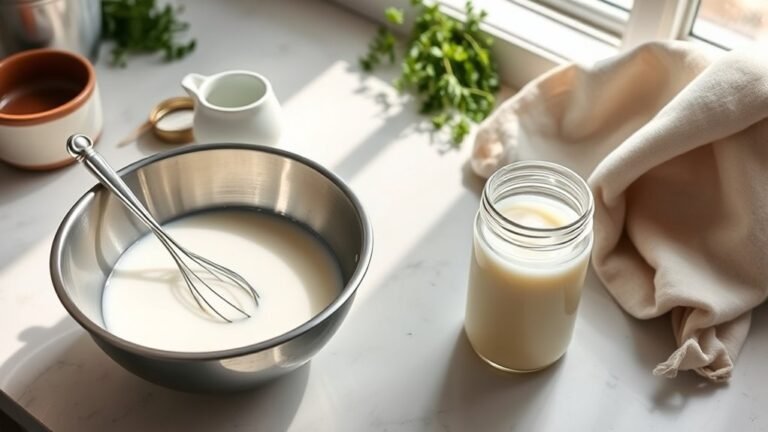
You can easily substitute evaporated milk for regular milk in most recipes by adjusting the amount of water added. Since evaporated milk is concentrated, mix equal parts evaporated milk and water to create a milk-like consistency.
For example, if a recipe calls for 1 cup of milk, combine ½ cup evaporated milk with ½ cup water. This works well for baked goods, sauces, and soups.
Simply measure the evaporated milk and water separately before mixing them together to ensure accuracy.
Avoid using undiluted evaporated milk unless the recipe specifically requires a thicker texture or richer flavor.
Adjusting Recipes for Texture and Flavor When Using Evaporated Milk

When you use evaporated milk in place of regular milk, you’ll need to adjust recipes to maintain the desired texture and flavor. Evaporated milk is thicker and has a slightly caramelized taste, so thinning it with water or balancing sweetness is key.
Here’s a quick guide to help you adjust:
| Adjustment Aspect | Tip |
|---|---|
| Texture | Mix evaporated milk with equal parts water |
| Flavor | Add a pinch of sugar if recipe is sweet |
| Cooking Time | Reduce slightly, as evaporated milk thickens faster |
Best Types of Dishes to Use Evaporated Milk In
Since evaporated milk has a richer texture and a slightly caramelized flavor, it works best in recipes that benefit from added creaminess and depth. You’ll find it perfect for creamy soups, sauces, and casseroles where a smooth, velvety consistency enhances the dish.
It’s also great in baked goods like cakes and custards, adding moisture and richness without thinning the batter. When making mashed potatoes or macaroni and cheese, evaporated milk boosts creaminess without overpowering the flavor.
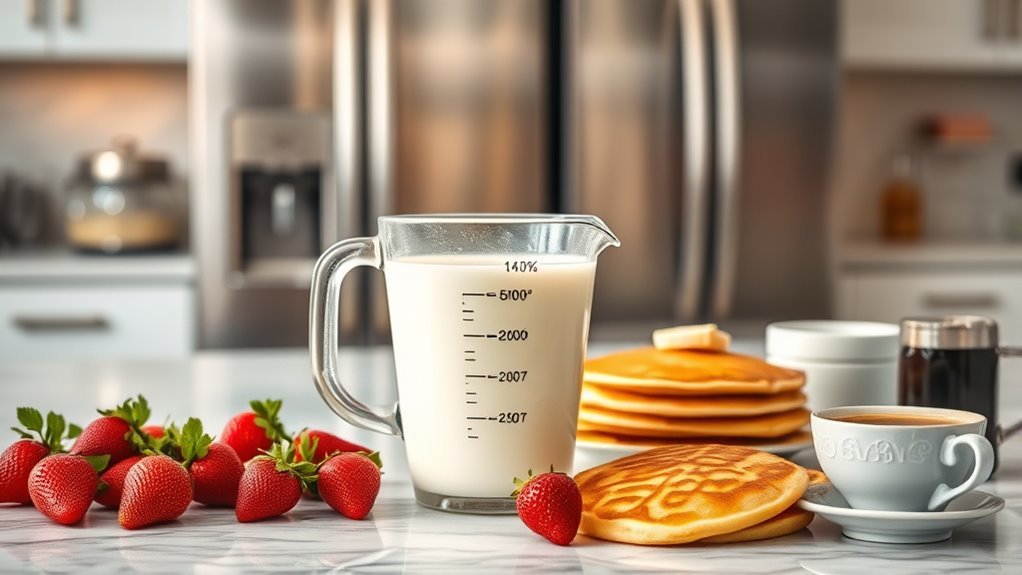
Plus, it’s ideal for coffee or tea if you want a thicker, more indulgent drink. Avoid using it in recipes that require fresh milk’s lightness, but for anything needing a creamy touch, evaporated milk is your go-to substitute.
Tips for Reconstituting Evaporated Milk for Drinking or Cooking
Evaporated milk’s concentrated nature means it often needs reconstituting before use, especially if you want a consistency closer to regular milk. To do this, simply mix equal parts of evaporated milk and water, usually one cup of each, to approximate the texture and flavor of fresh milk. Stir well to ensure the mixture is smooth and uniform.
For drinking, chilling the reconstituted milk improves taste and refreshment. When cooking, remember that reconstituted evaporated milk behaves like regular milk but may add a slight creaminess. Adjust your recipe’s liquid ratios if needed, especially in baking.
Always shake the can before opening to blend any separated solids. Keeping these tips in mind will help you use evaporated milk effectively without compromising flavor or texture.
Common Mistakes to Avoid When Using Evaporated Milk as a Substitute
Although using evaporated milk can be a convenient substitute, you might run into issues if you don’t adjust your expectations or methods. One common mistake is using it straight from the can without diluting. Evaporated milk is concentrated, so skip reconstituting it if your recipe calls for regular milk unless you want a thicker texture.
Also, avoid using it in recipes where fresh milk’s delicate flavor is key, like in some desserts, as it can alter the taste. Don’t forget to shake the can well before opening to mix any separated cream.
Frequently Asked Questions
Can Evaporated Milk Be Used in Coffee or Tea?
Yes, you can use evaporated milk in your coffee or tea. It adds a rich, creamy texture and slightly caramelized flavor that you’ll enjoy.
Just remember to dilute it with water if you want a lighter taste.
Is Evaporated Milk Safe for Infants or Toddlers?
You shouldn’t give evaporated milk to infants or toddlers as a substitute for breast milk or formula. It lacks essential nutrients and can be too concentrated, so stick to age-appropriate milk for their safety and growth.
How Long Does Opened Evaporated Milk Last in the Fridge?
Once opened, you should use evaporated milk within 4 to 7 days if kept refrigerated. Always store it in a sealed container and check for any off smell or changes in texture before using it.
Can Evaporated Milk Be Frozen for Later Use?
You can freeze evaporated milk, but it might separate and change texture. To minimize this, stir well after thawing and use it mainly for cooking or baking rather than drinking straight. Freeze in airtight containers.
Does Evaporated Milk Have the Same Nutritional Value as Regular Milk?
You might be surprised that evaporated milk has about 60% more calories and nutrients per cup than regular milk because it’s concentrated.
Conclusion
Don’t worry if you think evaporated milk will change your dish’s flavor or texture—it won’t, as long as you adjust the recipe properly. Using evaporated milk is a smart, convenient substitute that can add creaminess without extra sugar or fat. Just remember to dilute it when needed and avoid overcooking.
Once you get the hang of it, you’ll see how versatile and handy evaporated milk can be in your everyday cooking. Give it a try! Using evaporated milk instead of milk is an easy way to enhance your recipes while keeping them creamy and delicious.