How You Use Heavy Whipping Cream Instead of Milk in Recipes
If you find yourself out of milk but have heavy whipping cream on hand, you can still keep your recipe on track. Using heavy whipping cream instead of milk is a handy substitution. By adjusting the cream with water, you can mimic the consistency and fat content of milk, ensuring your dish turns out just right.
However, the substitution isn’t always straightforward. Using cream can change the texture and richness in ways you might not expect. Let’s explore how to make this swap work smoothly in your cooking.
Understanding Heavy Whipping Cream as a Milk Substitute

Although heavy whipping cream contains about 36% milk fat and is much richer than milk, you can still use it as a substitute by diluting it with water in a 1:1 ratio to match milk’s consistency.
Heavy whipping cream, though richer, can substitute milk when diluted with water in equal parts.
When a recipe calls for one cup of milk, mix half a cup of heavy cream with half a cup of water to get a similar texture.
This way, you’ll avoid making your dish overly dense or rich. Keep in mind, though, that the flavor will be more intense because heavy cream has a higher fat content than milk.
Using heavy cream in this diluted form lets you replicate milk’s consistency without sacrificing the creamy quality that heavy cream provides.
It’s a handy swap when you’re out of milk.
Adjusting Fat Content When Using Heavy Cream

When you use heavy whipping cream instead of milk, you need to adjust the fat content to avoid making your dish too rich or dense. Heavy cream contains about 36% fat, much higher than milk’s 2%, so direct substitution thickens and fattens your recipe.
To balance this:
- Dilute heavy cream with water to lower fat concentration.
- Use a 1:1 ratio of heavy cream to water for about 18% fat.
- For whole milk fat levels (~3.25%), mix 1 part heavy cream with 3 parts water.
- Adjust liquid amounts to maintain proper batter or sauce consistency since heavy cream is thicker than milk.
Dilution Ratios to Mimic Milk Consistency

To mimic the consistency of milk, you should dilute heavy whipping cream with water in specific ratios.
For whole milk, mix equal parts heavy cream and water. Use ½ cup cream with ½ cup water for every 1 cup of milk you need.
If you want a lighter option closer to 2% milk, combine ¾ cup heavy cream with ¼ cup water. Keep in mind that adding more water beyond a 1:1 ratio thins the liquid too much and reduces flavor, making it unsuitable for many recipes.
Adjust the cream-to-water ratio based on your desired fat content, using more water for lighter milk and less for richer substitutes.
This simple method helps you match milk’s consistency without compromising your dish.
Effects on Texture and Flavor in Baking
Because heavy whipping cream has a much higher fat content than milk, it gives your baked goods a richer, creamier texture. When you swap milk for heavy cream, expect noticeable changes in both texture and flavor. Here’s what happens:
- Heavy cream adds moisture and density, making your baked items more tender but sometimes heavier.
- The increased fat can alter rise and crumb structure, requiring slight adjustments in baking time or leavening.
- The intense richness of heavy cream may overshadow delicate flavors, creating a more indulgent taste.
- Overall, heavy cream enriches texture but can make the final product denser and more decadent.
Using heavy cream instead of milk transforms your baking, so balance is key to achieve the desired texture and flavor.
Using Heavy Cream in Sauces and Soups
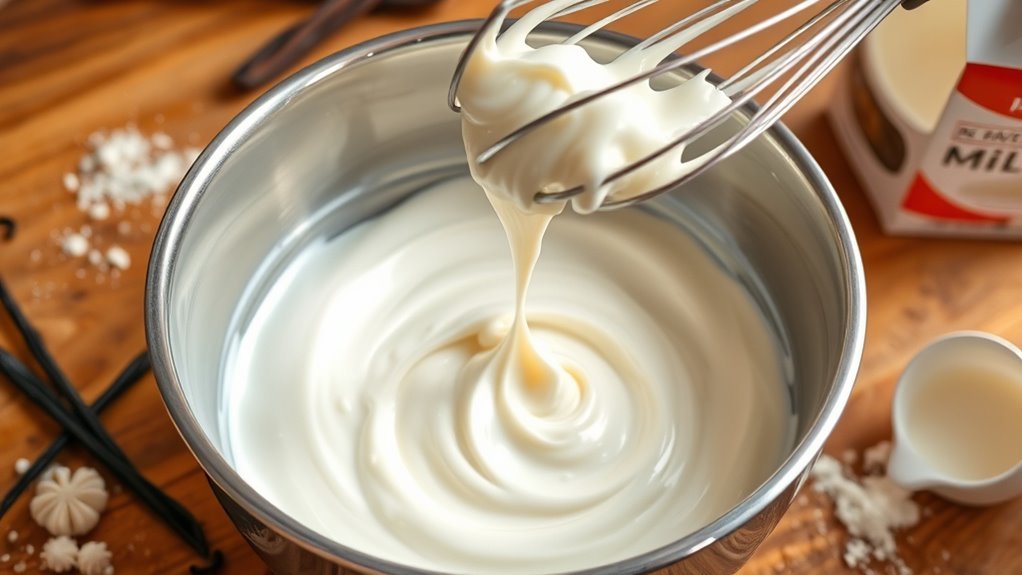
Although heavy whipping cream has a higher fat content than milk, you can use it directly in sauces and soups to instantly add richness and a smooth, velvety texture.
When you substitute heavy cream for milk, expect your sauces to become creamier and more indulgent.
To keep the liquid balance right, you might dilute the heavy cream with equal parts water if you want a lighter touch.
Remember, the increased fat content can intensify flavors, so adjust your seasoning accordingly.
Avoid whipping the cream for cooking because overwhipping turns it into butter.
Instead, stir it gently into your sauces and soups for a luscious finish that elevates your dishes without complicating the process.
Heavy cream truly transforms simple recipes into luxurious meals.
Impact on Rise and Crumb in Baked Goods
When you swap milk for heavy whipping cream in baked goods, you’ll notice a shift in texture and rise. The higher fat content in heavy cream creates a denser, moister crumb but can reduce overall volume. Here’s what to expect:
- Heavy cream increases fat, making the crumb richer and more indulgent.
- The rise might be lower due to fat inhibiting leavening agents.
- Your baked goods may feel heavier or less airy compared to using milk.
- Adjust liquid ratios since heavy cream’s thickness affects batter consistency.
Using heavy cream enhances flavor and moistness but means you’ll get a denser crumb with less rise. Keep these factors in mind for the best results when substituting it for milk.
Combining Heavy Cream With Other Ingredients
If you want to replicate the consistency of milk without losing the richness heavy cream offers, try mixing it with water. Combining heavy cream and water in equal parts creates a substitute that closely mimics whole milk’s texture and fat content.
This dilution reduces the fat from about 36% to 18%, making it ideal for many baking recipes where you want creaminess without heaviness. When you adjust the ratio, you control richness and moisture, ensuring your sauces, custards, and batters maintain the right texture without overpowering flavor.
Using heavy cream and water together lets you tailor the consistency precisely, so your baked goods come out tender and moist, just as if you’d used milk. This simple mix keeps your recipes balanced and delicious.
Alternatives to Heavy Cream for Milk Substitution
Since heavy cream offers a rich texture that milk lacks, you might look for alternatives that provide similar creaminess without the high fat content. Here are some options to contemplate when substituting heavy cream for milk:
- Diluted Heavy Cream: Mix equal parts heavy cream and water to mimic milk’s consistency.
- Evaporated Milk: Use evaporated milk as a lower-fat creamy substitute with a slightly caramelized flavor.
- Half-and-Half: Blend equal parts cream and milk for a balanced richness.
- Milk Alternatives: Unsweetened almond or oat milk can work, though they lack heavy cream’s thickness.
Each option lets you adjust fat and texture levels while keeping your recipes creamy without relying solely on heavy cream.

Practical Tips for Successful Substitutions
Although heavy cream can enrich your recipes, you’ll want to dilute it properly to match milk’s consistency and avoid overpowering flavors. Use a 1:1 ratio of heavy cream to water to mimic milk’s texture without making dishes too dense or rich.
Remember, whipped cream isn’t a direct substitute for milk but works well as a topping or garnish.
| Purpose | Substitution Tip |
|---|---|
| Baking | Use ½ cup heavy cream + ½ cup water |
| Sauces & Soups | Blend 50% heavy cream and 50% water |
| Creaminess | Adjust ratio for richer texture |
| Flavor Impact | Expect creamier, indulgent taste |
| Whipped Cream Use | Use only as garnish, not milk substitute |
Follow these tips to get the best results when replacing milk with heavy cream.
Creative Recipes Featuring Heavy Cream in Place of Milk
When you swap milk for heavy cream in your recipes, you open up a world of richer flavors and creamier textures that can elevate everyday dishes like pancakes, sauces, and baked goods.
Here are some creative ways to use heavy cream or whipping cream instead of milk:
- Pancakes and pound cakes gain moisture and richness but turn denser when you replace milk with heavy cream.
- Dilute heavy whipping cream with equal parts water to mimic milk’s consistency in soups and sauces.
- Fold whipped heavy cream into mousses or fillings for a light, airy texture without milk.
- Use heavy cream in creamy pasta sauces like Alfredo or vodka sauce for an indulgent flavor boost.
Adjust liquid ratios to balance the increased fat content for perfect results.
Frequently Asked Questions
What Happens if You Use Heavy Cream Instead of Milk in a Recipe?
If you use heavy cream instead of milk, your recipe gets richer and creamier, but you’ll need to adjust liquids since it’s thicker.
Expect denser texture and intensified flavors that might overpower delicate dishes.
How Much Heavy Whipping Cream Is Equivalent to 1 Cup of Milk?
You might think 1 cup of heavy cream equals 1 cup of milk, but it doesn’t. To match milk’s consistency, mix ½ cup heavy whipping cream with ½ cup water. That’s your perfect 1 cup milk substitute.
How Does Heavy Cream Affect Baking Recipes?
Heavy cream makes your baked goods richer, moister, and denser. You’ll notice a creamier texture and intensified flavors, but it might affect rise and thickness.
Adjust liquid amounts to keep your recipe balanced and tender.
How to Substitute Heavy Cream for 1 Cup of Milk?
Imagine a magician’s potion: mix ½ cup heavy cream with ½ cup water to mimic 1 cup milk. You’ll keep your recipe’s magic alive, balancing richness and texture perfectly without missing a beat.
Conclusion
Now that you know how to swap heavy whipping cream for milk, you’re ready to elevate your recipes to cloud-nine creaminess! Just remember to dilute the cream to avoid overwhelming richness, and adjust based on your dish’s needs.
This simple trick adds a luxurious touch that can transform ordinary meals into unforgettable delights. With a little practice, you’ll never think of milk the same way again—your taste buds will be doing cartwheels!
Using heavy whipping cream instead of milk in recipes brings a rich, velvety texture that enhances flavor and mouthfeel. Embrace this substitution to create decadent dishes that impress every time.