Do You Know If Milk Is Bad?
You can tell if milk is bad by checking for sour or rancid smells and looking for lumpy, curdled, or discolored milk. If it smells off or has an unusual texture, don’t taste it. The expiration date helps but isn’t the only guide—milk can spoil sooner if not stored properly.
Fresh milk is smooth, creamy, and slightly sweet-tasting. Keep an eye on these signs, and you’ll avoid using spoiled milk. There’s more to know about keeping milk fresh and safe.
Signs to Look for When Checking Milk Freshness

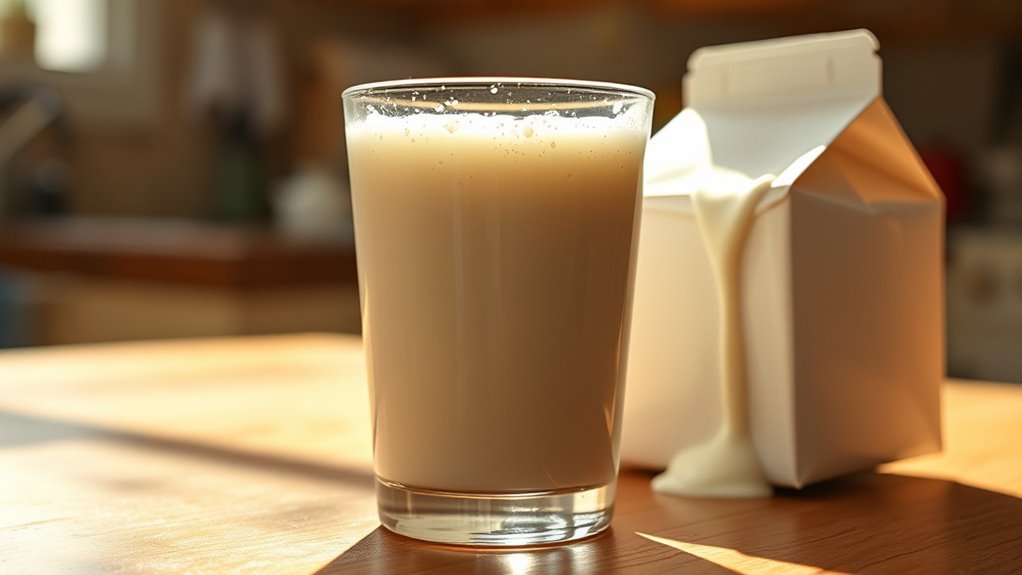
Although milk might look fine at first glance, you should always check for specific signs before using it. First, pour a small amount into a clear glass to observe its color and consistency. Fresh milk is smooth and uniform, while spoiled milk often appears lumpy or curdled.
Check the expiration date on the container, but remember it’s just a guideline. You should also notice the texture—if the milk feels slimy or unusually thick when you touch it, it’s a bad sign.
Finally, pay attention to any discoloration; fresh milk is usually white or creamy, so any yellowing or unusual shades indicate spoilage.
How Smell Can Indicate Spoiled Milk

A strong sour or rancid smell is one of the clearest signs that milk has spoiled. When you open the container, take a quick sniff. Fresh milk has a mild, slightly sweet aroma, so any sharp, unpleasant odor means bacteria have started breaking it down.
If the smell hits you with a tangy, sour punch or a funky, almost chemical scent, don’t taste it; pour it out. Trusting your nose is vital because spoiled milk can cause stomach discomfort if consumed.
Even if it looks okay, the smell will reveal its true state. So, always give your milk a good sniff before pouring; it’s a simple step that helps you avoid wasting time and risking your health.
Visual Clues That Milk Has Gone Bad

When you pour milk into a glass, you can often tell if it’s gone bad just by looking at it. Fresh milk is smooth and white, but spoiled milk looks lumpy or curdled.
You might also notice a yellowish tint or unusual cloudiness. These visual clues are your first warning signs.
| Visual Clue | What It Means |
|---|---|
| Lumps or Curdles | Milk is spoiled and unsafe |
| Yellowish Tint | Milk is oxidizing or old |
| Cloudy Appearance | Bacterial growth present |
If you see any of these signs, it’s best to discard the milk. Don’t risk drinking it, even if it smells okay. Visual inspection is a quick way to protect your health.
Understanding the Expiration Date on Milk
Since milk’s quality changes over time, you should pay close attention to the expiration date printed on the container. This date indicates the last day the manufacturer guarantees peak freshness and safety. However, it’s not a strict deadline.
Milk can often remain good for a few days past this date if stored properly in the refrigerator at or below 40°F (4°C).
Still, you shouldn’t rely solely on the date. Factors like how long the milk has been unrefrigerated or how often the container was opened affect its shelf life.
Use the expiration date as a guideline but combine it with other checks to decide if your milk is still fresh and safe to use.
The Role of Taste in Determining Milk Quality
Expiration dates give you a starting point, but tasting your milk provides immediate insight into its quality. When you take a small sip, pay close attention to the flavor. Fresh milk tastes slightly sweet and creamy, without any off-putting notes.
If you notice a sour or bitter taste, it’s a clear sign the milk has started to spoil. Don’t ignore subtle changes either; even a mildly unpleasant flavor indicates potential spoilage.
Taste acts as a quick, effective test that complements what you see and smell. However, always taste cautiously. If the milk smells strongly off, it’s safer not to taste it at all.
Trust your taste buds to help you decide if the milk is still good to use.
Common Causes of Milk Spoilage
Although milk might seem simple, several factors can cause it to spoil quickly. One major cause is bacterial growth. When bacteria get into milk, they multiply rapidly, breaking down lactose into lactic acid, which sours the milk.
Exposure to warm temperatures accelerates this process, so even brief warmth can lead to spoilage. Light exposure also plays a role by damaging milk’s proteins and fats, causing off-flavors and quicker spoilage.
Additionally, contamination from unclean containers or utensils introduces unwanted microbes that spoil milk faster. Even the milk’s natural enzymes can contribute to spoilage over time, breaking down fats and proteins.
Knowing these causes helps you understand why milk can go bad sooner than you expect, even if it looks fine at first glance.
Best Practices for Storing Milk
Understanding what speeds up milk spoilage can help you keep it fresh longer. To store milk properly, always keep it refrigerated at or below 40°F (4°C). Place the milk container on a middle or lower shelf rather than in the door, where temperature fluctuates more.
Make sure the cap or lid is tightly sealed to prevent exposure to air and contaminants. Avoid leaving milk out of the fridge for extended periods, especially during meals or grocery trips.
When pouring, pour what you need instead of leaving the container open. Also, try to use milk within the printed expiration date and buy only what you can consume before it goes bad.
Following these steps guarantees your milk stays fresh and safe to drink.
What to Do If You Accidentally Use Spoiled Milk
If you realize you’ve accidentally used spoiled milk, don’t panic. First, stop using the milk immediately to avoid further issues.
If you consumed it, monitor yourself for any symptoms like stomach cramps, nausea, or diarrhea. These symptoms usually pass quickly, but if they worsen or persist, seek medical advice.
For cooking, if the spoiled milk changed the dish’s taste or texture, it’s best to discard it and start over. To prevent future mistakes, always smell and check the milk before use.
Clean any containers or utensils that came into contact with the spoiled milk to avoid cross-contamination. Remember, taking quick action helps minimize health risks and food waste.
Stay cautious, and you’ll handle this with ease next time.
Frequently Asked Questions
Can Spoiled Milk Be Harmful to Pets?
Yes, spoiled milk can be harmful to pets. It might cause stomach upset, vomiting, or diarrhea.
You should avoid giving your pets spoiled milk and always provide fresh, pet-safe food and water to keep them healthy.
Does Boiling Milk Make It Safe After Spoiling?
Boiling spoiled milk doesn’t make it safe; it kills bacteria but won’t remove toxins already produced. You shouldn’t risk it. It’s better to toss sour milk than gamble with your health or your pet’s well-being.
How Long Can Milk Be Left Out Before Spoiling?
You shouldn’t leave milk out more than two hours at room temperature. After that, bacteria multiply quickly, and it spoils.
If it’s hotter, like above 90°F, spoilage can happen even faster, within an hour.
Are Organic Milks Less Likely to Spoil?
Organic milk isn’t necessarily less likely to spoil than regular milk. You should still refrigerate it promptly and check the expiration date.
Spoilage depends more on storage conditions than whether it’s organic or not.
Can Milk Spoil Faster in Certain Types of Containers?
If you leave milk in a clear glass bottle under sunlight, it spoils faster than in opaque plastic containers. You’ll notice that light speeds up spoilage, so choosing dark or insulated containers helps keep milk fresh longer.
Conclusion
Now that you know how to spot spoiled milk, you can avoid wasting it and keep your kitchen safe. Did you know that about 15% of milk is thrown away due to spoilage each year? By checking the smell, look, and taste, and storing milk properly, you’ll save money and reduce food waste.
Next time you’re unsure, trust your senses—they’re your best tools for knowing if milk is still good. Understanding how to tell if milk is bad helps you make smarter choices in the kitchen and ensures you always consume fresh, safe milk.