How Long Can Breast Milk Sit Out Safely? Storage & Safety Guide
Imagine fresh breast milk like a delicate flower—it thrives best in just the right environment. Knowing how long breast milk can sit out safely is crucial for maintaining its quality and your baby’s health. If you leave it out too long at room temperature, it can wilt, losing nutrients and safety.
You might wonder exactly how long you can trust your milk to stay fresh before it starts to spoil. Understanding these timeframes is essential for keeping your baby healthy and avoiding waste. Proper storage and timely use of breast milk help ensure your little one gets the best nutrition possible.
Understanding Breast Milk Storage Basics

Although breast milk is naturally designed to nourish your baby, you need to store it properly to keep it safe and nutritious.
Breast milk nourishes your baby best when stored safely and handled with care.
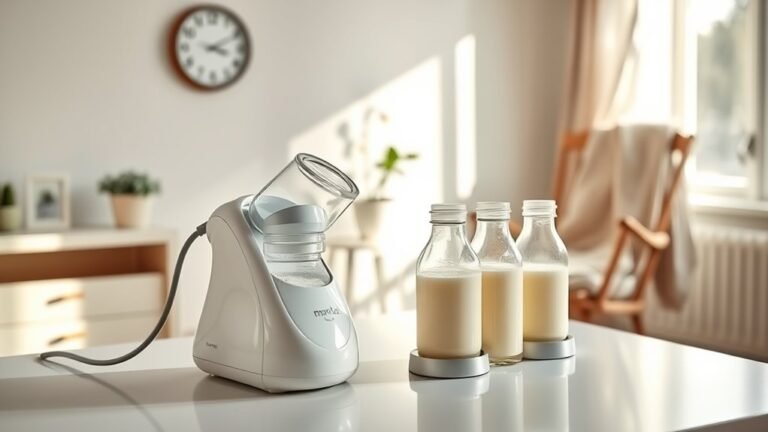
When you express milk, freshly pumped breast milk can sit at room temperature (up to 77°F/25°C) for a safe storage time of up to 4 hours.
After that, bacterial growth increases, making it unsafe.
If you’ve thawed milk, you should use it within 1 to 2 hours at room temperature, or discard it to maintain breast milk safety.
To extend its freshness, promptly place stored breast milk in the refrigerator.
Using clean, covered containers helps protect milk quality and reduce contamination risks.
Recommended Room Temperature Limits for Breast Milk

When you leave breast milk at room temperature, it’s important to keep it within safe time limits to protect your baby’s health. Freshly expressed breast milk can safely stay at room temperature, around 77°F (25°C), for up to 4 hours.
Beyond this storage duration, the risk of bacterial growth rises, so it’s best to refrigerate or freeze milk if you won’t use it soon.
If you’re thawing breast milk, follow thawing guidelines carefully. Once thawed, it should be used within 1 to 2 hours at room temperature.
Remember, as room temperature increases above 77°F, the safe storage window shortens.
Always adhere to these temperature limits to guarantee your breast milk remains safe for your little one.
Safe Duration for Leaving Freshly Expressed Milk Out

Since freshly expressed breast milk contains natural enzymes and antibodies that help protect it, you can safely leave it out at room temperature (around 77°F or 25°C) for up to 4 hours.
This safe duration aligns with established storage guidelines to maintain the milk’s nutritional quality and minimize bacterial growth.
If the room temperature rises above 77°F, it’s best to refrigerate the milk sooner to prevent spoilage.
After 4 hours at room temperature, you should discard any unused freshly expressed milk to ensure your baby’s safety.
Always stick to these storage guidelines to protect your little one from potential health risks.
Proper handling and timely refrigeration help maintain the quality and safety of freshly expressed milk.
Guidelines for Thawed Breast Milk at Room Temperature
If you thaw breast milk, you should use it within 1 to 2 hours at room temperature (around 77°F or 25°C) to keep it safe for your baby. Thawed breast milk can support infant safety when handled properly, but you must never leave it out longer than 2 hours.
After thawing, if you don’t use the milk immediately, refrigerate it and plan to use it within 24 hours for maximum safety. Avoid reheating or refreezing thawed milk.
Also, once warmed, discard any leftover milk after 2 hours, even if you refrigerate it later. If thawed breast milk sits out past the 2-hour mark, discard it to prevent bacterial growth and ensure your baby’s health.
Following these guidelines helps maintain safety and quality.
Effects of Prolonged Room Temperature Exposure on Milk Quality
Although breast milk can safely sit out at room temperature for up to four hours, leaving it out longer considerably compromises its quality and safety. When exposed beyond this time frame, you risk:
- Accelerated bacterial proliferation, increasing contamination.
- Noticeable bacterial growth, leading to spoilage.
- Significant loss of vitamin C, reducing nutritional value.
- Decreased overall safety, posing health risks to your baby.
Warmer room temperatures speed up these processes, making timely refrigeration or use essential.
Once breast milk has been left unrefrigerated for over four hours, it’s best to discard it to avoid potential health hazards. Keeping these effects in mind helps you maintain the milk’s quality and ensure your infant receives safe, nutritious nourishment.
Proper Container Selection for Breast Milk Storage
Choosing the right container plays a crucial role in keeping your breast milk safe and fresh. Use BPA-free containers like glass containers or hard plastic bottles specifically designed for breast milk storage. These storage containers prevent chemical leaching and protect milk quality.
Opt for containers with tight-fitting caps to avoid contamination and spills. Store milk in small portions, typically 2-4 ounces, which helps reduce waste and allows for expansion during freezing.
Avoid household plastic bags or disposable liners, as they increase contamination risk.
While labeling is important, focus on selecting the proper containers first to guarantee safety. By choosing the appropriate BPA-free containers with secure lids and storing milk in manageable amounts, you’ll preserve your milk’s freshness and nutritional value effectively.
Best Practices for Labeling and Organizing Stored Milk
When you label and organize your stored breast milk properly, you make feeding time easier and safer. Clear labels help you identify each container’s collection date and, if needed, your baby’s full name.
To keep your storage neat and maintain milk quality, follow these steps:
- Use waterproof labels or markers to avoid smudging or peeling.
- Store milk in the back of the fridge or freezer to maintain consistent temperature.
- Arrange milk by date, placing the oldest containers at the front or top to practice FIFO (first-in, first-out).
- Update labels regularly when adding new milk to existing containers to track expiration and freshness.
Impact of Room Temperature Variations on Milk Safety
Properly labeling and organizing your stored breast milk helps maintain its quality, but understanding how room temperature affects milk safety is just as important. Room temperature variations considerably impact bacterial growth and safe storage duration.
When ambient conditions exceed 77°F, bacterial growth accelerates, reducing the time milk stays safe without refrigeration. Cooler temperatures slow this process, extending milk safety within recommended limits. Temperature fluctuations caused by air conditioning or heating can also compromise milk safety by promoting spoilage.
| Room Temperature (°F) | Safe Storage Duration (hours) |
|---|---|
| Up to 77 | Up to 4 |
| Above 77 | Less than 4 |
Monitoring ambient conditions and minimizing temperature fluctuations help ensure your milk remains safe for your baby.
Tips for Handling Leftover Breast Milk After Feeding
Although leftover breast milk can be a valuable resource, you need to handle it carefully to keep it safe for your baby. To verify safety, follow these key tips:
- Store leftover breast milk in the refrigerator immediately after feeding and use within 24 hours.
- Never let milk sit out at room temperature for more than two hours; discard any milk left in the bottle after this time.
- Reheat stored milk gently by placing the bottle in warm water. Avoid microwaving to preserve nutrients.
- Always label stored milk with the date and time to track freshness and avoid using expired milk.

Strategies to Maintain Milk Safety While Traveling or at Work
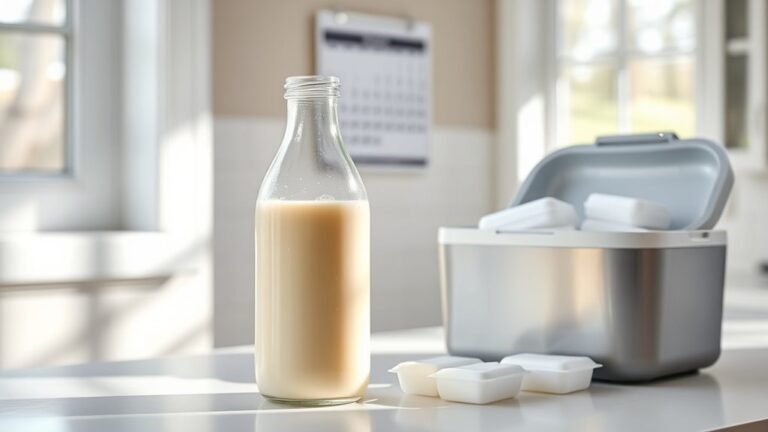
Since you need to keep breast milk safe while on the go, using insulated cooler bags with ice packs is essential to maintain a temperature below 77°F (25°C).
For proper storage and preparation, always use pre-sterilized bottles with tight-fitting caps to prevent contamination.
Fresh milk should be labeled with the date and time to track safe usage.
If you keep milk at room temperature, consume it within 4 hours; if stored cold in an insulated cooler bag or refrigerator, it can last up to 24 hours.
Avoid leaving milk out longer than 4 hours to prevent bacterial growth and nutrient loss.
When possible, transfer milk to a refrigerator or freezer promptly after returning from work or travel to ensure its safety and freshness.
Frequently Asked Questions
What Happens to Breast Milk After 4 Hours at Room Temperature?
After 4 hours at room temperature, breast milk starts losing nutrients and antibodies. Bacteria multiply, increasing contamination risk.
You shouldn’t feed it to your baby because it might cause infections. Always discard milk after this time.
What Is the 4 4 4 Rule for Breast Milk?
Imagine you express milk, and you leave it on the counter for 3 hours. The 4-4-4 rule means you can safely keep freshly expressed milk 4 hours at room temp, 4 days refrigerated, and 4 months frozen.
What Is the 3-3-3 Rule for Breast Milk?
The 3-3-3 rule means you can leave freshly expressed breast milk at room temperature for 3 hours, store it in the fridge for 3 days, or keep thawed milk refrigerated for up to 3 days before feeding.
What Is the 5 5 5 Rule for Breast Milk?
The 5-5-5 rule means you can leave freshly expressed breast milk out for 5 hours, store it in the fridge for 5 days, and use thawed milk within 5 hours at room temperature to keep it safe.
Conclusion
Think of breast milk as a precious treasure that needs careful guarding. Leaving it out beyond four hours lets bacteria sneak in, dulling its nourishing glow.
By following storage guidelines and treating milk like liquid gold—chilling, labeling, and timely use—you protect your baby’s health and preserve every drop’s significance.
Remember, a little care turns breast milk from a fleeting gift into a lasting source of comfort and strength for your little one. How long can breast milk sit out safely? Always keep this question in mind to ensure your baby receives the best nourishment possible.