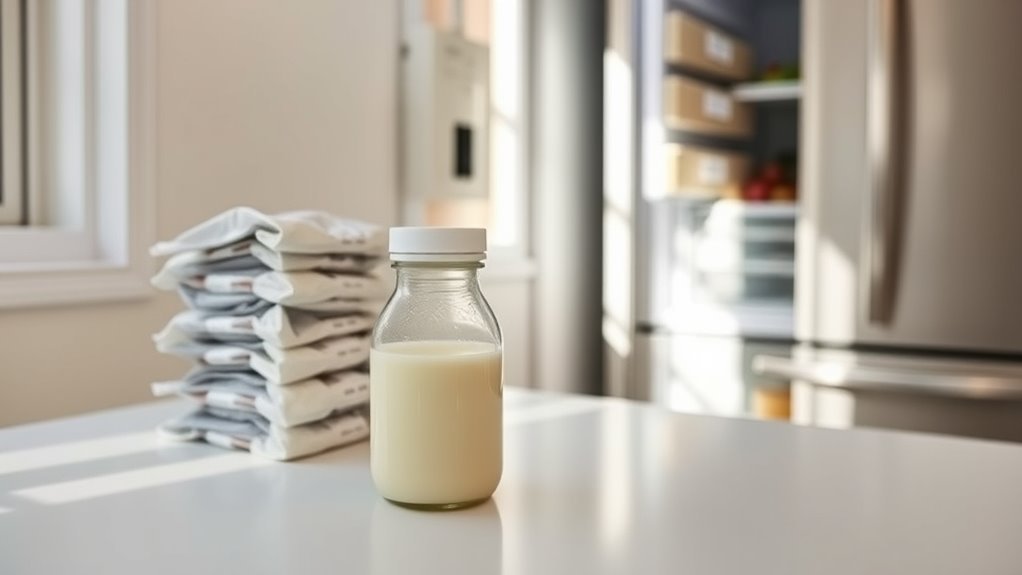
How Long Does Breast Milk Stay Fresh in the Fridge? Safety Tips
When you store breast milk in the fridge, knowing exactly how long breast milk stays fresh is key to keeping your baby safe and well-nourished. You might think a few days is fine, but factors like container choice, fridge temperature, and handling can change that timeline.
Before you reach for that bottle, it’s important to understand these details to avoid waste or risk. Let’s explore what you need to know to get it right.
Recommended Containers for Storing Breast Milk

When storing breast milk, you should use clean, sterile glass containers or BPA-free hard plastic bottles with tight-fitting lids to keep the milk fresh and safe.
Choosing the right storage containers is essential; BPA-free bottles and specially designed breast milk storage bags made of BPA-free plastic are both excellent options.
Always sterilize containers before use to prevent contamination.
Make sure your containers are leak-proof and freezer-safe if you plan to freeze the milk.
Using container labels for date tracking helps you manage freshness and rotate milk properly.
Pay attention to the container material—glass and BPA-free plastics are safest.
Properly labeled, sterilized, and secure storage containers ensure you maintain fresh breast milk’s quality and safety for your baby.
Ideal Storage Locations Within the Refrigerator

Although storing breast milk in the refrigerator might seem straightforward, choosing the right storage location inside is crucial to keep it fresh. You should place milk on the middle shelf or at the back of the refrigerator, where the temperature is most consistent and the cold environment helps preserve milk freshness.
Avoid door compartments since frequent opening causes temperature fluctuations, which can compromise storage guidelines. The back of the refrigerator usually offers the coldest, most stable shelf, ideal for maintaining milk quality.
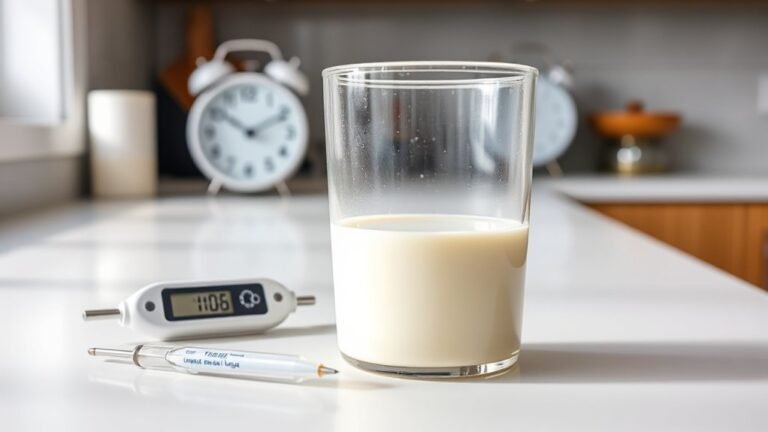
Additionally, storing milk above the vegetable drawer ensures shelf stability and a reliably cool temperature. To guarantee ideal conditions, use a thermometer to check your refrigerator stays at or below 40°F (4°C), ensuring your breast milk remains safe and fresh for your baby.
Labeling and Portioning Expressed Milk

Properly labeling and portioning your expressed breast milk plays an essential role in preserving its freshness and ensuring your baby receives safe feedings. Use waterproof labels and permanent ink to mark each container with the date it was pumped. This helps you track storage duration and maintain milk quality.
Organizing your expressed milk with the first in, first out method ensures you use the oldest milk first, preventing spoilage. Portion your milk into small amounts, 1 to 2 ounces or 2 to 4 ounces, to match your baby’s feeding needs and reduce waste.
If storing milk at a childcare facility, clearly label containers with your baby’s name to avoid mix-ups. Proper labeling and portioning keep your milk fresh and safe while making feeding more efficient and organized.
Guidelines for Combining Fresh and Stored Milk
Since combining fresh and stored breast milk requires careful handling, you should always cool freshly expressed milk to room temperature or below before adding it to refrigerated or frozen milk. This practice guarantees milk safety and prevents bacterial growth.
When you combine milk, follow proper storage guidelines to maintain quality and nutrition.
Never mix warm or hot milk directly with refrigerated breast milk to avoid partial thawing and contamination.
Add fresh milk to stored milk within 24 hours of expression to optimize storage time.
Pour gently to minimize agitation during handling expressed milk.
Always use the oldest milk first to ensure freshness and reduce waste.
Following these tips helps you safely combine milk while respecting thawing breast milk and storage time limits.
Maximum Safe Storage Durations for Refrigerated Milk
When you store breast milk in a refrigerator set at 4°C (39°F) or below, you can keep it safe for up to 4 days. Storing beyond this increases the risk of bacterial growth and reduces nutrient preservation.
If the temperature rises to 5–10°C (41–50°F), the storage duration shortens to 3 days. Always follow proper storage guidelines, label milk with the expression date, and use the oldest milk first to ensure freshness and avoid expiration.
| Temperature (°C) | Storage Duration | Notes |
|---|---|---|
| ≤ 4 | Up to 4 days | Ideal for nutrient preservation |
| 5 – 10 | Up to 3 days | Increased risk of bacterial growth |
| > 10 | Not recommended | Unsafe for storage |
| Labeling | Use-by date | Essential for rotation |
| Storage guidelines | Follow strictly | Protects milk quality |
Proper Thawing and Warming Techniques
Although thawing and warming breast milk may seem straightforward, doing it correctly is crucial to preserve its nutrients and guarantee your baby’s safety. When thawing breast milk, remember it should be used within 24 hours if kept as refrigerated breast milk at 4°C or below.
Follow safe warming techniques to maintain nutrient preservation and avoid hot spots. Warm breast milk by placing the container in warm water or using a bottle warmer; avoid microwaving to prevent uneven heating.
Gently swirl the milk to re-mix separated fat layers; don’t shake vigorously. Always perform temperature testing on your wrist to ensure the milk is comfortably warm.
Never re-freeze thawed breast milk, regardless of warming or cooling. These steps optimize storage duration and keep your baby safe.
Recognizing Changes in Thawed Breast Milk
Even if thawed breast milk looks different from fresh milk, you can still safely use it by knowing what changes are normal. Separation of the cream layer on top is common; just swirl gently to restore its uniform texture.
A slight yellowish or cloudy discoloration in appearance after thawing is also normal and doesn’t indicate spoilage. However, pay close attention to signs like an off odor or sour smell, which signal that the milk has gone bad.
Unusual texture or any unexpected discoloration after storage are further indicators you shouldn’t ignore. Remember, thawed breast milk should be used within 24 hours when kept in the fridge at 4°C or below.
Recognizing these signs helps you safely feed your baby without worry.
Maintaining Refrigerator Temperature for Milk Safety
To keep your breast milk fresh and safe, you need to maintain your refrigerator at 40°F (4°C) or below. Proper temperature control is vital for milk safety, preventing bacterial growth and ensuring milk preservation.
Use a refrigerator thermometer to regularly monitor the refrigerator temperature, especially during a power outage or mechanical issues.
Store stored breast milk in the back of the fridge, where the cold environment is most consistent.
Keep the door closed as much as possible to maintain stable temperature control and extend your milk’s storage duration up to 4 days.
- Use a refrigerator thermometer to check temperature regularly
- Store milk away from the door for stable cooling
- Keep the refrigerator door closed to maintain cold environment
- Monitor temperature closely during power outages for milk safety

Frequently Asked Questions
What Is the 6 6 6 Rule for Breast Milk?
The 6-6-6 rule means you can keep freshly expressed breast milk at room temperature for 6 hours, in the fridge for 6 days, and in the freezer for 6 months. This ensures it’s safe and nutritious for your baby.
How Long Is Freshly Pumped Breastmilk Good in the Fridge?
You can keep freshly pumped breast milk in the fridge for up to 4 days at 4°C or below, but using it within 24 to 48 hours guarantees the best freshness and nutrient quality for your baby.
What Is the 3-3-3 Rule for Breast Milk?
The 3-3-3 rule means you can store freshly expressed breast milk in your fridge for up to 3 days, use or freeze it within 3 days, and safely keep frozen milk for 3 months.
What Is the 4 4 4 Rule for Breast Milk?
You’ve got a little treasure that stays delightful for 4 days in your fridge at 4°C or below. The 4-4-4 rule helps you use that liquid gold before it’s time to say goodbye.
Conclusion
You might be surprised to learn that breast milk stays fresh in your fridge for up to four days when stored properly at or below 40°F (4°C). That’s four precious days to provide your baby with all the nutrients and antibodies they need.
By using clean containers, labeling each one, and storing milk in the right spot, you’re giving your little one the safest, healthiest start possible. Keep these tips in mind—it truly makes a difference.
Remember, how long breast milk stays fresh in the fridge depends largely on proper storage techniques. Following these guidelines ensures your baby receives the best quality milk every time.