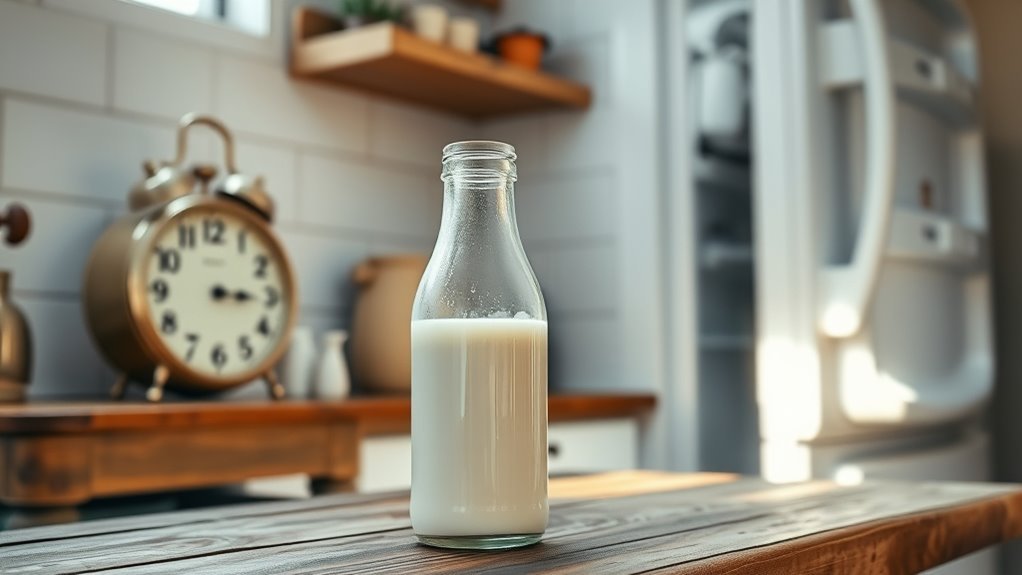
How Long Can Milk Be Out of the Fridge Safely
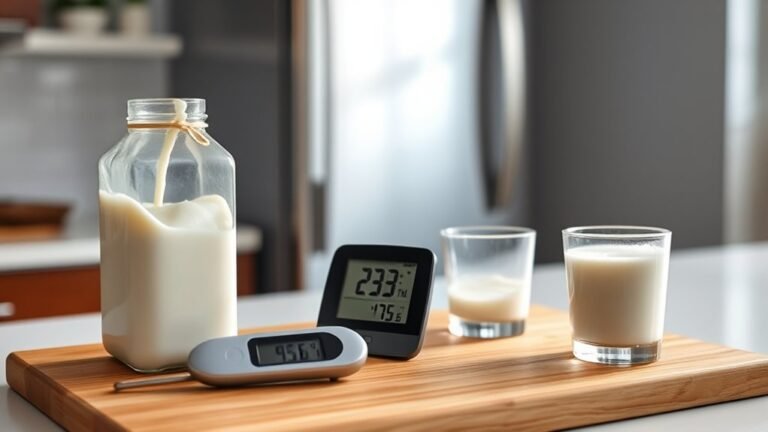
You shouldn’t leave milk out of the fridge for more than two hours, especially if the temperature is above 40°F (4°C). At warmer temperatures above 70°F (21°C), your safe window drops to just one hour. Keeping the container sealed and away from heat or sunlight helps slow spoilage.
If you need to keep milk fresh longer outside the fridge, using a cooler bag with ice packs can help. This method maintains the temperature and extends freshness. Always be mindful of how long milk stays unrefrigerated to prevent spoilage.
Want to learn more about spotting spoiled milk and handling tips? Understanding these guidelines ensures your milk stays safe to consume and reduces waste.
Factors Influencing Milk Spoilage

Although milk naturally spoils over time, several factors can speed up the process when it’s left out of the fridge. Temperature plays a major role; the warmer the environment, the faster bacteria multiply.
Milk spoils faster at higher temperatures as bacteria multiply more quickly when left unrefrigerated.
If you leave milk near a heat source or in direct sunlight, it spoils much quicker. The container’s cleanliness also matters. Any contamination can introduce bacteria that accelerate spoilage.
Additionally, the type of milk impacts how long it lasts; whole milk tends to go bad faster than ultra-pasteurized varieties. Exposure to air increases bacterial growth, so always keep the cap tightly closed.
Finally, the initial freshness of the milk influences how long it stays safe. Being mindful of these factors helps you avoid consuming spoiled milk and wasting it unnecessarily.
Recommended Time Limits for Milk at Room Temperature

When you leave milk out at room temperature, bacteria can multiply rapidly, making it unsafe to drink after a certain period. To keep your milk safe, it’s best to follow these recommended time limits based on the temperature:
| Temperature Range | Safe Time Limit |
|---|---|
| Below 40°F (4°C) | Up to 2 hours |
| 40°F – 70°F (4°C-21°C) | 1 to 2 hours |
| Above 70°F (21°C) | Less than 1 hour |
| Ultra-Pasteurized Milk | Up to 4 hours |
These guidelines help you avoid consuming spoiled milk and reduce the risk of foodborne illness. Remember, once milk exceeds these times, it’s best to discard it rather than risk your health.
Signs That Milk Has Gone Bad

How can you tell if milk has gone bad? First, check the smell. Sour or off odors are a clear sign that bacteria have started to grow.
An off or sour smell in milk signals bacterial growth and spoilage—always check before use.
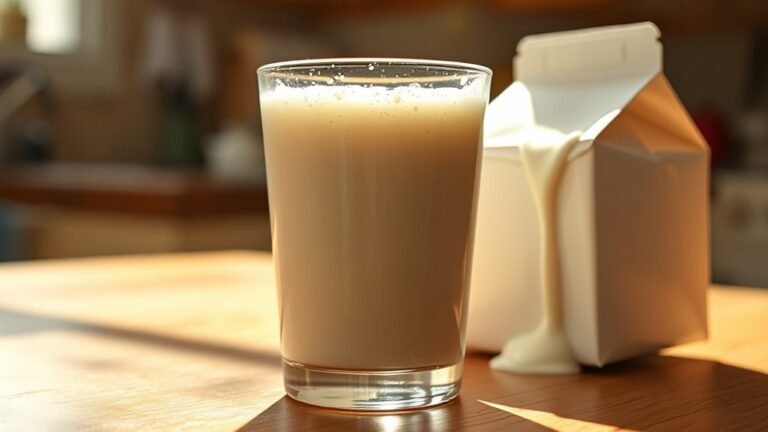
Next, look at the milk’s texture; if it’s lumpy or thicker than usual, it’s spoiled. Pour a small amount into a glass and observe the color—any yellowish or curdled appearance means it’s no longer safe to drink.
Taste can also be a giveaway, but only try this if the milk passes the initial smell and look tests. If it tastes sour or unusual, spit it out and discard the milk.
Trust your senses. When in doubt, throw it out. Consuming spoiled milk can lead to stomach upset and food poisoning.
Tips for Keeping Milk Fresh Outside the Fridge
Knowing the signs of spoiled milk helps you avoid health risks, but sometimes you might need to keep milk outside the fridge temporarily. To keep it fresh longer, store milk in a cooler bag with ice packs whenever possible.
Keep the container sealed tightly to prevent contamination and slow spoilage. Avoid leaving milk in direct sunlight or near heat sources, as warmth accelerates bacterial growth.
If you’re at a picnic or traveling, pour smaller amounts into a separate container to limit exposure each time you open it. Always return the milk to refrigeration as soon as you can.
Safe Handling Practices for Milk in Different Scenarios
Although milk is a perishable product, you can handle it safely in various situations by following key practices tailored to each scenario. Whether you’re at home, traveling, or hosting an event, these steps help maintain milk’s freshness and safety.
- At Home: Always store milk in the coldest part of the fridge, not the door, and seal the container tightly after use.
- Traveling: Use an insulated cooler with ice packs to keep milk chilled if you’re on the go for more than an hour.
- Events: Serve milk in smaller containers and return them promptly to refrigeration between servings to prevent prolonged exposure to warm air.
Frequently Asked Questions
Can Boiling Milk Extend Its Safety Outside the Fridge?
Yes, boiling milk kills bacteria, letting you keep it outside the fridge longer temporarily. But don’t rely on it too long; you’ll still need to refrigerate it promptly to avoid spoilage and foodborne illness.
Does the Type of Milk (Almond, Soy) Affect Spoilage Time?
Yes, the type of milk affects spoilage time. Almond and soy milk usually last longer outside the fridge than dairy milk due to preservatives and lower protein content.
However, you should still keep them refrigerated for safety.
How Does Pasteurization Impact Milk’s Room Temperature Tolerance?
Pasteurization kills harmful bacteria, so you get safer milk, but it doesn’t make it immune to spoilage.
You can’t leave pasteurized milk out long; it still sours quickly at room temperature, so refrigerate promptly.
Is It Safe to Drink Milk Past Its Printed Expiration Date?
You can usually drink milk a few days past its expiration date if it smells and tastes fine, but don’t take chances. Always check for sourness or curdling before drinking to avoid getting sick.
What Are the Health Risks of Drinking Spoiled Milk?
Drinking spoiled milk can give you stomach cramps, nausea, vomiting, and diarrhea. You’ll risk food poisoning because harmful bacteria grow in it.
Conclusion
You shouldn’t leave milk out of the fridge for more than two hours, as bacteria can double every 20 minutes at room temperature. Knowing this helps you avoid spoiled milk and potential stomach issues.
If you’re ever unsure, trust your senses—sour smell or curdled texture means it’s time to toss it.
By handling milk carefully and keeping it cold, you can enjoy it safely and reduce waste. Remember, proper storage is key to how long milk can be out of the fridge safely.