How Long Can Milk Stay Out of the Fridge Safely?
You shouldn’t leave milk out of the fridge for more than two hours to keep it safe and fresh. If it’s hotter than 90°F (32°C), limit that to one hour. Milk spoils faster if it’s raw or exposed to light and air.
Watch for sour smell or curdled texture as signs it’s gone bad. Keep milk cold and handle it carefully, and you’ll keep it tasting great. There’s more to know about milk safety and storage.
Factors Affecting Milk Spoilage at Room Temperature

While milk naturally spoils faster at room temperature, several factors influence how quickly this happens. You need to consider the initial freshness of the milk; the closer it’s to its expiration date when left out, the faster it will spoil.
The temperature of the room plays a big role too. Warmer environments speed up bacterial growth.
The type of milk matters as well; raw or unpasteurized milk spoils quicker than pasteurized milk.
Also, exposure to light and air can degrade milk quality, so keeping the container sealed helps.
Ultimately, contamination from dirty utensils or hands can introduce bacteria, accelerating spoilage.
Recommended Time Limits for Milk Left Out

Knowing what affects milk spoilage helps you determine safe time limits for leaving it out. Generally, you shouldn’t leave milk at room temperature for more than two hours.
If the room is warmer than 90°F (32°C), that window shortens to just one hour.
Bacteria multiply quickly in these conditions, increasing the risk of spoilage and foodborne illness.
When you pour milk, avoid leaving the container open for long periods, as exposure to air accelerates spoilage.
If you accidentally leave milk out longer than recommended, it’s safer to discard it rather than risk consumption.
To keep milk fresh, return it to the fridge promptly after use and keep the temperature at or below 40°F (4°C).
Following these guidelines helps ensure your milk stays safe and tasty.
Differences Between Pasteurized and Raw Milk

Because pasteurized and raw milk undergo different processing, their safety and shelf life vary considerably. Pasteurized milk is heated to kill harmful bacteria, which extends its safe storage time and reduces the risk of spoilage when left out.
You can expect pasteurized milk to last about two hours at room temperature before bacteria multiply to unsafe levels.
On the other hand, raw milk hasn’t been heat-treated, so it contains more natural bacteria, some of which can cause illness.
This means raw milk spoils faster and shouldn’t be left out for more than an hour.
If you’re handling raw milk, you need to be especially cautious with time and temperature to avoid foodborne illness.
Understanding these differences helps you keep milk safe and fresh longer.
Signs That Milk Has Gone Bad
If milk smells sour or has a curdled texture, it’s a clear sign it’s gone bad. You should also watch for changes in color; milk that’s turning yellowish or gray isn’t safe to drink.
When you pour it, notice if it appears lumpy or thicker than usual. These textures indicate spoilage. The taste will be off too, often sour or unpleasant, so don’t try to mask it with other flavors.
Sometimes, spoiled milk develops a slight fizz or bubbles, which signals bacterial activity. Trust your senses. If the milk looks, smells, or tastes unusual, throw it out immediately.
Consuming spoiled milk can cause stomach discomfort or food poisoning, so it’s better to be cautious and discard any milk that shows these signs.
How Temperature Influences Milk Safety
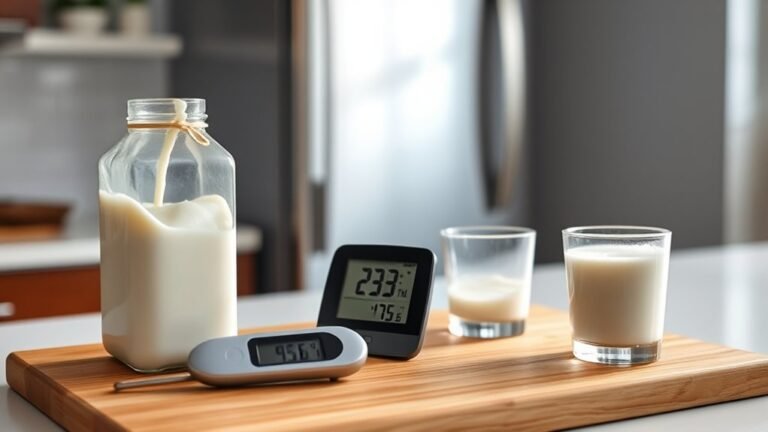
Since milk is highly perishable, keeping it at the right temperature is essential to prevent harmful bacteria from multiplying. When milk is left out at room temperature, especially above 40°F (4°C), bacteria can rapidly grow, increasing the risk of spoilage and foodborne illness.
You should know that even short periods at warmer temperatures can cause milk to sour. Cooler temperatures slow bacterial growth, preserving milk’s freshness longer.
Ideally, milk should be stored below 40°F to maintain safety and quality.
When temperatures rise above this, the time milk can safely stay out decreases dramatically. So, if you leave milk out too long, you risk consuming unsafe products.
Always be mindful of how temperature affects milk to protect your health.
Safe Practices for Serving Milk Outside the Fridge
When you serve milk outside the fridge, maintaining its temperature is key to keeping it safe. Use an insulated container or cooler packed with ice to slow bacterial growth.
Pour only the amount you plan to use immediately, and return the rest to refrigeration quickly. Avoid leaving milk out in direct sunlight or warm areas, as heat accelerates spoilage.
If you’re serving milk at an event, keep track of the time it’s been out. Generally, don’t exceed two hours at room temperature.
If the environment is hotter than 90°F (32°C), reduce that time to one hour.
Always check for changes in smell, taste, or appearance before consuming. Following these steps helps prevent contamination and keeps your milk fresh when a fridge isn’t nearby.
Tips for Storing Milk to Maximize Freshness
Although milk is a staple in many households, storing it properly can make a big difference in how long it stays fresh. Keep milk in the coldest part of your fridge, usually the back, not the door. Always seal the container tightly to prevent odors and bacteria.
Avoid leaving milk out for extended periods and check expiration dates regularly. Here’s a quick guide to help you store milk effectively:
| Tip | Why It Matters | Quick Action |
|---|---|---|
| Store in fridge back | Coldest spot, slows spoilage | Place milk in the back shelf |
| Seal container | Prevents contamination | Close cap tightly after use |
| Avoid door storage | Temperature fluctuates | Don’t keep milk in fridge door |
| Check dates | Ensure freshness | Use before expiration |
| Limit out time | Reduces bacteria growth | Put back in fridge promptly |
Frequently Asked Questions
Can Milk Cause Food Poisoning if Left Out Too Long?
Yes, milk can cause food poisoning if you leave it out too long. Harmful bacteria grow quickly at room temperature, so don’t let milk sit out more than two hours.
This helps keep yourself safe and avoid illness.
Is It Safe to Drink Milk Past Its Expiration Date?
Of course, you’d love to gamble with spoiled milk! But seriously, drinking milk past its expiration isn’t safe. You risk stomach upset or worse. Always check smell and taste; when in doubt, throw it out to stay safe.
Does Shaking Milk Affect Its Spoilage Rate?
Shaking milk doesn’t speed up spoilage, but it can mix any cream or sediment back in.
Just make sure to keep it refrigerated and sealed tightly, so you don’t accidentally introduce bacteria that cause spoilage.
How Does Milk Storage Affect Its Nutritional Value?
Like a battery losing charge, milk stored improperly loses nutrients faster. When you keep milk cold, it retains vitamins better, but leaving it out depletes nutrients, making it less healthy and fresh for your body to absorb.
Can Additives in Milk Extend Its Shelf Life?
Yes, additives like stabilizers and preservatives can extend milk’s shelf life by slowing spoilage and bacterial growth. However, you should still store milk properly and check expiration dates to guarantee it’s safe and fresh.
Conclusion
You shouldn’t leave milk out of the fridge for more than two hours to keep it safe. For example, imagine you’re hosting a picnic and leave milk in the sun for three hours—chances are it’ll spoil, making your coffee taste sour and risking your health.
Always keep milk cold and watch for signs like sour smell or curdling. Following these tips helps you enjoy fresh milk without worry, no matter where you are.
Remember, how long can milk stay out of the fridge safely depends on temperature and exposure, so prioritize refrigeration to maintain milk freshness and safety.