How Long Does Milk Last Out of the Fridge Safety Guide
You can generally leave milk out at room temperature for about an hour before it starts to spoil, but in warmer conditions, that time shrinks to around 30 minutes. How long does milk last out of the fridge? After that, bacteria multiply quickly, making it unsafe to drink.
Look for sour smells, clumps, or color changes as warning signs. To keep your milk fresh longer and avoid health risks, you’ll want to follow some simple storage tips. Understanding what to do if milk’s been left out too long is also important.
By paying attention to these details, you can ensure your milk stays safe and fresh for consumption. Always prioritize proper storage to maintain quality and safety.
Factors Affecting Milk Shelf Life Outside the Fridge

Although milk is best stored in the fridge, several factors can affect how long it lasts outside. You need to take into account the temperature where the milk is kept; warmer environments speed up spoilage.
Also, the type of milk matters. Ultra-pasteurized milk tends to last longer than raw or regular pasteurized milk when left out.
You should look at the container, too; sealed cartons protect milk better from bacteria than open containers.
Exposure to sunlight can also degrade milk quickly, so keep it in a shaded place.
Finally, how long the milk was out previously influences its shelf life. Milk repeatedly warmed and cooled spoils faster.
Being aware of these factors helps you manage milk safely outside the fridge.
How Long Milk Can Stay Out Safely

When you leave milk out of the fridge, it generally stays safe for about two hours at room temperature. Beyond this time, bacteria multiply quickly, increasing the risk of spoilage.
If the environment is warmer, like above 90°F (32°C), milk can spoil in just one hour. To keep milk safe, avoid leaving it out during meals or while cooking for extended periods.
| Time Left Out | Safety Status |
|---|---|
| Up to 1 hour | Safe |
| 1 to 2 hours | Usually safe |
| 2 to 4 hours | Risk increases |
| Over 4 hours | Unsafe to consume |
Stick to these guidelines to ensure your milk stays fresh and safe to drink.
Signs That Milk Has Gone Bad

If you notice a sour smell or an unusual texture, your milk has likely gone bad. Fresh milk has a mild, slightly sweet aroma, so any sour or rancid odor is a clear warning.
When you pour it, look for clumps or curdling instead of a smooth, fluid consistency—these are telltale signs of spoilage.
The color might also shift from white to a yellowish or off-white tone.
If the milk tastes sour or off in any way, don’t swallow it.
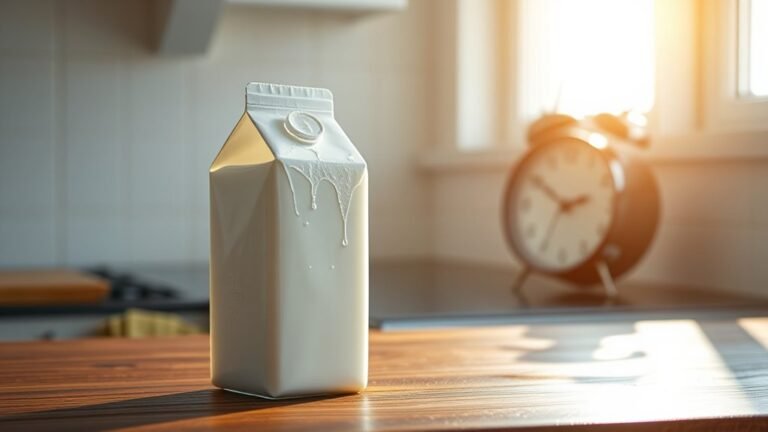
Additionally, if the container is bloated or leaking, that could indicate bacterial activity inside.
Trust your senses: when in doubt, throw it out. Recognizing these signs helps you avoid using milk past its prime and keeps your kitchen safe.
Risks of Consuming Spoiled Milk
Consuming spoiled milk can expose you to harmful bacteria that cause food poisoning. When you drink milk that’s gone bad, you risk experiencing unpleasant and sometimes serious health effects.
Here are three key risks you should be aware of:
- Stomach cramps and nausea: Spoiled milk contains bacteria like Salmonella or E. coli, which can upset your digestive system and cause stomach pain or vomiting.
- Diarrhea and dehydration: The bacterial toxins can lead to diarrhea, which might dehydrate you if fluids aren’t replenished.
- Fever and chills: Your body may react with fever and chills as it fights off infection from harmful bacteria ingested with spoiled milk.
To avoid these risks, always check milk freshness before consuming it.
Tips for Keeping Milk Fresh Longer
Understanding the risks of spoiled milk highlights why it’s important to keep your milk fresh as long as possible. To do this, always store milk in the coldest part of your fridge, not the door, where temperatures fluctuate.
Keep the container tightly sealed to prevent exposure to air and contaminants. Avoid leaving milk out too long when pouring or cooking; return it promptly to the fridge.
Use clean utensils to prevent introducing bacteria. Consider buying smaller quantities if you don’t consume milk quickly to reduce the chance of spoilage.
Also, check the expiration date before purchasing and use milk within that timeframe. By following these simple steps, you can extend your milk’s freshness and reduce health risks associated with spoiled milk.
What to Do If Milk Has Been Left Out Too Long
When milk sits out too long, bacteria can multiply quickly, making it unsafe to drink. If you realize milk has been left out beyond the safe timeframe, take these steps immediately:
- Smell and inspect the milk. If it has a sour odor or clumps, discard it without tasting.
- Check how long it was unrefrigerated. Milk left out over two hours at room temperature is risky to consume.
- When in doubt, throw it out. Consuming spoiled milk can cause stomach upset or food poisoning.
Never attempt to salvage milk that’s been left out too long.
Prioritize your health by disposing of it safely and cleaning any containers or surfaces it contacted.
Alternatives to Refrigeration for Milk Storage
Although refrigeration is the most common method for keeping milk fresh, you can explore alternatives if a fridge isn’t available. For short-term storage, keeping milk in a cool, shaded place can slow spoilage. Using insulated coolers with ice packs also helps maintain a lower temperature.
Additionally, powdered or UHT (ultra-high temperature) milk offers longer shelf life without refrigeration until opened.
| Method | Duration & Notes |
|---|---|
| Cool, shaded spot | A few hours; avoid direct sunlight |
| Insulated cooler | Up to 24 hours with ice packs |
| Powdered/UHT milk | Months unopened; refrigerate after opening |
These options can extend usability, but always check milk freshness before use.
Frequently Asked Questions
Can Freezing Milk Extend Its Overall Shelf Life?
Yes, freezing milk can extend its shelf life by several months. Just make sure to leave space for expansion in the container, thaw it properly, and use it quickly once thawed to keep it fresh and safe.
How Does Pasteurization Affect Milk’s Durability Outside the Fridge?
Pasteurization kills harmful bacteria, so your milk lasts longer outside the fridge than raw milk, but it still spoils quickly if left out too long.
You shouldn’t leave it unrefrigerated for more than two hours.
Is UHT Milk Safer to Leave Out Than Regular Milk?
Yes, UHT milk’s safer to leave out than regular milk because it’s ultra-pasteurized, killing more bacteria. You can keep unopened UHT milk at room temperature for months, but once opened, treat it like regular milk and refrigerate it.
What Are the Best Containers for Storing Milk at Room Temperature?
Think of your milk as a delicate treasure. Use airtight, opaque containers to shield it from light and air. Glass or BPA-free plastic bottles with tight seals work best, keeping your milk fresh and safe at room temperature.
Can Adding Preservatives to Milk Help It Last Longer Unrefrigerated?
Yes, adding preservatives can help milk last longer unrefrigerated by slowing bacterial growth. However, you should still refrigerate milk when possible, as preservatives don’t make it completely safe to leave out for extended periods.
Conclusion
You can’t afford to treat milk like a ticking time bomb—knowing how long it stays safe out of the fridge is essential. If you leave it out too long, it’s like inviting a bacterial party you don’t want to crash. Always watch for sour smells or curdling, and when in doubt, toss it out.
By following simple tips, you’ll keep your milk fresh longer and avoid any nasty surprises that could ruin your day. Understanding milk safety guidelines and how long milk lasts out of the fridge ensures you enjoy it without risk. Proper storage and timely use are key to maintaining milk quality and safety.