How Long Is Almond Milk Good After Opening? Storage Tips & Shelf Life
When you open a carton of almond milk, you probably wonder how long almond milk is good after opening. You want to avoid wasting it, but you also don’t want to risk drinking spoiled milk. Knowing the right storage methods and recognizing when it’s gone bad can save you trouble.
But what exactly affects its shelf life once opened, and how can you tell if it’s still safe to use? Understanding these factors will help you keep your almond milk fresh and safe to consume for as long as possible.
Typical Shelf Life of Opened Almond Milk

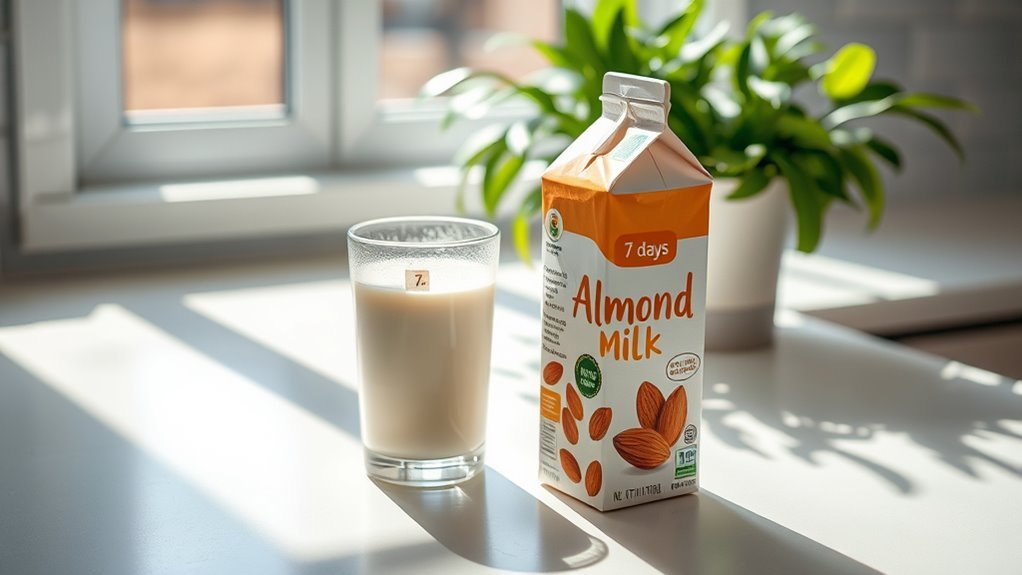
Once you open almond milk, it usually stays fresh in the fridge for about 7 to 14 days.
The typical shelf life of almond milk depends on whether it’s refrigerated almond milk or shelf-stable before opening.
Once opened almond milk, including unsweetened almond milk, requires proper storage to maximize its storage time.
Proper storage is essential for opened almond milk, including unsweetened varieties, to extend freshness and quality.
To determine if your almond milk has expired, rely on a visual check and sensory evaluation.
Look for clumping, discoloration, or a sour smell, which are clear signs of spoilage.
If you notice any of these, it’s best to discard the almond milk to avoid foodborne illness.
Keeping track of the storage time after opening helps ensure you enjoy your almond milk safely and at its best quality.
Proper Storage Practices for Opened Almond Milk

Although almond milk offers a convenient dairy alternative, you need to store it properly after opening to keep it fresh and safe. Always refrigerate opened almond milk at or below 4°C (39°F) to slow spoilage and maintain quality.
After each use, seal the container tightly to prevent contamination from airborne bacteria. Use a clean utensil every time you pour almond milk, as introducing bacteria can compromise safety.
Avoid leaving the milk out at room temperature for more than 2 hours, since higher temperatures encourage bacterial growth.
To guarantee both safety and peak quality, consume opened almond milk within 7 to 14 days. Following these storage practices helps you enjoy almond milk without risking spoilage or contamination.
Visual and Sensory Signs of Spoiled Almond Milk

When almond milk spoils, you’ll notice distinct visual and sensory changes that signal it’s time to discard it. Look for mold, such as black flecks inside the milk or swelling of the container, which are clear visual cues of spoilage.
Pay close attention to the smell; a sour or off-putting odor is a strong sensory sign that the almond milk has gone bad.
Spoiled almond milk often shows thickening, curdling, or clumping, indicating bacterial or yeast activity.
While natural separation can happen, persistent clumping or discoloration, such as darkening or a dull appearance, means the milk isn’t safe to consume.
Trust these visual cues and sensory signs to avoid using spoiled almond milk and keep your health intact.
Factors That Affect Almond Milk’s Longevity
Because storage conditions vary, the length of time almond milk stays fresh after opening can differ considerably. The shelf life of almond milk depends largely on how you handle opened almond milk. Proper refrigeration is essential; storing it in the coldest part of your fridge helps slow spoilage.
Exposure to heat, light, or fluctuating temperatures accelerates spoilage signs like sour smell or curdling. Store-bought almond milk often contains preservatives and is pasteurized, extending its freshness compared to homemade almond milk, which typically lasts 4 to 5 days due to lacking preservatives.
Shelf-stable almond milk unopened lasts longer, but once opened, it requires refrigeration. Always check the expiration date and seal the container tightly as part of spoilage prevention to maximize the shelf life of almond milk.
Potential Health Risks of Consuming Spoiled Almond Milk
If you consume spoiled almond milk, you risk experiencing gastrointestinal issues like nausea, vomiting, and diarrhea caused by bacterial growth. Spoiled almond milk often develops off odors, a sour taste, or visible mold, which indicate the presence of harmful microorganisms.
Drinking it increases your chances of foodborne illnesses and food poisoning, as molds can produce mycotoxins that trigger allergic reactions or other health risks. Ignoring these signs jeopardizes your food safety and can lead to stomach discomfort or more severe allergic responses.
To protect yourself, always check for any changes in smell, taste, or appearance before using almond milk. Avoiding spoiled almond milk is essential to prevent bacterial growth and mold-related complications that threaten your well-being.
Tips to Extend the Freshness of Almond Milk After Opening
To keep your almond milk fresh longer, store it in the back of the refrigerator where the temperature stays between 1-4°C. Proper refrigeration is key to maintaining the shelf life of opened almond milk and preventing contamination.
Store almond milk at 1-4°C in the back of the fridge to keep it fresh and safe longer.
Follow these storage tips to extend freshness:
- Always seal the container tightly after use to limit air exposure.
- Never leave almond milk out at room temperature for more than two hours.
- Check the expiration date and watch for spoilage signs like sour smell or curdling; discard if present.
- Freeze excess almond milk in small portions to extend shelf life up to six months.
Frequently Asked Questions
How Long Is Almond Milk Good in the Fridge After Opening?
You can keep almond milk in the fridge for 7 to 14 days after opening. Just make sure to store it properly, check for any sour smell or curdling, and discard it if you notice spoilage signs.
How to Know if Almond Milk Has Gone Bad?
Think of almond milk like a fading sunset. If it smells sour, looks discolored or clumpy, or has mold, it’s past its prime. Trust your senses; if it tastes off, toss it out to stay safe.
Why Do You Have to Use Almond Milk 7 Days After Opening?
You have to use almond milk within 7 days because bacteria start growing, causing off flavors and sour smells.
Consuming it later risks foodborne illness, especially since it lacks preservatives and spoils quickly after opening.
Can I Drink One Month Old Almond Milk?
Better safe than sorry—you shouldn’t drink one month old almond milk. It likely spoiled, even if it looks fine.
Trust your senses: if it smells sour or clumps, toss it to avoid getting sick.
Conclusion
Once you open almond milk, remember to refrigerate it right away and reseal it tightly to keep it fresh for up to two weeks. Always assess its appearance and aroma—any sour smell, strange spots, or curdling signals spoilage.
Staying savvy with storage and spotting signs helps safeguard your sip and supports your health. So, store smart, smell, and see before you sip to savor every smooth, satisfying serving safely.
By following these tips on how long almond milk is good after opening, you ensure your almond milk stays fresh and delicious while avoiding waste.