How Long Is Milk Good After the Expiry Date? Safety, Storage & Signs to Check
Imagine pouring milk into your morning coffee, unsure if it’s still fresh after the expiration date. How long is milk good after the expiry date? This common question has a more complex answer than you might expect.
Several factors affect milk’s freshness beyond the printed date. Knowing when to trust your senses—and when to toss it—can save you from waste or an upset stomach. Let’s explore what you need to know.
Understanding Milk Date Labels

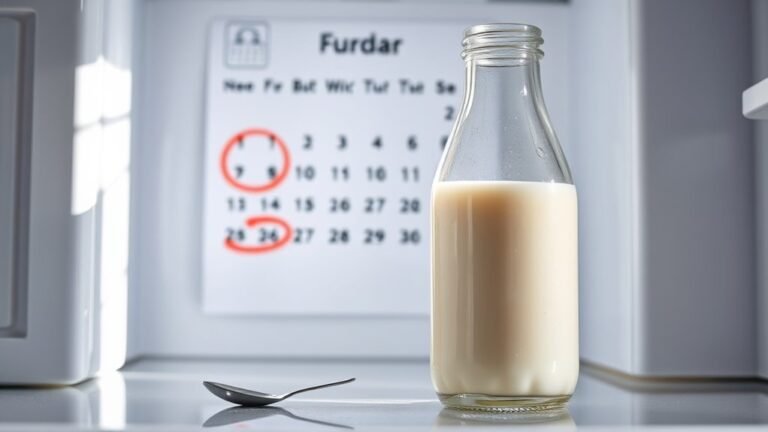
Although milk date labels like “Best if used by,” “Sell by,” and “Use by” are common, they mainly indicate quality rather than safety, so you shouldn’t rely solely on them to decide if your milk is still good. These milk date labels guide you on the best quality and help stores manage inventory but don’t guarantee food safety.
Pasteurized milk often remains safe beyond expiration dates if unopened and stored properly.
To avoid foodborne illness, trust sensory checks like smell, taste, and appearance to detect spoilage signs.
Since the FDA doesn’t mandate milk date labels except for infant formula, you must assess shelf life yourself. Proper storage and regular sensory checks are key to ensuring your milk’s safety, even past printed expiration dates.
Typical Shelf Life of Milk After Expiration

When you store pasteurized milk properly in the refrigerator, it can remain safe to drink for 3 to 7 days after the expiration date. Unopened milk generally has a milk shelf life extending up to 7 days beyond the printed date, while opened milk’s shelf life after expiration shortens to 2 to 3 days.
Ultra-high temperature (UHT) milk lasts even longer unopened, up to 4 weeks, and 7 to 10 days once opened. Proper fridge storage is key to maintaining milk freshness and extending storage duration.
However, milk spoilage can occur sooner if storage conditions aren’t ideal. Always watch for signs of spoilage like sour smell or curdling before consuming milk past its expiration date. This helps guarantee you avoid spoiled milk and only drink milk that’s safe to drink.
How to Identify Spoiled Milk

Even if milk is stored properly and kept past its expiration date, you’ll want to check for clear signs that it’s spoiled before drinking.
The most obvious sign of spoilage is a sour odor. If the milk smells sour the moment you open it, discard it immediately.
Look closely for changes in texture; a lumpy texture or curdling means the milk is spoiled and unsafe to consume.
Other signs of spoilage include discoloration, such as yellowish hues or mold growth.
Don’t risk tasting milk unless you’re sure it’s fresh.
Identifying these signs helps you avoid health risks and reduces unnecessary food waste.
Always inspect milk carefully for spoilage before consuming, even if the expiration date hasn’t passed by much.
Tips for Extending Milk Freshness
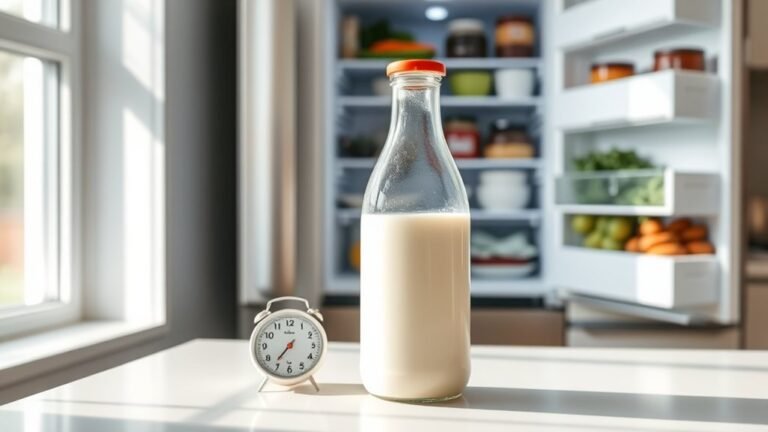
To keep your milk fresh longer, store it in the coldest part of your fridge, ideally between 38°F and 40°F, and always seal the carton tightly after use. Proper storage prevents temperature fluctuations that can shorten milk shelf life. Avoid fridge storage in the door, where warmth varies.
You can extend freshness by freezing milk in small portions, which preserves it up to three months, though texture might change. Always check for spoilage before use. Look for sour smell, curdling, or discoloration regardless of the expiration date.
Storing milk properly and monitoring signs of spoilage are essential for food safety. By following these tips, you’ll maximize your milk’s usability and reduce waste while ensuring it remains safe to consume beyond the printed expiration date.
Proper Milk Storage Practices
Although milk naturally spoils over time, you can considerably extend its freshness by storing it properly. Always keep milk refrigerated between 38°F and 40°F, ideally on interior shelves to avoid temperature fluctuations near the door.
Seal the container tightly and avoid transferring milk to other containers to prevent contamination. Freezing milk in airtight containers can extend its shelf life up to three months, but leave space for expansion.
Regardless of proper storage or expiration date, check for signs of spoilage like sour smell or curdling before use.
| Storage Location | Temperature Range | Impact on Freshness |
|---|---|---|
| Interior Shelves | 38°F – 40°F | Maintains freshness |
| Refrigerator Door | Variable | Increases spoilage risk |
| Freezer | 0°F or below | Extends shelf life |
Health Risks of Consuming Spoiled Milk
Proper storage and careful inspection help reduce the chances of drinking spoiled milk, but consuming it still carries health risks you should be aware of.
Spoiled milk results from bacterial growth that occurs after the expiration date or due to poor milk spoilage management. Drinking it can lead to food poisoning, causing nausea, vomiting, diarrhea, and stomach cramps.
Larger amounts increase your risk of bacterial infections like Salmonella or Listeria, which can severely affect those with weakened immune systems.
Always check for signs of spoilage such as sour smell, curdling, or off-color before use.
Prioritizing food safety by respecting the expiration date and recognizing spoilage signs helps protect you from these health risks linked to spoiled milk and bacterial contamination.

Freezing Milk to Prolong Shelf Life
If you want to extend your milk’s shelf life beyond its expiration date, freezing is a practical option you can use. Freezing milk before the expiration date helps maintain milk safety and slows milk spoilage.
While freezing milk may cause slight quality loss like texture changes, it’s effective for dairy preservation. Always thaw milk in the refrigerator and shake well to redistribute separated components. Avoid refreezing thawed milk to prevent further quality loss.
| Aspect | Recommendation | Notes |
|---|---|---|
| Freeze Milk | Up to 3 months | Best before expiration date |
| Thawing | In refrigerator only | Shake well before use |
| Quality Loss | Slight changes in texture/color | Larger containers more affected |
| Milk Storage | Use airtight containers | Prevents contamination |
Frequently Asked Questions
Can You Drink Milk After the Expiration Date?
Yes, you can drink milk after the expiration date if it smells fresh and looks normal. Always check for sour smell or curdling first, and store it properly in the refrigerator to keep it safe longer.
How to Tell if Milk Is Still Good After the Expiration Date?
You can tell if milk’s still good by checking for sour smell, lumps, or discoloration.
Surprisingly, milk often stays safe 3-7 days past expiration, but trust your senses and toss it if anything seems off.
Can Milk Last 2 Months in the Fridge?
No, milk can’t last 2 months in the fridge safely. You’ll likely encounter spoilage like sour smell or curdling well before then.
It’s best to discard milk after about a week past expiration for your safety.
Conclusion
You might think milk turns into a science experiment the second it hits the expiry date, but that’s not true. If you store it right, unopened milk can still be your fridge’s best-kept secret for up to a week after expiration.
Just don’t ignore your senses—sniff, look, and trust your gut before drinking. With proper care, milk won’t betray you overnight; it’s more patient than you’d imagine!
So, how long is milk good after the expiry date? Usually, it can last about 5 to 7 days beyond that date if refrigerated properly. Always check for signs of spoilage to be safe.