How Much Whole Milk Should a 1-Year-Old Drink Daily?
It’s a funny coincidence that just as you’re wondering how much whole milk your 1-year-old should drink daily, many parents are asking the same question. Whole milk for toddlers is an important part of their diet because it provides essential nutrients like calcium and vitamin D. You want to make certain your child gets enough nutrients without overdoing it, but striking that balance can be tricky.
Understanding the right amount of whole milk can help support healthy growth and avoid common pitfalls. Yet, there’s more to think about before settling on the perfect daily intake. Factors like your child’s overall diet and individual health needs also play a role in determining how much milk they should consume.
Recommended Daily Whole Milk Intake for 1-Year-Olds

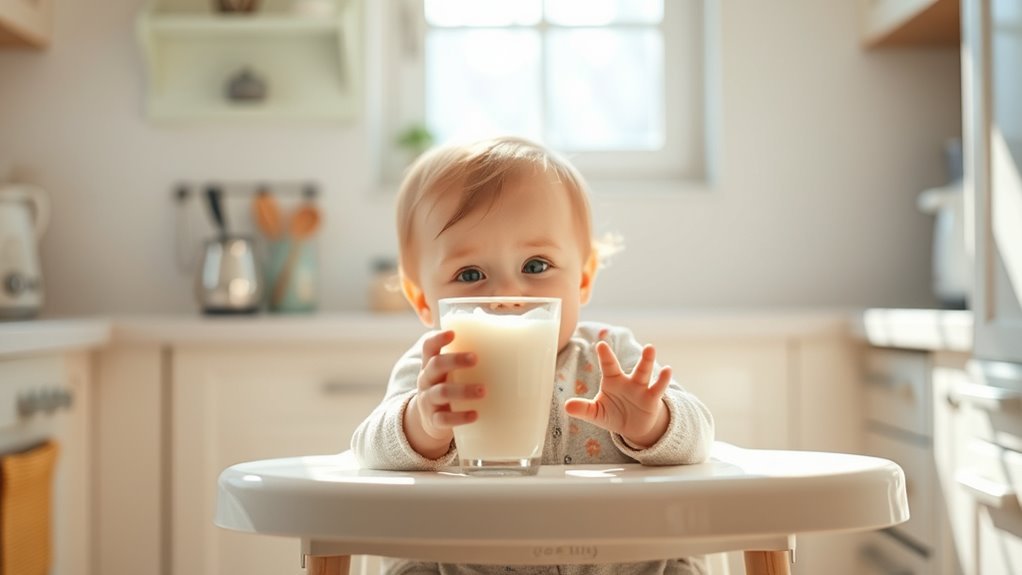
While it’s important to provide your 1-year-old with whole milk, you should aim for about 16 ounces (2 cups) daily. Feeding recommendations suggest between 16 and 24 ounces to ensure your toddler gets enough vitamin D and calcium for healthy growth.
However, consuming more than 24 ounces may interfere with their appetite for solid foods, upsetting nutritional balance. To maintain age-specific needs, divide the milk into two or three servings throughout the day, complementing a diet rich in iron and other nutrients found in solid foods.
Nutritional Benefits of Whole Milk at Age One

Whole milk plays an essential role in your 1-year-old’s nutrition by providing essential fats that support brain development and promote healthy growth. The fat content in whole milk is indispensable for energy and healthy weight gain during this stage.
Beyond fats, whole milk offers important nutritional benefits like calcium and vitamin D, which work together to build strong bones and teeth. Introducing whole milk at age one ensures your toddler meets daily nutritional needs that other foods alone mightn’t fully cover.
Pediatric guidelines suggest about 16 ounces of whole milk daily to maximize these benefits. Choosing whole milk as toddler milk helps you provide balanced nutrients that support both brain development and physical growth, making it a valuable part of your child’s diet at this milestone.
Gradual Transition From Bottle to Cup

As your child reaches 12 months, you can start offering small amounts of milk in a sippy or straw cup to encourage independence and support oral development.
Begin the gradual shift by introducing cup use during meals and snacks, replacing one bottle feeding at a time.
Start switching from bottles by offering a cup during meals and snacks, one feeding at a time.
This helps your child adjust comfortably to the new feeding habits without overwhelming them.
Encourage acceptance by offering milk at room temperature or slightly warmed, making the experience familiar and pleasant.
Keep the routine positive and relaxed, which supports smooth bottle replacement and fosters your child’s confidence in using a cup.
Over time, increase cup use as your child gains independence, solidifying this important developmental step while maintaining consistent feeding habits.
Balancing Milk With Solid Foods
Even though milk provides important nutrients like calcium and vitamin D, you should balance your 1-year-old’s milk intake with a variety of solid foods to support their overall nutrition and growth.
Following feeding guidelines, aim for about 16 ounces of whole milk daily while encouraging nutrient-rich foods to ensure dietary balance.
Over-relying on milk might reduce appetite for solids, increasing the risk of iron deficiency. To promote healthy eating and growth, introduce diverse solid foods alongside milk, such as:
- Iron-rich meats and legumes to prevent iron deficiency
- Fruits and vegetables for vitamins and fiber
- Whole grains for energy and nutrients
- Dairy as a calcium and vitamin D source
Balancing milk with solid foods fosters better nutrition and supports your child’s development effectively.
Risks of Excessive Milk Consumption
If your toddler drinks more than 24 ounces of milk daily, you risk causing iron deficiency anemia and other nutritional imbalances. Excessive milk intake can displace appetite for solid foods, leading to nutrient displacement and reduced nutrient absorption.
This limits your toddler’s intake of essential vitamins and minerals beyond what milk provides. Over-relying on milk for calories may also contribute to unhealthy weight gain, increasing the risk of obesity.
Additionally, consuming too much milk can cause stomach discomfort, including constipation and bloating, making your child uncomfortable.
To avoid these issues, stick to the recommended daily milk limit and ensure a balanced diet with a variety of solid foods. This approach supports healthy growth while preventing the negative effects of excessive milk consumption in toddlers.
Choosing the Right Type of Milk
When choosing milk for your 1-year-old, whole milk remains the best option because it provides vital fats that support brain development and growth. You should introduce cow’s milk around 12 months after breastfeeding or formula feeding.
Always pick pasteurized whole milk to avoid risks linked to unpasteurized products.
Choose pasteurized whole milk to ensure safety and protect your child from foodborne illnesses.
If you consider milk alternatives, choose fortified plant-based milks like soy with added calcium and vitamin D to meet nutritional needs.
Avoid unfortified plant-based milks such as almond or rice milk as main drinks since they lack key nutrients.
- Whole milk delivers vital fats and nutrients for toddlers
- Pasteurized milk ensures safety from foodborne illness
- Fortified plant-based milks offer calcium and vitamin D when dairy isn’t an option
- Avoid unpasteurized and non-fortified milk alternatives for your 1-year-old
Alternatives to Cow’s Milk for Toddlers
Although whole milk is ideal for most toddlers, you might consider alternatives if your child has a dairy allergy or your family follows a plant-based diet. For child nutrition at age 1 year, choosing plant-based milks fortified with calcium and vitamin D is essential.
Fortified soy milk stands out among milk alternatives because it matches cow’s milk in protein content and calcium sources, supporting proper growth. Other options like oat, rice, almond, and coconut milks often lack sufficient protein and need fortification to be dairy-free substitutes.
| Milk Type | Protein Content | Fortified with Calcium & Vitamin D |
|---|---|---|
| Fortified Soy | Comparable to cow’s milk | Yes |
| Oat Milk | Lower | Sometimes |
| Almond Milk | Lower | Sometimes |
| Coconut Milk | Lower | Sometimes |
Check labels and consult your healthcare provider to ensure adequate nutrition.
Monitoring Your Child’s Milk Intake and Health
Since toddlers need a balanced intake to thrive, you should watch your child’s whole milk consumption carefully.
For a 1-year-old, about 16 ounces of whole milk daily supports growth and vitamin D needs, but exceeding 24 ounces can hinder iron absorption and risk anemia.
Monitoring milk intake ensures your child maintains a balanced diet without losing appetite for solids.
Follow feeding guidelines and consult your pediatrician regularly to align milk intake with your child’s health needs.
Keep an eye on:
- Total whole milk consumed daily
- Signs of iron deficiency or anemia
- Appetite for solid foods
- Pediatrician’s recommendations on vitamin D and nutrition

Frequently Asked Questions
How Much Whole Milk Should I Give My 1 Year Old a Day?
You should give your 1-year-old about 16 to 24 ounces of whole milk daily. Don’t exceed 24 ounces to avoid iron absorption issues.
Always offer water and solid foods alongside milk for balanced nutrition.
Does My 2 Year Old Still Need to Drink Whole Milk?
Like a steady drumbeat, your 2-year-old still needs whole milk daily to support brain growth and healthy fats.
You can switch to lower-fat milk later, but keep whole milk now unless your doctor advises otherwise.
How Much Milk Should a 1 Year Old Drink in CDC?
You should give your 1-year-old about 16 ounces of whole milk daily, according to the CDC. This amount supports healthy growth without risking iron absorption issues, so balance milk with solid foods for best nutrition.
How Many Bottles of Milk Should a 12 Month Old Have a Day?
Think of milk bottles as stepping stones; your 12-month-old should have 1 to 3 bottles daily, each about 3 to 4 ounces.
You’ll want to slowly swap bottles for sippy cups as solid foods take center stage.
Conclusion
You should aim to give your 1-year-old about 16 to 24 ounces of whole milk daily, divided into a few servings.
Remember, too much of a good thing can be detrimental—excessive milk might reduce their appetite for solid foods and increase the risk of iron deficiency. Balance is key, so offer a variety of nutritious solids alongside milk.
Keep an eye on their intake and health to ensure they’re growing strong and healthy. Proper whole milk intake daily is essential for your toddler’s development and overall well-being.