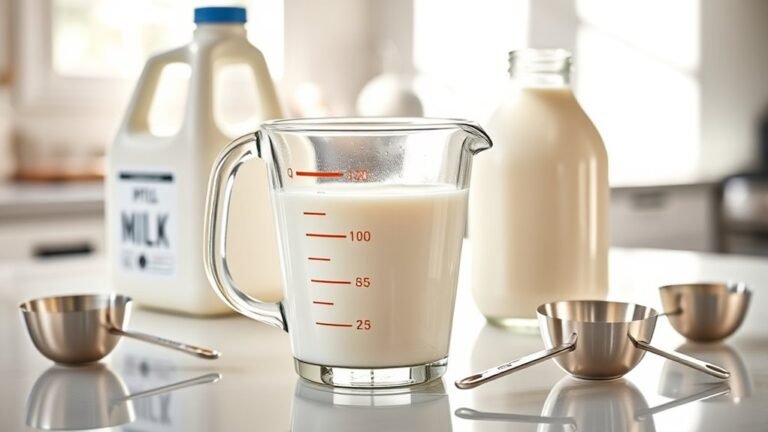
How Much Whole Milk Should a 12 Month Old Drink?
How Much Whole Milk Should a 12 Month Old Drink? You should give your 12-month-old about 16 to 24 ounces (2-3 cups) of whole milk daily. This amount supports their rapid growth by providing essential fats, calcium, vitamin D, and protein.
Make sure milk complements a balanced diet with solids, as too much can cause issues like poor appetite or iron deficiency. Keep an eye on their intake and symptoms.
If you want to understand how to balance milk with other foods and watch for signs, there’s more to contemplate.
Nutritional Benefits of Whole Milk for Toddlers

Although you might be exploring various options, whole milk provides essential nutrients that support your toddler’s growth and development. It contains fat crucial for brain development, helping your little one build cognitive skills.
Whole milk also delivers calcium and vitamin D, which strengthen bones and teeth during this critical growth phase. Additionally, it offers protein to support muscle growth and overall health.
Because toddlers are growing rapidly, these nutrients are vital to meet their energy and developmental needs. Whole milk’s balanced combination of fats, vitamins, and minerals makes it a practical choice, helping you ensure your child gets the nourishment necessary for a strong foundation.
Choosing whole milk helps you provide essential nutrients without relying on supplements or fortified alternatives.
Recommended Daily Milk Intake for 12-Month-Olds

To guarantee your 12-month-old reaps the full benefits of whole milk, it’s important to offer the right amount each day. Typically, toddlers need about 16 to 24 ounces (2 to 3 cups) daily. This amount supports their rapid growth without replacing essential solid foods.
Offering more than 24 ounces might reduce their appetite for nutritious meals. Balance milk with a varied diet to meet all nutritional needs.
| Age (Months) | Milk Amount (Ounces) | Notes |
|---|---|---|
| 12 | 16-24 | Ideal daily intake |
| 13-18 | 16-24 | Maintain balanced diet |
| 19-24 | 16-24 | Monitor appetite |
| 24+ | 16-20 | Gradual reduction starts |
| Adults | Varies | Not applicable for toddlers |
Signs Your Baby Is Drinking Enough Milk

When your baby consistently finishes their whole milk and seems satisfied, it’s a good sign they’re getting enough. You’ll also notice other clear indicators of proper milk intake that show your little one’s nutritional needs are being met.
Here are signs your baby is drinking enough milk:
- Steady weight gain appropriate for their age
- Regular wet diapers, typically 4 to 6 per day
- Contentment between meals without excessive fussiness
- Healthy skin tone and good muscle tone
- Normal growth milestones and active behavior
Keep an eye on these signs to ensure your baby is thriving with their milk intake, and always consult your pediatrician if you have concerns about their nutrition or growth.
Potential Risks of Excessive Milk Consumption
If your toddler drinks too much whole milk, it can lead to health issues like iron deficiency anemia and poor appetite for other important foods. Milk is low in iron, so when your child fills up on it, they mightn’t eat enough iron-rich foods, increasing the risk of anemia.
Excessive milk intake can also cause constipation or diarrhea, making your child uncomfortable. Drinking more than 24 ounces a day may displace essential nutrients from solids, hindering balanced growth.
Additionally, too much milk can contribute to weight gain beyond healthy levels. To avoid these risks, monitor your toddler’s milk consumption closely and ensure they eat a variety of solid foods.
Keeping whole milk intake within recommended limits supports better overall nutrition and development.
Transitioning From Breast Milk or Formula to Whole Milk
Although breast milk or formula provides essential nutrients during your baby’s first year, you’ll need to gradually introduce whole milk as they approach 12 months. Making this switch smoothly helps your little one adjust to new tastes and textures while ensuring they continue receiving proper nutrition.
Gradually introducing whole milk around 12 months helps your baby adapt to new tastes and maintain proper nutrition.
To shift effectively, try these tips:
- Start by mixing whole milk with breast milk or formula, increasing the milk ratio over time.
- Offer milk in a cup instead of a bottle to encourage independence.
- Introduce whole milk during mealtimes to associate it with eating.
- Watch for any signs of intolerance or allergies, like rashes or upset stomach.
- Be patient and consistent, as some babies may resist the new taste initially.
This gradual approach supports a healthy adjustment during this important stage.
How Whole Milk Supports Growth and Development
Since your toddler’s body and brain are rapidly developing, whole milk plays a crucial role in providing the fats, vitamins, and minerals they need to grow strong and stay healthy. The healthy fats in whole milk support brain development and help maintain energy levels throughout the day.
Additionally, whole milk delivers essential nutrients like calcium and vitamin D, which strengthen bones and teeth during this critical growth phase. You’ll also find protein in whole milk, which aids muscle development and repair.
Balancing Milk Intake With Solid Foods
As your toddler explores new tastes and textures, you’ll want to balance their whole milk intake with a variety of solid foods to guarantee they receive a well-rounded diet. Too much milk can fill them up, leaving less room for nutrient-rich solids.
Aim for about 16 to 24 ounces of whole milk daily, paired with diverse foods to support growth.
Focus on offering:
- Soft fruits and vegetables for vitamins and fiber
- Iron-rich meats or legumes to prevent anemia
- Whole grains for sustained energy
- Dairy or dairy alternatives beyond milk for calcium
- Healthy fats from avocado or nut butters for brain development
This approach helps your toddler get essential nutrients without relying solely on milk.
Alternatives to Whole Milk for Toddlers
When you’re considering your toddler’s nutrition, it’s helpful to know there are several options to whole milk that can provide essential nutrients.
If your child is lactose intolerant or allergic to cow’s milk, fortified plant-based milks like soy, almond, or oat milk can be good choices.
Choose unsweetened varieties fortified with calcium, vitamin D, and protein to match the benefits of whole milk.
Goat’s milk is another alternative but consult your pediatrician since it lacks folic acid.
Additionally, breast milk or formula may still be suitable for some toddlers beyond 12 months.
Tips for Encouraging Milk Drinking in Picky Eaters
Although some toddlers may resist drinking milk, you can use simple strategies to make it more appealing. It’s important to be patient and creative while encouraging your little one to enjoy milk as part of their diet.
Patience and creativity can help toddlers embrace milk as a tasty, healthy part of their diet.
Try these tips to boost their milk intake:
- Serve milk at different temperatures to find their preference.
- Offer milk in colorful or fun cups to spark interest.
- Mix milk with a small amount of natural flavor, like vanilla or cinnamon.
- Incorporate milk into foods such as oatmeal or smoothies.
- Set a consistent routine for milk times to build habit and expectation.
When to Consult a Pediatrician About Milk Intake
If your toddler shows signs of milk intolerance or refuses milk consistently, you should consult a pediatrician to guarantee they’re meeting their nutritional needs. Watch for symptoms like rashes, diarrhea, or persistent fussiness after milk consumption.
Your pediatrician can help assess whether your child needs alternative sources of calcium and vitamin D or if an allergy test is necessary.
| Signs to Watch For | Possible Issues | When to Act |
|---|---|---|
| Rash or hives | Milk allergy | Immediately |
| Diarrhea or vomiting | Intolerance or allergy | Within a few days |
| Refusal to drink milk | Nutritional concerns | If persistent over 1 week |
Don’t hesitate to seek professional advice to ensure your child’s healthy growth.
Frequently Asked Questions
Can Whole Milk Cause Allergies in 12-Month-Olds?
Yes, whole milk can cause allergies in 12-month-olds if they’re sensitive to cow’s milk proteins. You should watch for symptoms like rash, vomiting, or diarrhea.
Consult your pediatrician if you suspect an allergy.
Is Organic Whole Milk Better for Toddlers?
Organic whole milk isn’t necessarily better for toddlers, but it may have fewer pesticides and antibiotics. You can choose organic if you prefer, but focus more on balanced nutrition and your child’s tolerance to milk.
How Should Whole Milk Be Stored After Opening?
Think of opened whole milk like a treasure chest. Keep it sealed tight and chilled in your fridge.
Don’t let it sit out; consume it within 7 days to keep that creamy goodness fresh and safe for your little one.
Can Whole Milk Be Used in Toddler Recipes?
Yes, you can definitely use whole milk in toddler recipes. It adds creaminess and provides essential fats and nutrients toddlers need for growth.
Just make sure you use pasteurized whole milk for safety and nutrition.
Is It Safe to Mix Whole Milk With Other Beverages?
Mixing whole milk with other beverages is generally safe, but you shouldn’t combine it with acidic drinks like orange juice, as it might curdle.
You can enjoy it with smoothies or cereal, just keep balance in mind.
Conclusion
As your little one turns 12 months, whole milk becomes an important part of their diet, but don’t let it steal the show from solid foods. Aim for about 16-24 ounces a day to keep them healthy and happy.
Remember, too much of a good thing can backfire, so balance is key. If you’re ever unsure, trust your gut and consult your pediatrician—it’s better to be safe than sorry when it comes to your toddler’s nutrition.
In conclusion, knowing how much whole milk should a 12 month old drink is essential for their growth and development. Always balance milk intake with solid foods and professional advice for the best outcomes.