How Long Is Breast Milk Good After Warming How To Guide
When you warm breast milk, knowing how long breast milk is good after warming is essential for your baby’s health. Using warmed milk beyond its safe window can lead to bacterial growth, which you definitely want to avoid.
But did you know that the way you warm and handle the milk can make a big difference? Understanding these details can help you feed your baby confidently and safely.
Here’s what you need to keep in mind to ensure your baby gets the best from every feeding.
Understanding Breast Milk Storage Times

Although breast milk is a natural and nutritious food, you need to handle its storage carefully to keep it safe for your baby. Following proper storage guidelines helps maintain milk quality and safety.
Freshly expressed milk can stay at room temperature for 4 to 6 hours, depending on conditions, but it’s best used within that timeframe.
In the refrigerator, breast milk stays fresh for up to 4 days if stored properly.
Frozen breast milk retains most nutrients for up to 6 months, though 12 months is acceptable with some nutrient loss.
When thawing breast milk, use it within 24 hours and never refreeze thawed milk.
Label your milk with the expression date to track storage duration and expiration time, ensuring your baby gets safe, nutritious milk every time.
Safe Methods to Warm Breast Milk

When you warm breast milk, using safe methods helps maintain its nutrients and prevents harmful bacteria from growing. To warm breast milk safely, use a bottle warmer or place the bottle in a bowl of warm water.
Warm breast milk safely with a bottle warmer or warm water to preserve nutrients and prevent bacteria growth.
Avoid microwave heating, as it can create hot spots that may burn your baby and degrade nutrient preservation. Always test the temperature on your wrist before feeding—it should feel warm, not hot, close to body temperature.
Reheating breast milk more than once isn’t safe, so only warm the amount you plan to use. After feeding, discard leftover milk within two hours.
Following these safe warming methods and proper storage techniques ensures your baby receives nutritious, safe breast milk every time.
The Two-Hour Rule for Using Warmed Milk

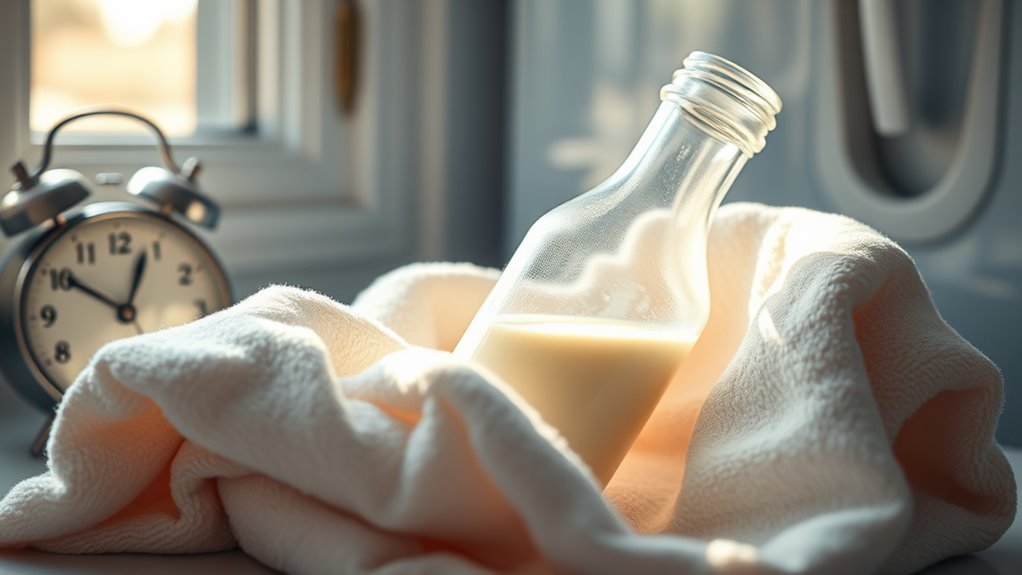
Because warmed breast milk provides an ideal environment for bacteria to grow, you should use it within two hours. This two-hour rule guarantees the milk stays safe and maintains its nutritional value for your infant.
After warming, don’t leave milk at room temperature longer than this to prevent bacterial growth. If you have leftover milk after feeding, the safest choice is to discard it rather than reheating or refrigerating it, as both increase contamination risks.
These storage guidelines apply whether the milk was freshly warmed or previously stored. Following the two-hour rule helps protect your baby’s health by minimizing exposure to harmful bacteria while preserving the benefits of breast milk’s infant nutrition.
Always prioritize safety by using warmed breast milk promptly and discarding any milk left beyond two hours.
Handling and Discarding Leftover Breast Milk
Following the two-hour rule means you need to handle any leftover breast milk with care to keep your baby safe. After feeding, it’s vital to discard leftover milk promptly to prevent bacterial growth and contamination.
Never reuse or reheat breast milk that’s been out past the milk discard time or touched by your baby’s mouth. If you warmed milk but didn’t feed from it, you can store it safely in the fridge for up to 24 hours following temperature guidelines.
Proper handling includes labeling milk with dates and times, using safe storage methods, and avoiding feeding leftovers to reduce contamination risk.
Thawing and Using Previously Frozen Milk
Although thawing breast milk requires patience, doing it slowly in the refrigerator helps maintain its nutrients and safety. You should thaw breast milk overnight, typically about 12 hours, and always refrigerate after thawing.
Once thawed, use within 24 hours to ensure freshness and safety. Proper labeling with the date and time of thawing is essential to track thawed milk storage. Avoid refreezing thawed milk, as it can compromise quality and safety.
When warming, follow safe warming methods and reheating guidelines. Never microwave or heat rapidly to protect nutrient preservation.
If your baby doesn’t finish the milk, discard leftover milk within 24 hours to prevent bacterial growth.
Following these steps ensures your previously frozen milk stays safe and nutritious for your little one.

Tips for Safe and Effective Breast Milk Feeding
After thawing and warming breast milk properly, you’ll want to focus on safe feeding practices to keep your baby healthy. Use warmed breast milk within 2 hours to prevent bacterial growth and ensure milk safety.
Always do a temperature check before feeding to avoid burns and guarantee comfort. Avoid reheating breast milk more than once, as this can cause nutrient loss and increase bacterial proliferation.
Follow feeding guidelines closely, discarding any leftover milk after feeding since bacteria from your baby’s mouth can contaminate it.
For nutrient preservation, use proper warming methods like a bottle warmer or warm water bath.
Prioritize safe storage and timely use of breast milk, so your baby enjoys all its benefits without risks.
Frequently Asked Questions
How Long to Use Breast Milk After Warming Up?
You should use breast milk within two hours after warming it. Don’t refrigerate or reheat leftover warmed milk.
Always warm only what you need to keep it fresh and safe for your baby’s feeding.
What Is the 3-3-3 Rule for Breast Milk?
You’re guided by the 3-3-3 rule: breast milk stays fresh for 3 hours at room temperature, 3 days in the fridge, and 3 months in the freezer. This helps you keep your baby’s milk safe and nourishing.
What Is the 4 4 4 Rule for Breast Milk?
The 4-4-4 rule means you can store breast milk at room temperature for 4 hours, in the fridge for 4 days, and in the freezer for 4 months.
Stick to it to keep milk safe and nutritious.
What Is the 6 6 6 Rule for Breast Milk?
The 6-6-6 rule means you can keep breast milk for 6 hours at room temp, 6 hours in a cooler with ice packs, or freeze it for up to 6 months, ensuring it stays safe and nutritious.
Conclusion
Now that you know breast milk stays good for up to two hours after warming, you can feed your baby with confidence. Always test the temperature and never reheat or reuse milk touched by your little one’s mouth—better safe than sorry.
Remember to label and store milk properly to keep it fresh and nutritious. By following these simple steps, you’ll be hitting the nail on the head when it comes to safe, healthy feeding. Understanding how long breast milk is good after warming helps ensure your baby gets the best nutrition safely.