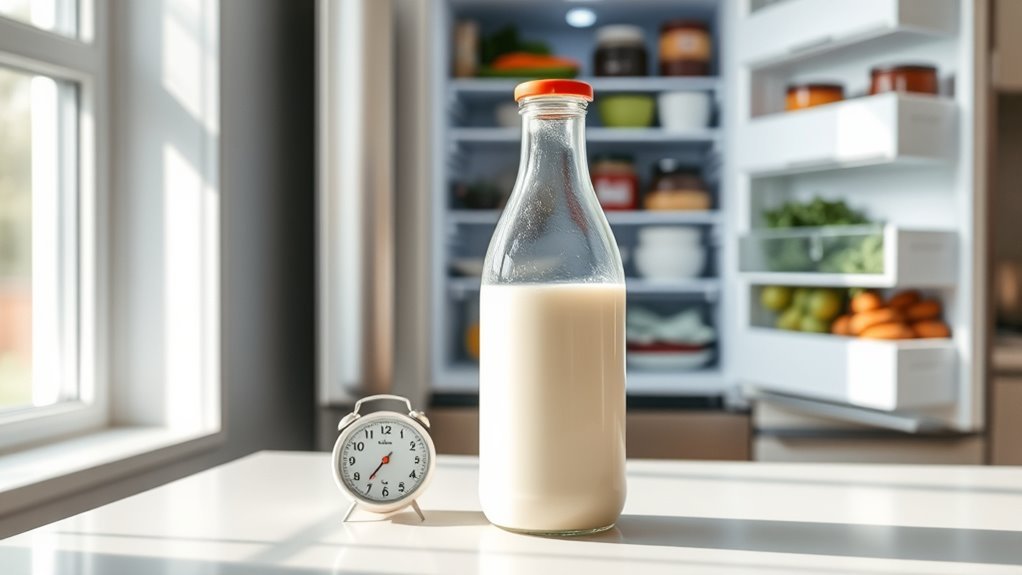
How Long Is Breast Milk Good in the Refrigerator? Expert Storage Guidelines
Imagine you expressed breast milk last night and placed it in the fridge, but now you’re unsure how long breast milk is good in the refrigerator. You want to make sure you’re preserving the milk’s nutrients while avoiding any risk of spoilage. Understanding the right storage time and conditions can help you manage your supply effectively.
There’s more to contemplate than just the clock on your fridge door. Proper storage guidelines ensure the milk remains safe and nutritious for your baby. By following the recommended time frames, you can confidently feed your little one without worry.
Recommended Containers for Storing Breast Milk

When storing breast milk, you should use clean, food-grade glass or BPA-free hard plastic containers with tight-fitting lids to keep the milk fresh and safe.
Before using any storage containers, make sure to wash and sterilize them thoroughly to prevent contamination.
Always wash and sterilize breast milk containers before use to ensure safety and prevent contamination.
Special breast milk storage bags are also acceptable, but avoid household plastic bags or disposable liners.
Whether you plan to refrigerate or freeze breast milk, select containers designed for these purposes and leave room for expansion to avoid spills or container damage.
Don’t forget to label each container with the date expressed and, if needed, your child’s name, especially when storing milk at a childcare facility.
Proper container choice and labeling help ensure your breast milk stays safe and organized during storage.
Optimal Storage Practices in the Refrigerator

To keep your stored breast milk safe and fresh, pay attention to where and how you place it in the refrigerator. Store breast milk in clean, airtight containers, preferably glass or BPA-free plastic, and label each with the date of expression.
For ideal storage, place the milk in the coldest part of the refrigerator, usually the back, where the temperature remains steady at or below 39°F (4°C). Avoid storing milk in the door, as temperature fluctuations can affect quality.
Always verify the refrigerator temperature with a thermometer to guarantee it stays at or below 40°F.
Use breast milk within up to 4 days for the best quality, and follow the oldest milk first rule to reduce waste and maintain freshness.
Proper storage maximizes safety and nutrient preservation.
Guidelines for Combining Fresh and Stored Milk

Although combining fresh and stored breast milk can be convenient, you should only add freshly expressed milk that has cooled to room temperature or below 77°F (25°C) to refrigerated milk.
Avoid adding warm or hot milk directly to stored milk, as this can cause partial thawing and increase bacterial growth.
When mixing milk, gently swirl or invert the container instead of shaking vigorously to preserve nutrients.
If you combine thawed milk with fresh milk, remember that thawed milk must be used within 24 hours.
Always label combined milk with the date of the oldest milk to track the proper storage duration and expiration.
Maintaining proper temperature and careful labeling helps ensure your baby receives safe, nutritious milk every time from your refrigerator.
Safe Duration for Refrigerated Breast Milk
Since breast milk contains essential nutrients and antibodies, you’ll want to store it properly to keep it safe and fresh. The safe duration for refrigerated breast milk is up to 4 days when kept at a cool temperature of 39°F (4°C) or below.
Refrigerate breast milk at 39°F (4°C) or below to keep it safe and fresh for up to 4 days.
For maximum safety and nutrient preservation, it’s best to use within 24 hours after refrigeration. To maintain quality, store milk in the back of the refrigerator where the temperature is most consistent.
Always label containers with the date expressed to track storage time accurately.
While breast milk stored beyond 4 days might still be safe, nutrients like vitamin C can decline. Following these guidelines ensures your refrigerated breast milk remains safe and nutritious for your baby’s feeding needs.
Proper Thawing and Handling of Frozen Milk
When you need to thaw frozen breast milk, it’s important to do so gently to conserve its nutrients and safety. Follow these steps for proper thawing and safe handling:
- Use refrigerated storage by placing frozen milk in the fridge overnight or employ warm water thawing under running water. Never microwave.
- Once thawed breast milk is ready, use it within 24 hours and always discard after 24 hours to prevent milk expiration and ensure milk safety.
- Avoid refreezing thawed breast milk. If any milk remains unused after feeding, discard it immediately.

Frequently Asked Questions
What Is the 6 6 6 Rule for Breast Milk?
The 6 6 6 rule means you can store breast milk for 6 hours at room temperature, 6 days in the fridge, and up to 6 months in the freezer.
You should use it within these time frames.
How Long Is Breast Milk Good for After Taking Out of the Fridge?
Imagine you take milk from the fridge for your baby’s bottle at 3 PM; you’ve got until 3 PM the next day to use it.
Don’t leave it out longer than 1-2 hours before feeding.
What Is the 3-3-3 Rule for Breast Milk?
The 3-3-3 rule means you can store expressed breast milk for 3 hours at room temperature, 3 days in the fridge, and 3 months in the freezer.
It helps you keep milk safe and nutritious for your baby.
What Is the 4 4 4 Rule for Breast Milk?
The 4-4-4 rule means you can keep breast milk up to 4 hours at room temperature, 4 days in the fridge, and 4 months in the freezer.
It helps you store milk safely and reduce waste effectively.
Conclusion
You should store breast milk in the back of your fridge, at or below 39°F (4°C), and use it within 4 days to keep it safe and nutritious. Remarkably, many experts recommend using refrigerated milk within 24 hours for the best freshness and nutrient retention.
By labeling containers with the date and avoiding temperature changes, you’ll ensure your baby gets the highest quality milk every time. Proper storage really makes all the difference!
In conclusion, knowing how long breast milk is good in the refrigerator helps maintain its safety and nutritional value. Following these guidelines ensures your baby benefits from fresh, healthy breast milk every feeding.