How to Do Defrost Frozen Breast Milk in 10 Essential Steps
To defrost your frozen breast milk safely, it’s important to follow the right steps for thawing frozen breast milk. First, check the storage date and container for any damage. Planning ahead helps, so move the milk from the freezer to the fridge overnight to thaw slowly.
You can also thaw the milk under warm running water, but never use a microwave or leave it at room temperature. Gently swirl the milk to mix it without shaking, preserving the nutrients and preventing damage.
Use thawed milk within 24 hours and always label it with the thaw date. Discard any leftovers after feeding to ensure safety. Follow these tips to make certain of safe, nutritious milk for your baby, and discover more ways to care for stored milk.
Check the Storage Date on the Breast Milk Container

Before you begin defrosting, check the storage date on the breast milk container to verify it’s still safe to use. Breast milk can be stored frozen for up to 6 months in a standard freezer or 12 months in a deep freezer, but it’s best to use it within 3 to 6 months for superior quality.
If the date is missing or unclear, avoid guessing. Discard the milk to keep your baby safe. Also, look for any signs of damage or leaks in the container, as these could compromise the milk’s safety.
Taking a moment to confirm the milk’s freshness prevents wasting time and ensures your baby gets the best nutrition from safe, properly stored milk.
Plan Ahead to Defrost Breast Milk Slowly

Once you’ve confirmed the breast milk is safe to use, give yourself enough time to defrost it slowly. Planning ahead guarantees the milk retains its nutrients and reduces the risk of bacterial growth. Quick thawing methods can damage the milk’s quality, so patience is key.
Allow breast milk to thaw slowly to preserve nutrients and prevent bacterial growth—patience ensures quality.
To plan ahead effectively:
- Estimate how much milk you’ll need and when.
- Transfer frozen milk to the refrigerator the night before use.
- Avoid refreezing thawed milk to maintain safety.
- Keep a schedule or reminder to rotate milk supplies, using older milk first.
Use the Refrigerator for Gradual Thawing

Although it takes more time, using the refrigerator to thaw breast milk preserves its nutrients and safety better than quicker methods. To do this, simply move the frozen milk from the freezer to the fridge and let it thaw slowly over about 12 hours or overnight.
This gradual process helps maintain the milk’s quality and reduces the risk of bacterial growth. Make sure to place the milk container upright and on a stable shelf to avoid spills.
Once thawed, you should use the milk within 24 hours and never refreeze it.
Planning ahead and relying on your refrigerator for thawing guarantees that your baby gets safe, nutritious milk without the hassle or risks of faster thawing techniques.
Avoid Defrosting Breast Milk at Room Temperature
Since breast milk can spoil quickly at room temperature, you should never defrost it on the counter. Leaving frozen breast milk out exposes it to bacteria growth, which can harm your baby.
Instead, always use safer thawing methods to preserve its quality and safety. Avoid this risky practice to keep your milk fresh and healthy for your little one.
Here’s why you should avoid room temperature defrosting:
- Bacteria multiply rapidly between 40°F and 140°F (4°C and 60°C).
- Nutrients in breast milk degrade faster at warm temperatures.
- Spoiled milk can cause digestive issues for your baby.
- Keeping milk cold until thawed minimizes contamination risks.
Choose safer thawing methods to protect your baby’s health.
Thaw Breast Milk Under Warm Running Water
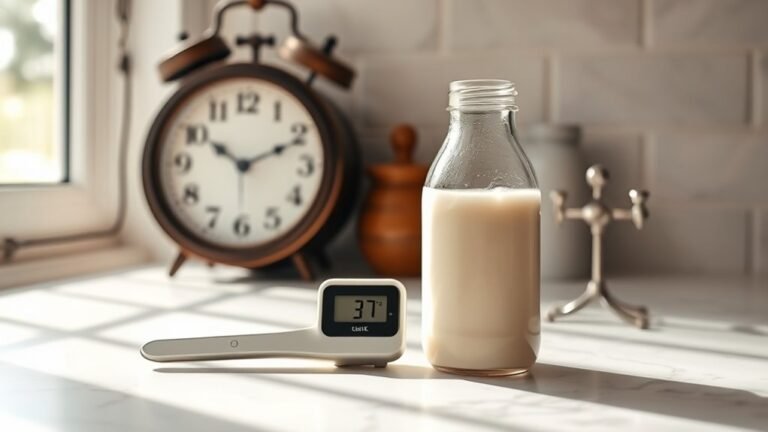
When you need to thaw breast milk quickly and safely, running it under warm water is an effective method. Hold the sealed container under warm, not hot, running water to gently raise the milk’s temperature. This prevents overheating and preserves nutrients.
Make sure the water doesn’t touch the lid to avoid contamination. Once thawed, use the milk within 24 hours and never refreeze it.
| Step | Tips |
|---|---|
| Use warm water | Avoid hot water to keep nutrients intact |
| Hold container tight | Prevent water from entering the container |
| Rotate container | Ensures even thawing |
| Check temperature | Milk should feel lukewarm, not hot |
| Use promptly | Use within 24 hours after thawing |
Gently Swirl the Milk to Mix Separated Layers
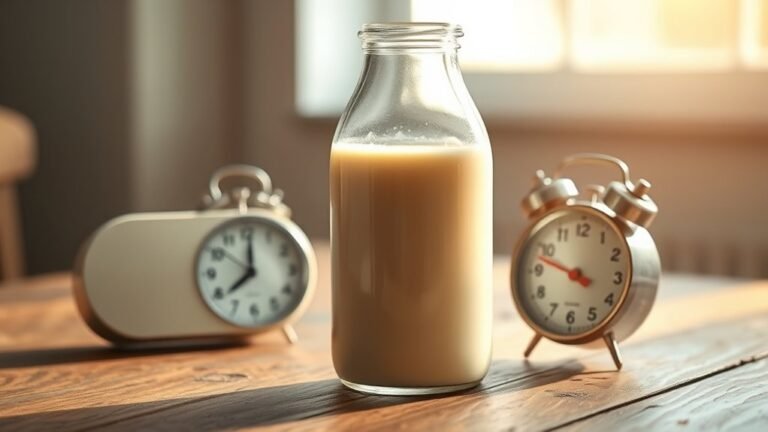
After thawing, you’ll notice that breast milk naturally separates into layers, with cream rising to the top. To ensure your baby gets all the nutrients, gently swirl the milk to mix these layers back together. Avoid shaking vigorously, as this can break down valuable proteins and increase air bubbles.
Here’s how to do it right:
Hold the container firmly and tilt it in a gentle circular motion. Rotate the bottle or bag slowly to blend the cream evenly. Swirl until the milk looks uniform in color and texture. Use the milk promptly after mixing to maintain freshness.
Never Microwave Breast Milk
Once you’ve gently swirled the milk to mix the layers, it’s important to warm it safely. Never microwave breast milk. Microwaving creates hot spots that can scald your baby’s mouth and throat.
It also breaks down valuable nutrients and antibodies, reducing milk’s protective qualities. Instead, warm the milk by placing the container in a bowl of warm water or using a bottle warmer.
Gently swirl the milk occasionally to distribute the heat evenly. Avoid shaking vigorously, which can damage the milk’s structure.
Always test the milk temperature on your wrist before feeding to ensure it’s comfortably warm, not hot.
Use Thawed Breast Milk Within 24 Hours
Although thawed breast milk retains many of its nutrients, you should use it within 24 hours to guarantee your baby gets the freshest, safest milk possible. Using the milk promptly helps prevent bacterial growth that can harm your little one.
Use thawed breast milk within 24 hours to ensure freshness and prevent harmful bacterial growth.
Once thawed, keep the milk refrigerated and never refreeze it.
To make the most of your thawed breast milk:
- Store it in the back of the fridge where temperatures are most consistent
- Label containers with the thaw date to track usage
- Avoid leaving milk at room temperature for extended periods
- Use a clean bottle or container each time you feed your baby
Following these steps ensures your baby receives milk that’s both nutritious and safe, supporting their health and growth.
Discard Any Unused Breast Milk After Feeding
Using thawed breast milk promptly is important, but you also need to discard any milk left in the bottle after feeding. Once your baby finishes feeding, bacteria from their mouth can contaminate the milk, making it unsafe to save. Never re-freeze or store leftover milk for later use.
This practice guarantees your baby drinks fresh milk each time, reducing the risk of illness.
| Reason | Explanation |
|---|---|
| Bacterial Growth | Mouth bacteria enter leftover milk |
| Safety | Prevents feeding spoiled milk |
| No Re-freezing | Avoids milk quality degradation |
| Freshness | Ensures milk remains nutritious |
| Baby’s Health | Protects against infections |
Always discard leftover milk to keep your baby safe and healthy.
Label Thawed Milk With the Date Before Storing
To keep track of your milk’s freshness and prevent confusion, always label thawed breast milk with the date before storing it. This simple step helps you use the oldest milk first and ensures your baby gets the freshest supply. Use a waterproof marker or a label sticker to write clearly on the container.
Make it a habit every time you thaw milk to maintain safety and organization.
Here’s what to include on your label:
- Date when the milk was thawed
- Original pumping date (if different)
- Your baby’s name (if storing with others’ milk)
- Any special notes (like fortifiers added)
Proper labeling helps you manage your milk efficiently and keeps feeding times stress-free.
Frequently Asked Questions
Can I Refreeze Breast Milk After Thawing?
You shouldn’t refreeze breast milk after thawing. Once it’s thawed, use it within 24 hours if refrigerated.
Refreezing can degrade nutrients and increase bacterial growth, so it’s best to avoid it for your baby’s safety.
How Long Can Breast Milk Stay Frozen?
You can keep breast milk frozen up to 6 months in a standard freezer and about 12 months in a deep freezer.
Always label the date, and use the oldest milk first to guarantee freshness and safety.
Is It Safe to Thaw Breast Milk in a Bottle Warmer?
Yes, you can safely thaw breast milk in a bottle warmer. Just make sure to use a gentle, warm setting to avoid overheating.
Overheating can destroy nutrients and cause hot spots that might burn your baby’s mouth.
Can Thawed Breast Milk Be Mixed With Fresh Milk?
You shouldn’t mix thawed breast milk with fresh milk because thawed milk can spoil faster. Instead, use thawed milk within 24 hours and always store fresh and thawed milk separately to keep your baby safe and healthy.
Does Freezing Breast Milk Affect Its Nutritional Value?
Freezing breast milk slightly reduces some immune components but doesn’t substantially affect its overall nutritional value. You’ll still provide your baby with essential nutrients, so freezing is a safe way to store milk for later use.
Conclusion
Remember, about 85% of nutrients in breast milk remain intact when you thaw it slowly in the fridge, which shows why planning ahead is so important.
By avoiding quick thawing methods like microwaving or room temperature defrosting, you’re protecting your baby’s health.
Always label and use thawed milk within 24 hours to keep it safe.
Following these simple steps helps you give your baby the best nutrition every time. Proper defrost frozen breast milk techniques ensure maximum nutrient preservation and safe feeding for your baby.