Is Coconut Cream the Same as Coconut Milk?
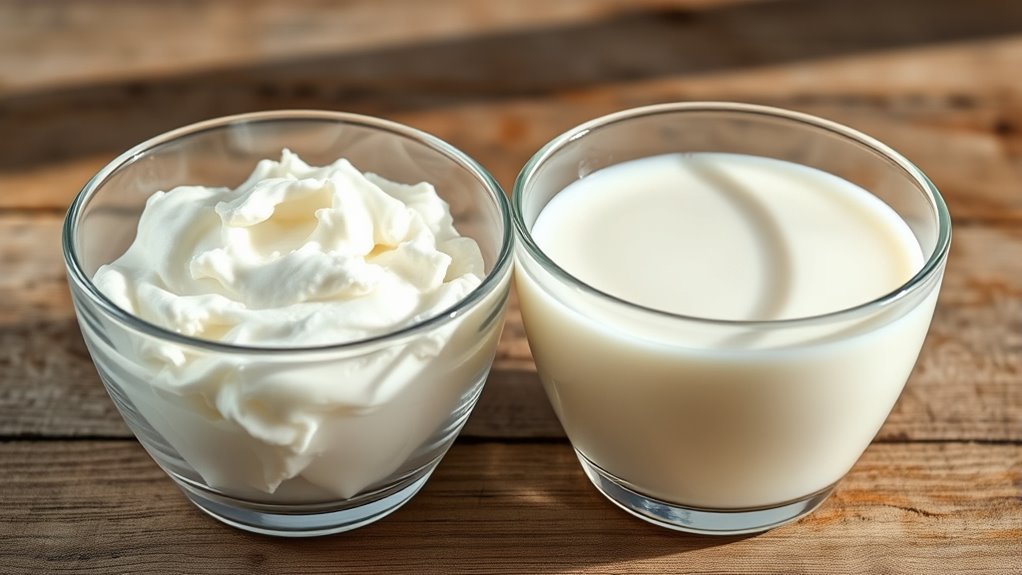
Coconut cream and coconut milk aren’t the same, though both come from grated coconut. They’re often confused because they share a common source, but their textures and uses are quite different.
Coconut cream is thicker and richer, with less water and about 20-25% fat, making it perfect for creamy sauces or desserts.
On the other hand, coconut milk is thinner, more watery, and contains less fat, around 9-15%. It’s ideal for soups and curries where you want a lighter, more fluid consistency.
You can dilute coconut cream to mimic milk, but not the other way around. If you want to use them right, you’ll find their differences quite useful.
Key Takeaways
- Coconut cream and coconut milk both come from grated coconut but differ in water and fat content.
- Coconut cream is thicker and richer, containing about 20-25% fat, while coconut milk has 9-15% fat and is more liquid.
- Coconut cream has a spreadable, buttery texture; coconut milk is watery and pourable.
- Coconut cream is ideal for rich sauces and desserts, whereas coconut milk suits lighter dishes like soups and curries.
- Coconut cream can be diluted to make coconut milk, but coconut milk cannot be thickened into cream without removing liquid.
What’s the Difference Between Coconut Cream and Coconut Milk?
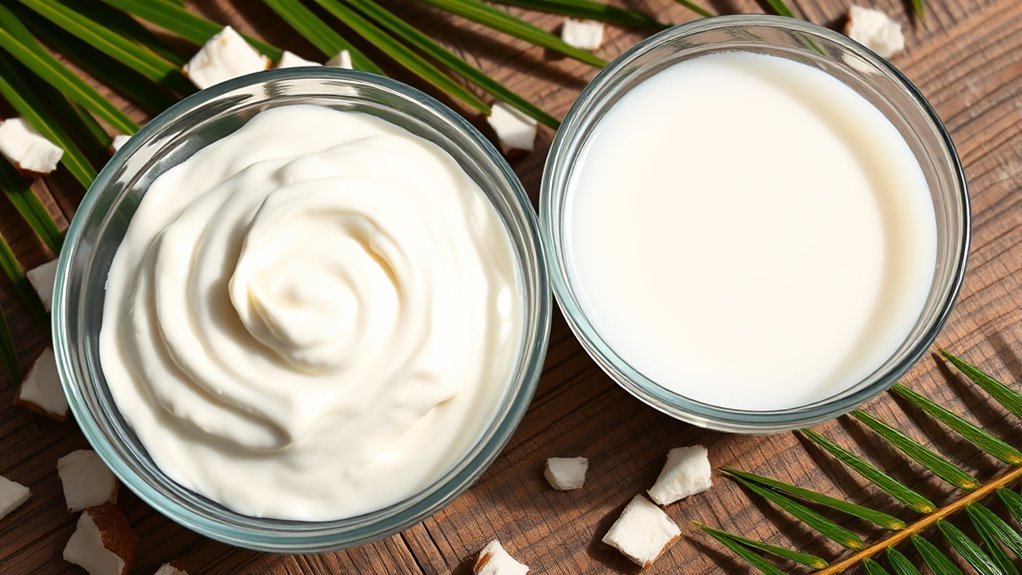
Although coconut cream and coconut milk come from the same source, they differ markedly in texture and fat content. Coconut milk is a liquid made by blending grated coconut with water, giving it a watery consistency similar to broth.
In contrast, coconut cream is much thicker and higher in fat because it contains less water and more coconut oil. This concentrated, creamy layer naturally separates on top of canned coconut milk.
Coconut cream’s consistency is soft and spreadable, comparable to butter, while coconut milk remains thin and pourable. The main difference lies in their fat content: coconut cream holds about 20-25% fat, whereas coconut milk typically contains only 9-15%.
You can dilute coconut cream to mimic coconut milk, but you can’t turn coconut milk into cream without removing liquid. So, if you need that rich, creamy texture, coconut cream is the way to go!
How to Know When to Use Coconut Cream or Coconut Milk?
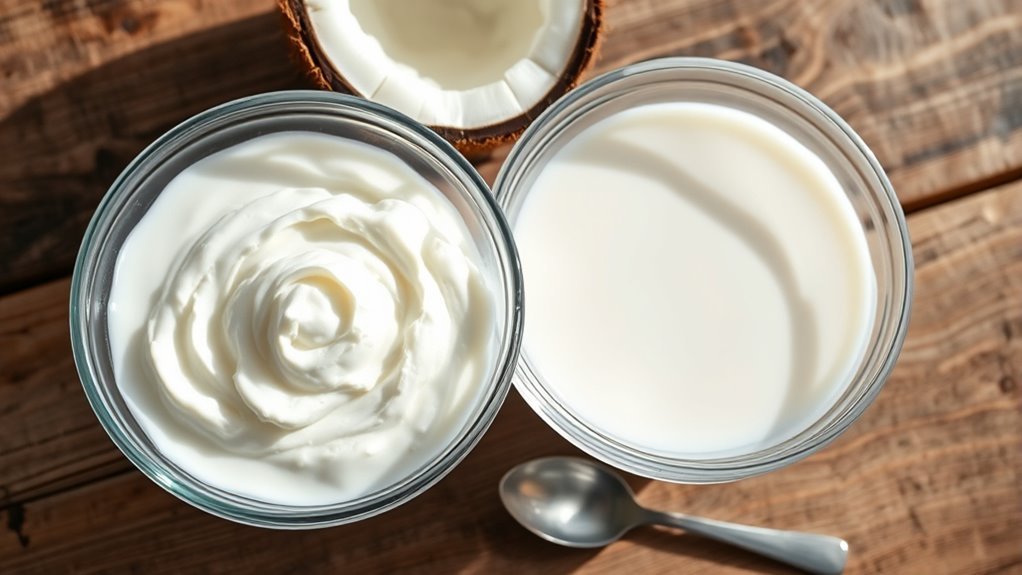
When you want a rich, thick texture in your dish, coconut cream is your best choice because it contains more fat and less water than coconut milk. Use coconut cream for sauces, desserts, or toppings where a creamy, dairy-free alternative to heavy cream is needed.
Choose coconut milk when your recipe calls for a lighter, more liquid consistency, like in curries, soups, or as a dairy substitute. If you need to make a substitution, thin coconut cream with water to match the desired consistency.
Using coconut milk instead of coconut cream may require longer cooking to reduce extra liquid. Remember, coconut milk can separate, so shake or stir before using, while coconut cream is usually uniform and ready to add directly to your dish.
Frequently Asked Questions
Can I Substitute Cream of Coconut for Coconut Milk?
You can substitute cream of coconut for coconut milk, but you’ll need to dilute it with water and adjust sugar levels since it’s sweeter and thicker. It’s better suited for desserts and drinks, not savory dishes.
Is It Better to Use Coconut Milk or Cream?
Choose coconut milk for lighter, soupier dishes; choose coconut cream for richer, thicker recipes. You’ll get the perfect texture and flavor by matching your choice to your dish’s desired consistency and intensity.
Is Coconut Milk Just Coconut Cream With Water?
No, coconut milk isn’t just coconut cream with water. Coconut cream is thicker and richer, while coconut milk contains more water and less fat. You can thin cream to make milk, but not the other way around.
Is Canned Coconut Milk and Canned Coconut Cream the Same Thing?
No, canned coconut milk and canned coconut cream aren’t the same. Coconut cream is thicker and richer, with more fat, while coconut milk is thinner and more watery. Use cream for richness and milk for lighter recipes.
Conclusion
Now that you know coconut cream and coconut milk aren’t just two peas in a pod, you can choose the right one like a pro chef. Whether you want that rich, velvety texture or a lighter touch, using them correctly will transform your dishes, just like a magician pulling a rabbit from a hat.
So go ahead—mix, match, and savor the tropical magic in every bite! Understanding the difference between coconut cream and coconut milk helps you nail the flavors and textures you want. Using coconut cream adds thickness and richness, while coconut milk offers a creamier, lighter base.
When cooking, picking the right one can make all the difference in your recipe’s success. So whether you’re whipping up a curry, dessert, or smoothie, knowing how to use coconut cream and coconut milk will elevate your cooking game and bring a delicious, authentic taste to your dishes every time.