How to Measure How Much Caffeine Is in Milk Chocolate
You can estimate how much caffeine is in milk chocolate by multiplying its cocoa percentage by 0.17 mg per 1% cocoa.
For example, 30% cocoa means about 5.1 mg caffeine per ounce.
This gives you a quick, general idea but isn’t perfectly precise. That’s because factors like bean origin and processing differences affect caffeine content.
For exact caffeine levels, lab methods like High-Performance Liquid Chromatography (HPLC) are used.
Keep exploring to discover how these methods work and why they matter.
Key Takeaways
- Estimate caffeine by multiplying the cocoa percentage by 0.17 mg per 1% cocoa in the chocolate. It’s a simple way to get a rough idea of how much caffeine is in there.
- Keep in mind that the cacao’s origin and how it’s processed can change caffeine levels a bit. So, the estimate might not be perfect every time.
- For a more precise measurement, labs grind the chocolate and use solvents to extract the caffeine. This method gives a clearer picture of the actual caffeine content.
- The go-to technique is High-Performance Liquid Chromatography (HPLC). It separates and measures caffeine accurately.
- Overall, lab testing beats estimation methods when it comes to reliability. If you really want to know how much caffeine is in your milk chocolate, that’s the way to go.
How to Estimate Caffeine in Milk Chocolate From Its Cocoa Content
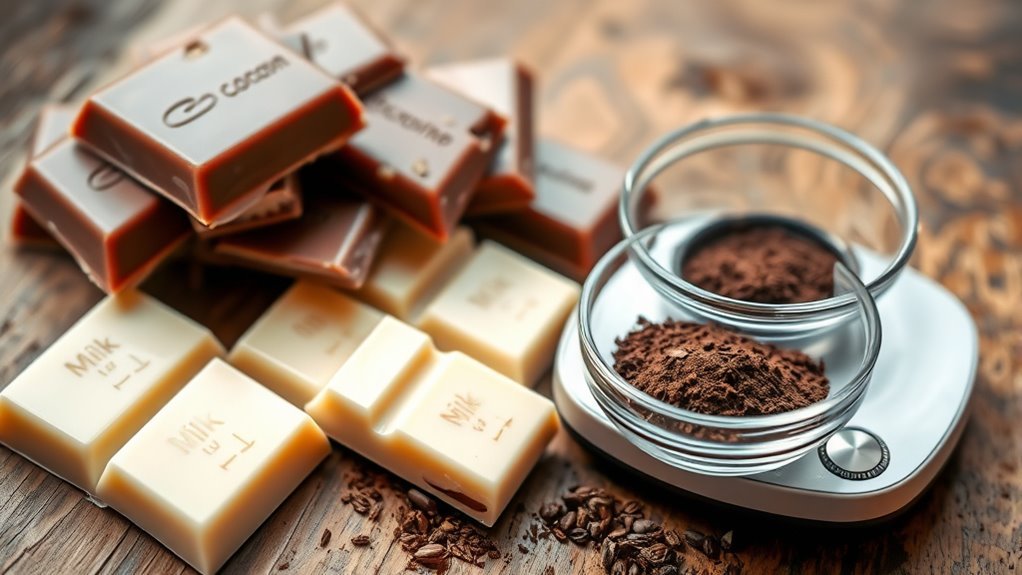
Although caffeine levels can vary, you can estimate the caffeine content in milk chocolate by multiplying the cocoa solids percentage by about 0.17 mg per 1% cocoa.
For example, if the chocolate labeling shows 30% cocoa solids, you’d calculate caffeine content by multiplying 30 by 0.17 mg, resulting in roughly 5.1 mg of caffeine per ounce.
This caffeine calculation method offers a simple caffeine estimation based on the cocoa percentage found on most chocolate products.
Keep in mind, caffeine levels can shift slightly depending on the origin of cacao beans and how the chocolate is processed. Still, this approach provides a reliable baseline for estimating caffeine content in milk chocolate without lab tests.
It helps you better understand the caffeine contribution from your favorite chocolate treats.
How to Measure Milk Chocolate Caffeine With Laboratory Methods
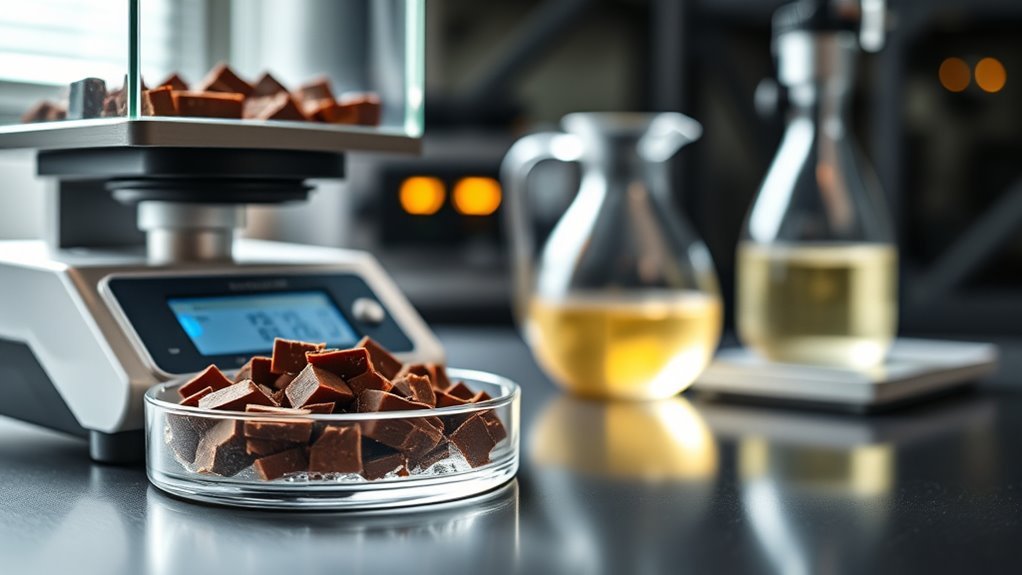
Estimating caffeine in milk chocolate using cocoa content gives you a quick idea, but measuring it accurately requires laboratory methods. For precise caffeine analysis, you start with sample preparation by grinding the chocolate and performing caffeine extraction through solvent extraction to isolate caffeine from the chocolate matrix.
High-Performance Liquid Chromatography (HPLC) is the preferred technique because it effectively separates caffeine from other compounds in the complex chocolate matrix. During chromatography, the extracted caffeine passes through the system and is detected for quantification.
Calibration standards of known caffeine concentrations are essential for accurate quantification, ensuring reliable results. This laboratory testing approach provides a definitive measurement of caffeine content in milk chocolate, surpassing simple estimation methods and allowing you to assess caffeine levels with scientific precision.
Frequently Asked Questions
How Much Caffeine Is in 1 Oz of Milk Chocolate?
You’ll find about 5.6 mg of caffeine in 1 oz of milk chocolate, though it can vary between 3 mg and 8 mg depending on cocoa content and manufacturing. It’s less than dark chocolate’s caffeine level.
Is There Enough Caffeine in Chocolate to Keep You Awake?
You won’t find a lightning bolt in a gentle drizzle; the caffeine in chocolate is too mild to truly keep you awake. You’d need a mountain of it to feel a real jolt of alertness.
Which Chocolate Is High in Caffeine?
You’ll find the highest caffeine in dark chocolates with 70-85% cacao. Semi-sweet and bittersweet varieties also pack more caffeine than milk chocolate, thanks to their higher cocoa content and stronger beans from regions like Ecuador.
Can You Eat Chocolate if You Can’t Have Caffeine?
If caffeine’s a storm you must avoid, steer clear of milk chocolate’s mild waves, but you can safely savor white chocolate’s calm shores. Always check labels and chat with your doctor to stay safe and sound.
Conclusion
Now that you know how to estimate caffeine in milk chocolate by its cocoa content or use lab methods, you’re ready to dig in and satisfy your curiosity. Don’t let the process scare you—it’s as easy as pie once you get the hang of it.
Whether you’re a casual snacker or a chocolate connoisseur, understanding caffeine levels helps you enjoy your treat without any surprises. Keep this know-how close to the vest for your next chocolate craving!
Measuring how much caffeine is in milk chocolate isn’t just for scientists. With a little practice, anyone can estimate caffeine content based on cocoa percentages or opt for more precise lab methods. This knowledge lets you enjoy your chocolate wisely, especially if you’re sensitive to caffeine or trying to manage your intake. So next time you unwrap a bar, you’ll know exactly what you’re getting—and that makes savoring your favorite treat even sweeter.