A Quick Guide to How Many Gallons of Milk Are in a Pound
You can quickly convert pounds of milk to gallons by dividing the pounds by 8.6, since one gallon weighs about 8.6 pounds.
Alternatively, multiply the pounds by 0.116 for a fast estimate.
This simple conversion is super handy whether you’re cooking, farming, or managing inventory.
Keep in mind that factors like fat content and temperature can slightly affect the weight, causing minor variations.
These small differences might seem tricky, but understanding why they happen will help you get even more accurate measurements.
So, next time you’re measuring milk, remember this easy trick and a bit of background knowledge to make your task smoother.
Key Takeaways
- One gallon of milk weighs approximately 8.6 pounds, making it a standard for conversions.
- To convert pounds of milk to gallons, divide the pounds by 8.6 or multiply by 0.116.
- Fat content and temperature slightly affect the milk’s weight per gallon, causing minor variations.
- But don’t worry, these changes are usually pretty small.
- Using 8.6 pounds per gallon ensures consistent and quick estimations in cooking and dairy tasks.
- Understanding these factors helps improve accuracy in milk quantity measurements and inventory management.
- It’s a handy trick to keep in mind!
Convert Pounds of Milk Into Gallons Quickly
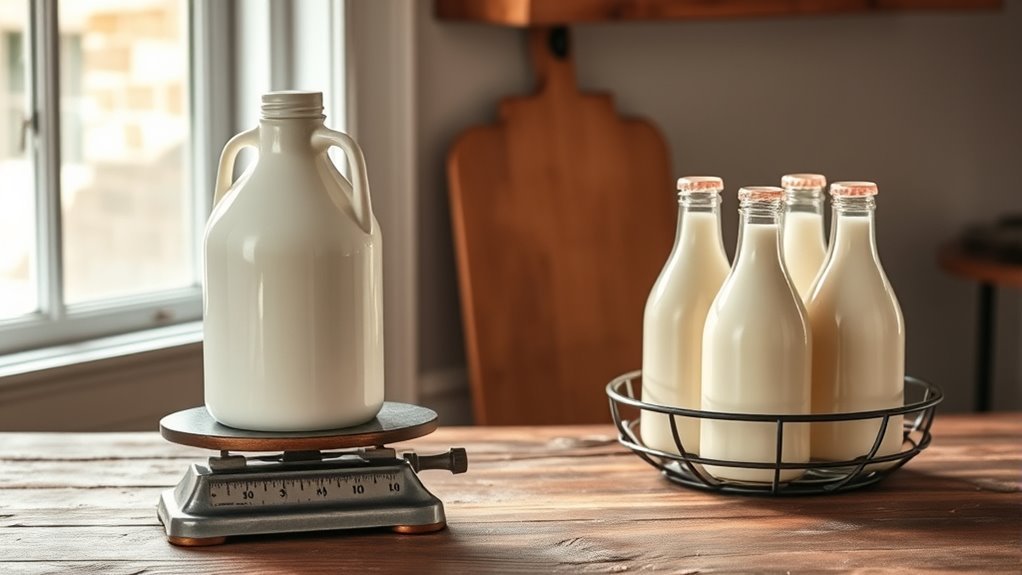
If you want to convert pounds of milk into gallons quickly, you just need to divide the pounds by 8.6, since one gallon of milk weighs about 8.6 pounds. This simple calculation helps you convert pounds of milk to gallons without hassle.
For example, if you have 43 pounds of milk, dividing by 8.6 gives you about 5 gallons. You can also remember that 1 pound of milk equals roughly 0.116 gallons, so multiplying the pounds by 0.116 offers a quick estimate.
This method makes it easy to convert any amount of milk weight into gallons. Whether you’re measuring large quantities or small, understanding that a gallon of milk weighs 8.6 pounds helps you convert accurately every time.
Why Milk Pounds Per Gallon Vary and What It Means for Conversion
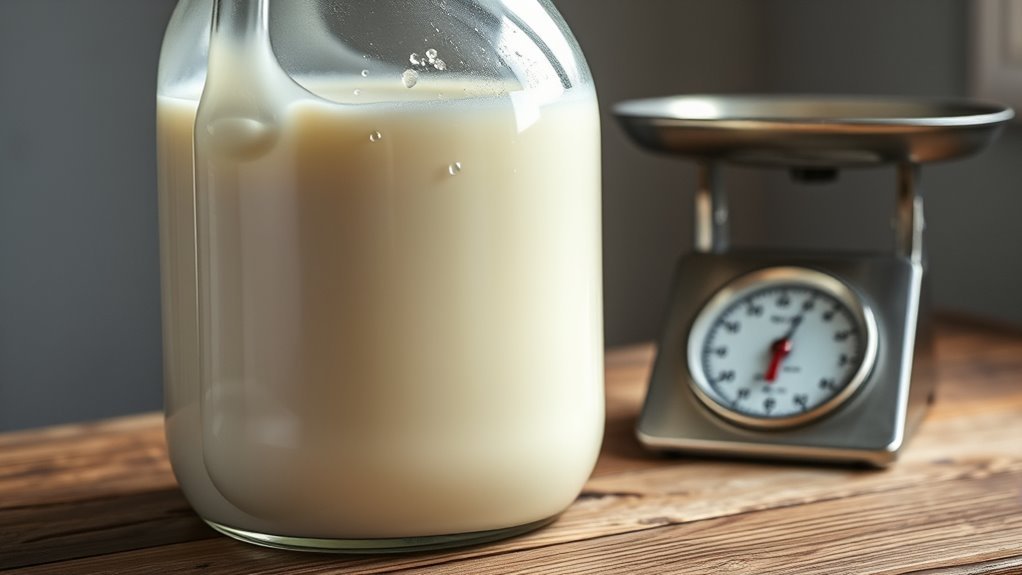
Although one gallon of milk is typically said to weigh about 8.6 pounds, the actual weight can vary slightly depending on factors like fat content and temperature. This milk weight variation matters when you convert between volume and weight in dairy measurement.
Here’s why:
- Fat content impact: Higher fat milk, like cream, is denser and weighs a bit more per gallon.
- Milk density: Skim milk is less dense, so it weighs less than whole milk per gallon.
- Temperature effects: Colder milk is denser and heavier than warmer milk.
- Standard average: Most conversions use 8.6 pounds per gallon, but small differences can affect precision.
Understanding these factors helps you make more accurate dairy calculations and measurements. It’s pretty handy to keep this in mind if you want your numbers to be spot on!
Frequently Asked Questions
How Many Gallons of Milk Is a Pound?
A pound of milk is about 0.116 gallons. You just divide the weight in pounds by 8.6 to get gallons. So, every pound you have equals roughly one-tenth of a gallon of milk.
How Heavy Is a Gallon of 2% Milk in Pounds?
A gallon of 2% milk weighs about 8.6 pounds. You’ll find it’s slightly heavier than 8 pounds because its density is close to water, so when you pick up a gallon, expect that weight.
Is 1 Gallon Equal to 1 Lb?
You’d think one gallon equals one pound, but nope, it’s like comparing a mountain to a pebble! One gallon weighs about 8.6 pounds, so you definitely can’t swap them as equals.
How Much Do 5 Gallons of Milk Weigh in Pounds?
Five gallons of milk weigh about 43 pounds since each gallon weighs roughly 8.6 pounds. You can multiply 5 by 8.6 to get that total weight easily.
Conclusion
Now that you know a pound of milk isn’t a straightforward gallon, imagine pouring just a fraction into your glass—each drop a part of a bigger whole.
As you convert pounds to gallons, picture the subtle weight and volume dance happening right before your eyes. It’s more than math; it’s the story of milk’s density playing tricks.
So next time you measure, you’ll see the hidden balance behind every pour. Understanding how many gallons of milk are in a pound helps you grasp the relationship between weight and volume better.
This quick guide makes it easier to visualize and calculate milk quantities, whether you’re cooking, baking, or just curious. Remember, milk’s density means pounds and gallons aren’t equal, but knowing this fact lets you measure with confidence every time.