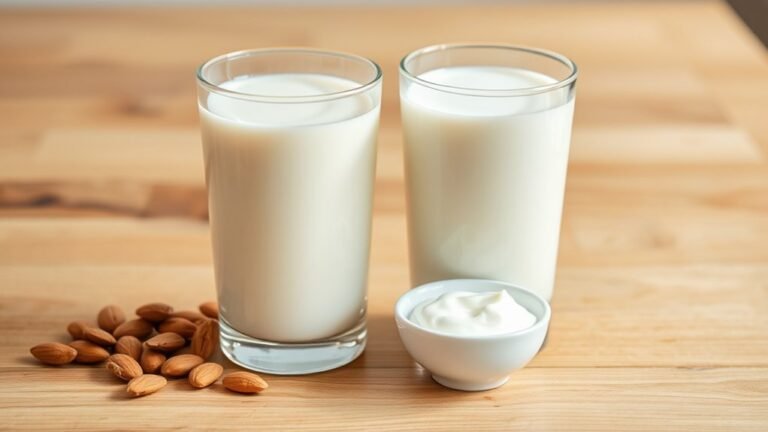
Are Evaporated and Condensed Milk the Same?
You might think evaporated milk and condensed milk are the same, but they’re actually quite different. Both are canned milks with reduced water content, but their flavor and texture set them apart.
Evaporated milk has about 60% of its water removed and is unsweetened, so it tastes thinner and more neutral.
On the other hand, condensed milk is thick, syrupy, and loaded with sugar, making it very sweet. Because of these differences, you can’t just swap one for the other without tweaking your recipe.
If you want to use evaporated milk instead of condensed milk or vice versa, understanding their unique qualities will help you get it right. It’s all about adjusting for sweetness and texture to make your dish delicious!
Key Takeaways
- Evaporated milk is unsweetened with 60% water removed, while condensed milk is sweetened with 40-45% added sugar.
- Evaporated milk has a thinner, neutral flavor; condensed milk is thick, syrupy, and very sweet.
- Both are shelf-stable dairy products but differ significantly in taste and texture.
- Condensed milk is mainly used in desserts, whereas evaporated milk suits savory and neutral recipes.
- They cannot be used interchangeably without adjusting sugar content and consistency in recipes.
What Are the Key Differences Between Evaporated and Condensed Milk?
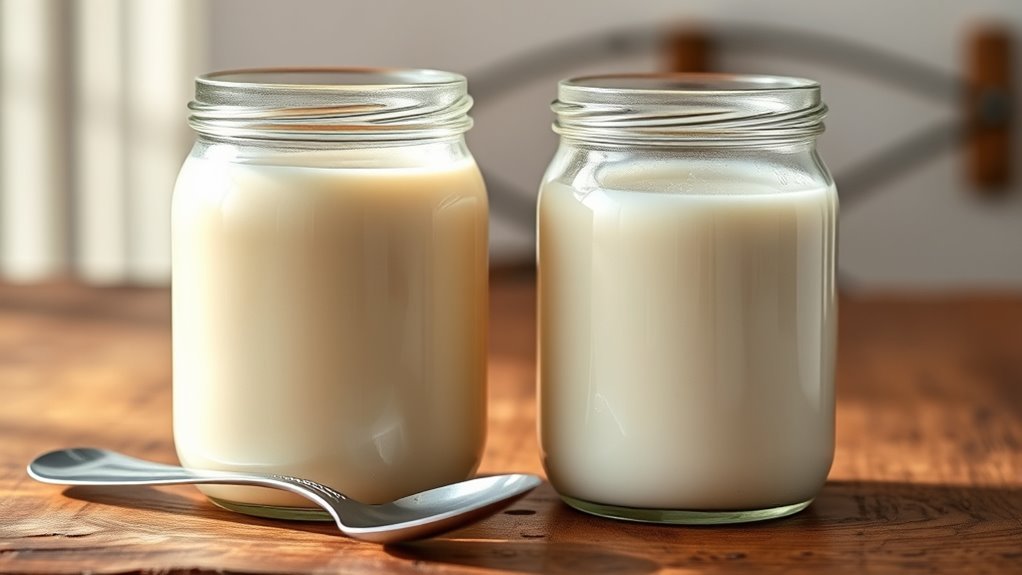
How do evaporated and condensed milk differ? Evaporated milk is unsweetened with about 60% of water removed, giving it a thinner texture and a neutral, caramelized flavor.
Evaporated milk is unsweetened, with 60% of water removed, resulting in a thinner, caramelized flavor.
Condensed milk, on the other hand, is sweetened with 40-45% added sugar, making it thick and syrupy with a rich, caramel-like sweetness. Both are shelf-stable, but evaporated milk’s lack of added sugar makes it ideal for savory culinary purposes.
Condensed milk suits desserts and sweet recipes. Because of their differences in sugar content and texture, you can’t use one in place of the other without adjusting for sweetness and consistency.
Understanding these key differences helps you choose the right product for your cooking or baking needs.
How and When to Substitute Evaporated for Condensed Milk
Knowing the differences between evaporated and condensed milk helps you decide when and how to swap one for the other in recipes. When substituting evaporated milk for condensed milk, add about 1 cup of sugar per can and simmer to achieve similar sweetness and thickness.
Since condensed milk has a high sugar content, reduce other sweeteners if swapping the other way. Both have a long shelf life and creamy texture but differ in flavor—condensed milk adds a caramel flavor, while evaporated milk is more neutral.
Here’s a quick guide for substitution in cooking and baking:
| Aspect | Substitution Tip |
|---|---|
| Sugar Content | Add sugar with evaporated milk |
| Sweetness Adjustment | Reduce added sugar if using condensed milk |
| Flavor Profile | Caramel vs. neutral creamy |
| Recipe Modification | Simmer evaporated milk to thicken |
| Shelf Life | Both long-lasting |
Frequently Asked Questions
Can I Use Evaporated Milk Instead of Condensed Milk?
You can use evaporated milk instead of condensed milk, but you’ll need to add about a cup of sugar to match sweetness and possibly thicken it. Otherwise, your recipe might turn out less sweet and rich.
Can I Use Evaporated Milk Instead of Condensed Milk for Fudge?
Yes, you can use evaporated milk for fudge, but you’ll need to add about a cup of sugar and possibly cook it longer to match condensed milk’s sweetness and thickness, ensuring your fudge turns out rich and creamy.
Can I Convert Condensed Milk to Evaporated Milk?
Yes, you can convert condensed milk to evaporated milk by diluting it with milk and simmering until it thickens. Just watch the heat carefully to avoid burning and expect a slight caramel flavor difference.
What Is the Point of Using Evaporated Milk?
You use evaporated milk to add creaminess and richness without extra sweetness. It boosts flavor and texture in dishes, lasts long, and stands up to heat, making it perfect for cooking, baking, and creamy sauces.
Conclusion
Now that you know evaporated and condensed milk aren’t the same—evaporated milk has about 60% of its water removed without added sugar, while condensed milk is much sweeter—you can choose the right one for your recipe.
Did you know Americans consume over 50 million cans of evaporated milk yearly? That’s proof of how versatile and popular it is.
So, next time you cook or bake, pick the right milk to get the perfect flavor and texture every time. Using evaporated milk or condensed milk correctly can really make a difference in your dishes. Remember, evaporated milk adds creaminess without sweetness, while condensed milk brings rich sweetness to desserts. Knowing the difference helps you create delicious recipes with the ideal balance of taste and texture.