How to Use Milk Instead of Buttermilk in Recipes
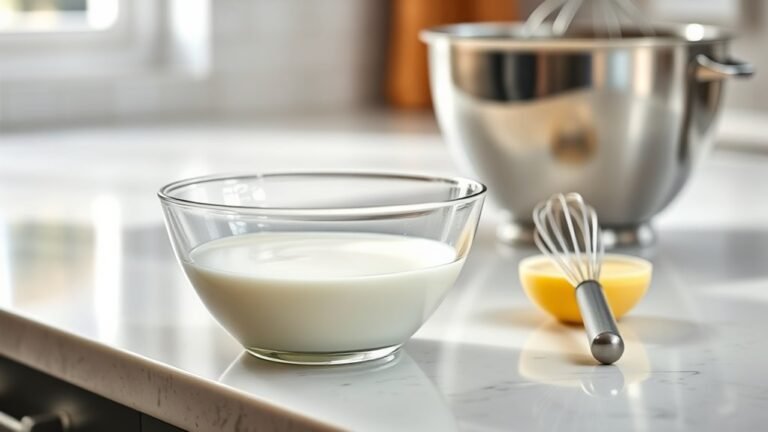
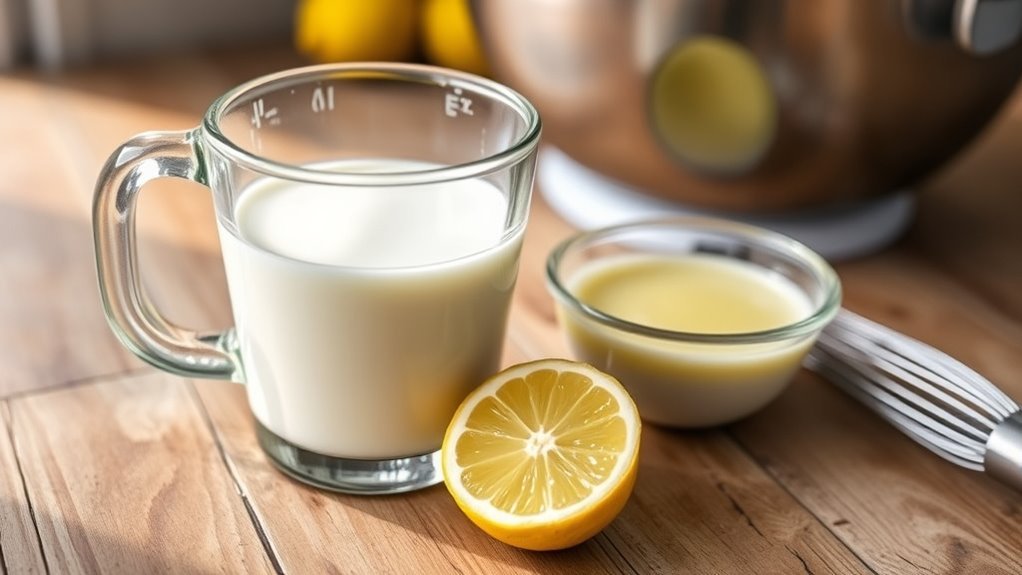
To use milk instead of buttermilk in recipes, simply add 1 tablespoon of vinegar or lemon juice to 1 cup of milk. Then, let it sit for about 5 minutes until it curdles.
This sour milk mimics buttermilk’s acidity, which is key for baking.
The acidity reacts with baking soda to help your baked goods rise and stay tender. It’s a great trick when you don’t have buttermilk on hand but still want that perfect texture.
Use this substitute immediately for the best results in pancakes, muffins, or quick breads.
Keep going to discover tips for perfect texture and flavor every time.
Trust me, once you try this easy swap, you’ll never stress about missing buttermilk again!
Key Takeaways
- Mix 1 tablespoon of vinegar or lemon juice with 1 cup of milk to create a buttermilk substitute for baking. Let it sit for 5 minutes until it curdles before using in recipes.
- Use whole or 2% milk for the best texture and flavor when substituting for buttermilk. It really makes a difference!
- Add the substitute immediately to activate baking soda and ensure your baked goods rise properly.
- Keeping that acidity in the substitute is key to getting fluffy, tender, and lightly tangy results every time.
What Buttermilk Does in Baking and Why You Might Need a Substitute
Although buttermilk might seem like just another ingredient, it plays an essential role in baking by reacting with baking soda to create carbon dioxide. This reaction helps your baked goods rise and stay fluffy.
Buttermilk’s reaction with baking soda is key to making your baked goods rise and stay fluffy.
The acid in buttermilk acts as a natural leavening agent, working with baking soda to produce that light, airy texture you want in cakes, muffins, and quick breads. It also helps tenderize gluten, making your treats softer and more tender.
Plus, its tangy flavor adds a subtle tang that really enhances the overall taste. If you don’t have buttermilk on hand, you might need substitutes because regular milk lacks the acid necessary for proper leavening and tenderizing.
Without that acid, your baked goods risk becoming dense and less flavorful. So, it’s worth finding a good substitute if you want to keep your treats light and tasty!
How to Make and Use a Milk-Based Buttermilk Substitute in Recipes
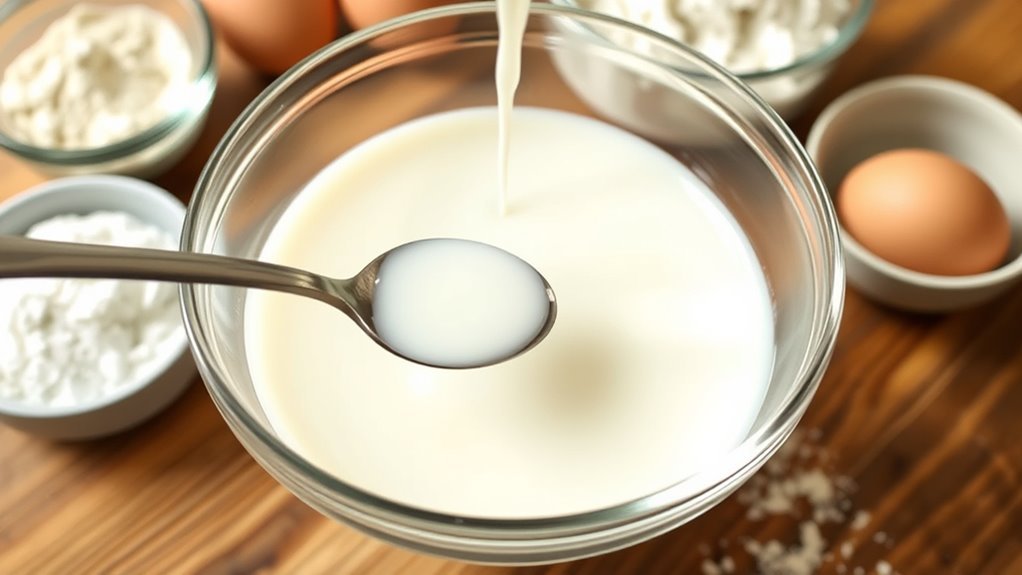
When you don’t have buttermilk on hand, you can easily make a substitute by adding an acid like vinegar or lemon juice to regular milk.
To create a reliable buttermilk substitute, mix 1 tablespoon of vinegar or lemon juice with 1 cup of whole or 2% milk. Then, let it sit for about 5 minutes until it becomes curdled or sour milk.
This homemade buttermilk works great in baking recipes like pancakes and muffins because it activates leavening agents, helping your baked goods rise properly.
You can also thin thicker dairy products with milk for a similar effect. Just remember to use this dairy product immediately as a recipe substitution to ensure the acidity needed for your dish’s texture and flavor.
Frequently Asked Questions
What Happens if I Just Use Milk Instead of Buttermilk?
If you just use milk instead of buttermilk, your baked goods might turn out denser, less tender, and flatter. You’ll also miss that tangy flavor, and the texture could be drier and less moist overall.
What Is the Best Substitute for Buttermilk?
The best substitute for buttermilk is milk mixed with 1 tablespoon of vinegar or lemon juice per cup. Let it sit for 5 minutes, then use it to get that tangy, tender texture in your recipes.
Is It Better to Use Milk or Buttermilk in Cake?
Isn’t it better to get the best texture and flavor in your cake? You should use buttermilk because it activates baking soda, giving your cake a lighter crumb and tangy taste you just can’t achieve with plain milk.
Could You Use Regular Milk Instead of Buttermilk?
Yes, you can use regular milk instead of buttermilk, but you’ll want to add vinegar or lemon juice to acidify it. This helps your baked goods rise properly and stay tender, just like with buttermilk.
Conclusion
Now that you know how to whip up a milk-based buttermilk substitute, you might wonder if it truly matches the magic of the real thing. Will your baked goods rise perfectly and taste just right?
The answer lies in your next batch—try it out and watch the transformation unfold. With this simple trick up your sleeve, you’re ready to bake confidently, even when buttermilk isn’t on hand.
Using milk instead of buttermilk in recipes is a handy shortcut that doesn’t compromise flavor or texture. So next time you’re out of buttermilk, remember this easy swap. It’s a great way to keep your baking on track without extra trips to the store. Ready to surprise your taste buds? Your delicious, fluffy creations are just a mix away!