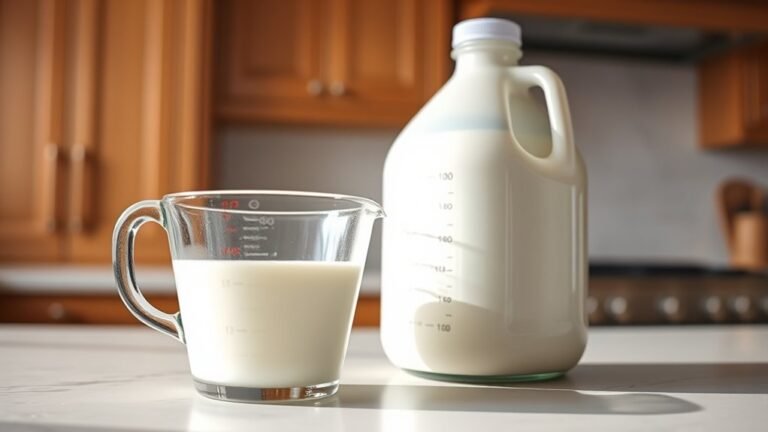
How Much Milk Should a Newborn Drink Daily
You should feed your newborn about 480 to 1080 ml (16 to 36 oz) of milk daily, spread across 8 to 12 feedings. This amount supports their growth and development in those crucial first weeks.
Knowing how much milk a newborn needs can help you feel more confident during feeding time.
In the first week, expect smaller amounts of 60 to 90 ml (2 to 3 oz) per feeding.
As your baby grows, this will increase to around 120 to 150 ml (4 to 5 oz) by one month.
Every baby is different, so it’s good to trust your little one’s hunger and fullness cues to adjust feeding amounts.
Keep an eye out for these signals to make feeding comfortable and effective.
You’ll find ways to support your newborn’s healthy growth by paying attention and responding to their needs.
Key Takeaways
- Newborns typically consume 60-90 ml (2-3 oz) of milk per feeding during the first week. They usually feed about 8-12 times daily in this period.
- So, the total daily milk intake ranges from around 480-1080 ml (16-36 oz) in that first week.
- By the time they reach one month, babies generally drink about 120-150 ml (4-5 oz) per feeding.
- Keep in mind, milk intake should always be adjusted based on the baby’s hunger cues and growth needs. Every baby is a little different!
How to Recognize Newborn Feeding Hunger and Fullness Cues

Although crying is a common sign of hunger, you should look for earlier cues like lip-smacking, rooting, or sucking motions to know when your newborn is ready to feed. These hunger cues are essential feeding signals that help you practice responsive feeding. This way, your baby eats before becoming distressed.
Watch for early cues like hand-to-mouth movements or fussiness as part of newborn feeding. Fullness cues, on the other hand, include your baby turning away from the breast or bottle, slowing sucking, or showing less interest.
Recognizing both hunger signs and fullness signs allows you to respond appropriately, preventing under- or overfeeding. By observing these behaviors closely, you’ll tune into your baby’s needs and promote a comfortable, effective feeding experience.
How Much Milk Newborns Need to Feed Each Day
When you care for a newborn, understanding how much milk they need each day helps you meet their nutritional needs effectively. Newborns typically require 60-90 ml (2-3 ounces of formula) per feeding during their first week, feeding 8-12 times daily.
This means their daily milk intake ranges from 480-1080 ml (16-36 ounces), depending on hunger cues and feeding frequency. As they grow, the feeding amount increases to about 120-150 ml (4-5 ounces) per feeding by one month.
Responsive feeding is essential—pay close attention to your baby’s hunger cues to guarantee adequate hydration and support steady weight gain. Adjusting feeding amounts based on your newborn’s growth helps maintain proper nutrition and promotes healthy development.
Frequently Asked Questions
How Much Milk Should a Newborn Drink Chart?
You’ll want a chart showing 60-90 ml per feeding in week one, increasing to about 150 ml per kilogram daily by one month. Adjust amounts based on your baby’s hunger cues and growth spurts for best results.
What Is the First Color a Baby Sees?
You’ll notice your baby first sees black, white, and gray because newborns focus on high-contrast patterns. Around 2 months, they start distinguishing bright colors, gradually seeing a full spectrum by about 5 months old.
Is 2 Oz Every 2 Hours Too Much for a Newborn?
No, 2 ounces every 2 hours isn’t too much if your newborn seems satisfied and gains weight well. Watch for hunger cues and discomfort, and always check with your pediatrician to guarantee the feeding amount fits your baby’s needs.
Is 4 Oz Too Much for a 1 Week Old?
You shouldn’t give your 1-week-old 4 ounces per feeding—it’s usually double what they need. Most babies at this age only tolerate 1.5 to 2 ounces, so stick to smaller, frequent feedings to avoid discomfort.
Conclusion
As you navigate your newborn’s feeding journey, remember their hunger cues are like little signals from a tiny drumbeat—soft cries, rooting, or sucking motions. Trust your instincts as you offer milk, knowing their needs can change like the tides.
Each feeding fills their growing body and heart, so listen closely and respond with love. You’re the anchor in this new world, guiding them gently toward health and comfort, one bottle at a time.
How much milk should a newborn drink daily? It varies, but typically, newborns consume about 1.5 to 3 ounces every 2 to 3 hours, totaling roughly 16 to 24 ounces a day. Pay attention to their hunger cues rather than strict schedules, as feeding amounts can shift with growth spurts. By tuning into these signals and providing the right amount of milk, you support your baby’s healthy development and build a strong feeding routine based on love and care.