How Much Protein Is in Breast Milk?
You get about 0.8 to 1.2 grams of protein per 100 milliliters in breast milk, with the highest levels found in colostrum right after birth. This early milk is packed with nutrients to give your newborn a strong start.
As your baby grows, the protein content gradually decreases, shifting from whey-rich to a balanced mix of whey and casein proteins.
These proteins support your baby’s growth, immune system, and digestion.
Keep exploring to discover how these proteins play a crucial role in your baby’s health and development. Understanding breast milk’s protein content can help you appreciate the natural nourishment it provides every step of the way.
Key Takeaways
- Breast milk contains about 0.8 to 1.2 grams of protein per 100 mL. The protein concentration is highest in colostrum and then decreases as the milk matures.
- Early milk is rich in easily digestible whey proteins. Later on, it shifts to a more balanced mix of whey and casein.
- Protein levels stabilize at lower amounts during the mature milk stages. This helps meet the infant’s needs perfectly.
- The proteins in breast milk provide essential amino acids and bioactive compounds. These are really important for infant growth and immunity.
How Much Protein Is in Breast Milk at Different Lactation Stages?
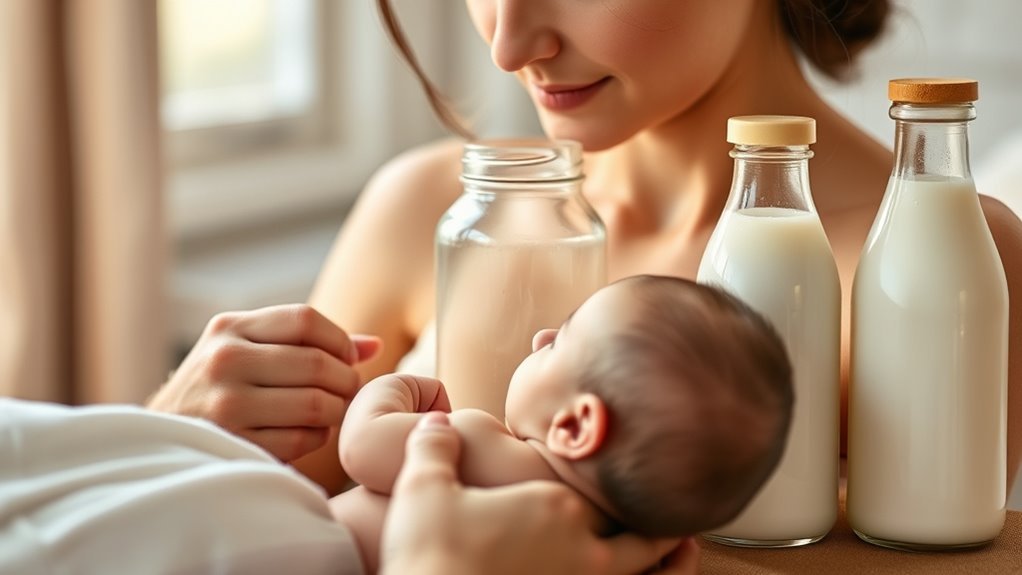
Although the protein content in breast milk varies, you can expect it to range from about 0.8 to 1.2 grams per 100 milliliters. In the early postpartum period, colostrum contains the highest protein levels, rich in whey proteins that are easy to digest.
As lactation progresses, the protein content decreases, shifting toward mature milk with a balanced mix of whey proteins and casein. This change in nutritional composition supports sustained infant growth by adapting to your baby’s evolving needs.
During mature milk stages, protein content stabilizes at lower levels compared to colostrum, ensuring adequate nutrition without overburdening your baby’s developing system. Understanding these lactation stages helps you appreciate how breast milk’s protein content meets your infant’s growth demands effectively.
How Do Breast Milk Proteins Help Your Baby Grow and Stay Healthy?

Because breast milk proteins are rich in essential amino acids and bioactive compounds, they play a crucial role in supporting your baby’s growth and immune health. Breast milk proteins like alpha-lactalbumin provide the amino acids needed for tissue development, fueling infant growth effectively.
At the same time, bioactive compounds such as lactoferrin and secretory IgA offer antibody protection, strengthening your baby’s immune system. These proteins also aid digestion by promoting the maturation of the gastrointestinal tract, ensuring your baby absorbs nutrients efficiently.
The balanced nutritional content and easy digestibility of breast milk proteins help your baby grow strong while warding off infections. By naturally supporting immune defenses and tissue growth, breast milk proteins are essential for your baby’s healthy start in life.
Frequently Asked Questions
Is Breast Milk a Good Source of Protein?
Yes, breast milk is a great protein source for your baby. It provides easily digestible, perfectly balanced proteins that support growth and immune protection, ensuring your little one gets exactly what they need for healthy development.
Why Do Bodybuilders Drink Breast Milk?
You drink breast milk because it offers high-quality, easily digestible protein that supports muscle growth. Its whey protein and bioactive compounds help with quick recovery and immune support, making it a natural, nutrient-dense supplement for your workouts.
Is It Healthy for Adults to Drink Breast Milk?
Imagine trying to fuel a sports car with regular gasoline—it’s not harmful, but it’s not optimized. Drinking breast milk as an adult won’t harm you if safe, but it doesn’t offer real health benefits either.
How Much Protein Does 1 Ounce of Breastmilk Have?
One ounce of breast milk has about 0.24 to 0.36 grams of protein. If it’s early colostrum, that jumps to roughly 0.6 grams. You’ll find whey proteins, which digest easily for infants.
Conclusion
As you nourish your baby with breast milk, remember that its protein content shifts like the changing seasons—tailored perfectly for each stage of growth. These proteins are tiny superheroes, protecting and building your little one’s body every day.
So, trust in this natural, evolving gift that fuels your baby’s health and development. You’re giving them exactly what they need, right when they need it. Your milk is their first, best armor.
Breast milk’s protein adapts to support your baby’s changing needs, from newborn to toddler. This dynamic nutrient blend helps strengthen their immune system, aids in growth, and supports brain development. Knowing how much protein is in breast milk reassures you that your baby is getting balanced nourishment. It’s nature’s way of ensuring your little one thrives, making breast milk the ultimate source of nutrition and protection during those crucial early months.