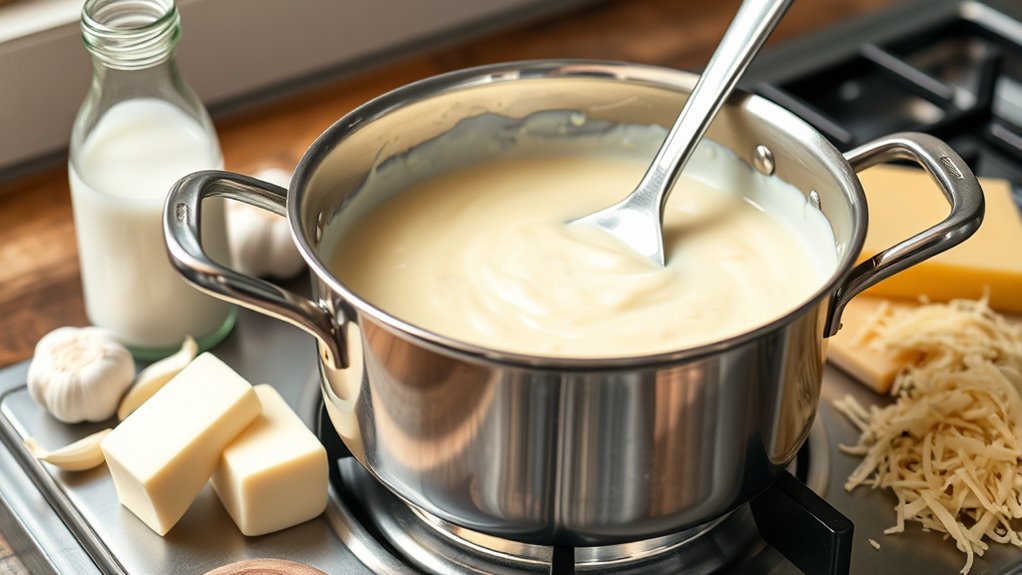
Can You Make Alfredo Sauce With Milk in 10 Easy Steps?
Yes, you can make Alfredo sauce with milk in 10 easy steps. This lighter version of the classic creamy Alfredo sauce lets you enjoy all the rich flavors without using heavy cream. It’s perfect if you want a delicious, homemade sauce but prefer a lower-fat option.
Start by melting butter and sautéing garlic, then create a roux with flour to thicken the sauce without cream. Gradually whisk in warm milk, add grated Parmesan, and season to taste.
Keep the heat low to avoid curdling, and customize with proteins or veggies if you like.
Store leftovers properly and reheat gently for best results. Keep going to discover helpful tips and serving ideas.
Key Takeaways
- Melt butter and sauté minced garlic over medium-low heat to build the sauce’s flavor base. This step really helps bring out that rich, garlicky goodness.
- Stir in flour to form a roux, thickening the sauce without using heavy cream. It’s a simple trick to get that creamy texture you want.
- Gradually whisk in warmed milk in small increments to ensure a smooth, creamy texture. Take your time here so it doesn’t get lumpy.
- Add grated Parmesan off the heat and season with salt, pepper, and herbs for enhanced flavor. This is where your sauce really starts to shine.
- Reheat gently, adding milk if needed, and serve over pasta or with proteins and vegetables. And just like that, you’ve got a delicious Alfredo sauce ready to enjoy!
What Ingredients Do You Need for Alfredo Sauce With Milk
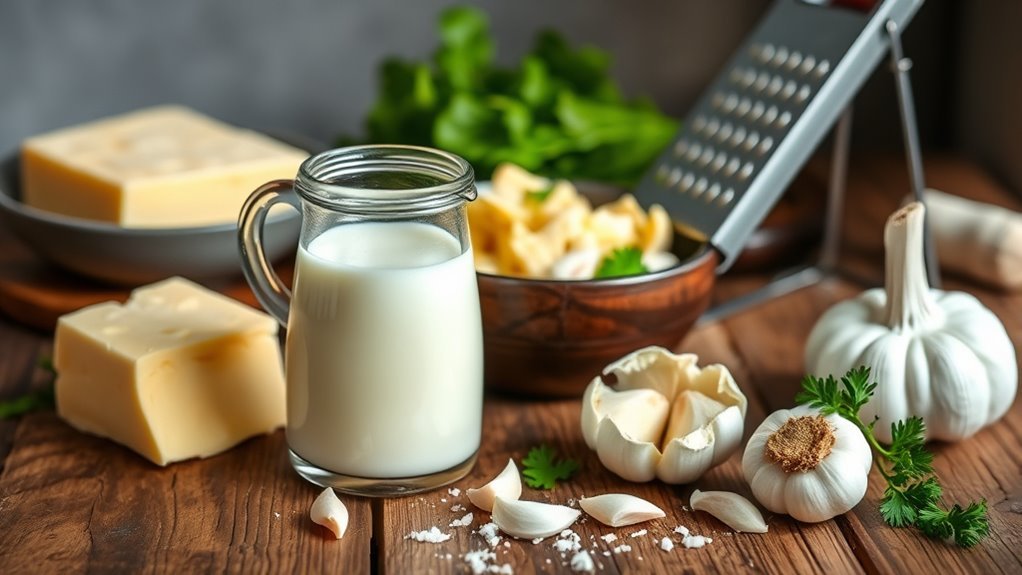
Although traditional Alfredo sauce uses heavy cream, you can easily make a lighter version with milk by gathering a few simple ingredients. You’ll need butter and garlic as your flavorful base.
Flour helps thicken the sauce without heavy cream, so be sure to include it in your recipe. Milk is the key ingredient that keeps the sauce lighter while still creamy.
Flour thickens the sauce without heavy cream, while milk keeps it light and creamy.
Grated Parmesan cheese not only adds rich flavor but also helps thicken the sauce further. Don’t forget to add seasonings like salt, pepper, and dried herbs to enhance the taste.
Depending on your preferences, you can experiment with different types of milk, such as whole milk or plant-based alternatives, to keep the sauce delicious and suitable for your diet.
Melting Butter and Sautéing Garlic for Alfredo Sauce
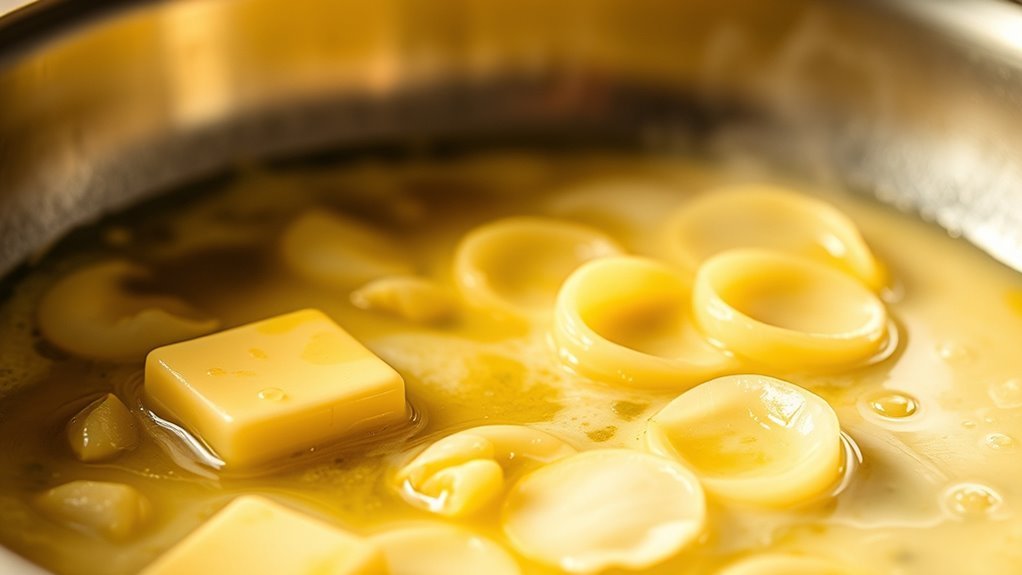
Once you melt the butter over medium-low heat, you’ll create a smooth base that helps the sauce come together effortlessly.
As the butter liquefies and starts to bubble, add minced garlic to the skillet. Sauté the garlic gently, stirring constantly for about 30 seconds to release its rich aroma and flavor without burning.
This step is essential because the butter’s richness combined with garlic’s fragrance sets the tone for your Alfredo sauce. The melting butter ensures the cream and other ingredients will blend smoothly, giving the sauce a velvety texture.
By carefully sautéing garlic in butter, you enhance the sauce’s depth, making every spoonful flavorful and aromatic.
This simple technique elevates your Alfredo sauce, even when using milk instead of traditional cream.
How a Roux Helps Thicken Alfredo Sauce
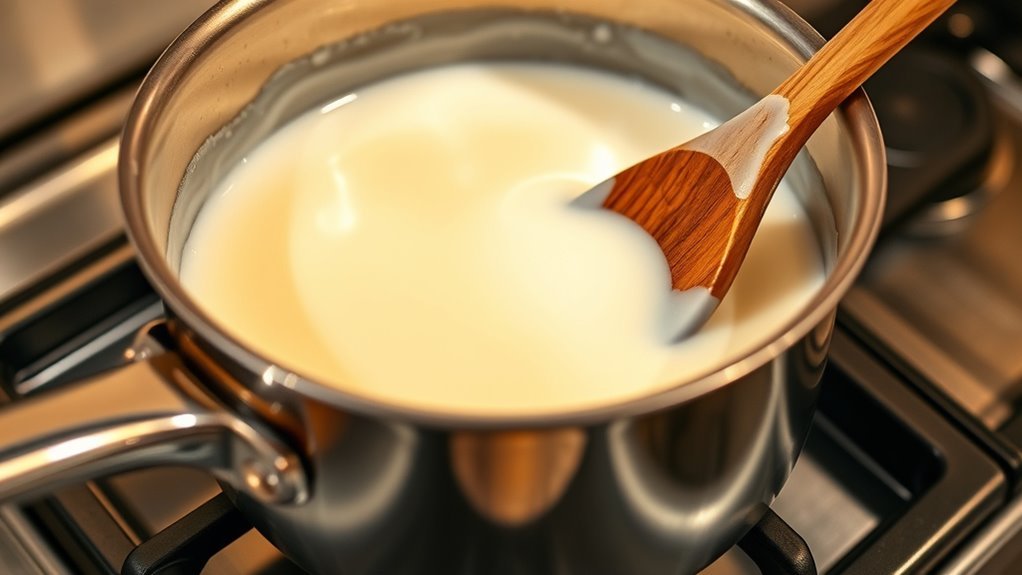
After sautéing garlic in melted butter, the next step in crafting a smooth Alfredo sauce with milk is creating a roux. By cooking flour with butter, you form a roux that acts as a powerful thickening agent.
When you add milk, the starch in the roux absorbs the liquid as it heats, swelling to thicken the sauce. This process gives your Alfredo sauce a velvety texture and helps maintain stability, preventing separation or greasiness.
Using a roux also lets you control the consistency, so your sauce coats the pasta perfectly without becoming too runny or lumpy. Incorporating this step guarantees your milk-based Alfredo sauce comes out rich, creamy, and beautifully thickened every time.
How to Gradually Add Milk and Whisk to Avoid Lumps
To guarantee your Alfredo sauce stays smooth and lump-free, add the milk gradually in small increments while whisking continuously. Pour about ¼ cup of milk at a time, whisking immediately to blend it into the roux. This steady process helps prevent lumps by ensuring the milk incorporates smoothly.
Keep your heat on low to medium-low to maintain temperature control, which is key to avoiding curdling or separation. Warming the milk slightly before adding it also promotes a smooth consistency. Don’t rush—whisking as you gradually add milk keeps the sauce creamy and uniform.
How to Stir in Parmesan Cheese and Seasonings
Now it’s time to stir in the Parmesan cheese slowly, making sure it melts smoothly into the sauce without clumping. Once the cheese is blended, add your seasonings like black pepper and garlic after you’ve taken the sauce off the heat to keep their flavors fresh.
Give everything a good stir, then taste and adjust the seasoning to get that perfect balance.
Adding Parmesan Cheese
When you stir grated Parmesan cheese into your hot Alfredo sauce off the heat, you prevent clumping and guarantee it melts smoothly. Use freshly grated Parmesan for the best cheese flavor and melting cheese quality, as pre-grated options often contain anti-caking agents that can hinder cheese incorporation.
Gradually add the grated Parmesan to the warm cheese sauce, stirring continuously to achieve a creamy cheese texture. This careful technique ensures the cheese melts evenly without separating or becoming grainy.
Once the Parmesan cheese is fully integrated, your sauce will boast a rich, velvety consistency. Avoid adding cheese seasoning before the cheese is incorporated to maintain the sauce’s smoothness and flavor balance.
That way, you can adjust seasoning after the Parmesan blends perfectly into your sauce. It really makes a difference in the final taste and texture!
Seasoning Tips
Although stirring Parmesan cheese into your Alfredo sauce might seem straightforward, doing it gradually and off the heat is key to preventing clumps and achieving a smooth, creamy texture. Whisk the cheese continuously to melt it evenly.
Once the cheese is fully incorporated, add your seasonings—salt, pepper, and herbs—away from the heat to keep their fresh flavors intact. Start with small amounts and adjust to maintain a perfect flavor balance.
For added depth, sprinkle in a pinch of nutmeg or Italian seasoning. Here are some seasoning tips to guide you:
| Seasoning | When to Add |
|---|---|
| Salt & Pepper | Away from the heat, gradually |
| Nutmeg & Italian seasoning | After cheese melts |
| Fresh Herbs | Just before serving |
This approach ensures your sauce stays creamy and flavorful.
How to Thicken Alfredo Sauce to the Perfect Consistency
If you want your Alfredo sauce to cling perfectly to your pasta, you’ll need to focus on thickening it properly. Start by making a roux with equal parts butter and flour, which forms the base to thicken your Alfredo sauce.
For Alfredo sauce that clings perfectly, begin with a roux of equal parts butter and flour.
Slowly whisk in milk, adding it gradually to maintain the right consistency. As the sauce simmers, let it reduce gently; this allows the starches to gelatinize, enhancing creaminess naturally.
If the sauce still feels too thin, simply whisk in a cornstarch or arrowroot slurry to boost thickness quickly. Remember to remove the sauce from the heat once it reaches a creamy texture that coats the back of a spoon.
Following these steps guarantees your Alfredo sauce has the perfect consistency every time. You’ll be amazed at how well it sticks to your pasta!
Heat Control Tips to Prevent Sauce From Curdling or Burning
Achieving the perfect thickness in your Alfredo sauce is just one part of the process; controlling the heat while cooking is equally important to prevent curdling or burning. Use low to medium heat throughout to guarantee gentle temperature regulation.
Gradually add milk in small increments while whisking continuously to promote even incorporation and prevent curdling. Avoid boiling the sauce vigorously—instead, maintain a gentle simmer to keep the temperature steady.
Stir constantly to evenly distribute heat and stop the milk from sticking to the pan’s bottom, which can cause burning. Pay close attention to heat control, and remove the sauce from the heat as soon as it reaches the desired thickness.
These steps help you avoid boiling and overheating, assuring a smooth, creamy Alfredo sauce every time. Just take it slow and steady, and you’ll get that perfect sauce every time!
How to Customize Your Alfredo Sauce With Add-Ins
You can easily customize your Alfredo sauce by adding cooked chicken, shrimp, or your favorite veggies for extra flavor and nutrition. Fresh herbs, extra cheese, or a splash of lemon juice can brighten and deepen the taste.
Don’t forget to experiment with spices like nutmeg or red pepper flakes to make the sauce truly your own. It’s all about making it suit your cravings and style!
Popular Ingredient Additions
While classic Alfredo sauce shines on its own, adding popular ingredients can elevate your dish and tailor it to your taste. Toss in cooked chicken or shrimp to make your Alfredo protein-rich and more satisfying.
You can also incorporate sautéed vegetables like spinach, mushrooms, or broccoli for extra nutritional value and texture. Fresh herbs such as basil, parsley, or thyme bring a burst of aroma and brightness to the sauce.
For a sweet and smoky twist, stir in sun-dried tomatoes or roasted red peppers. Another fun idea is mixing in different grated cheese varieties like mozzarella or Gouda to create unique textures and flavors.
These popular ingredient additions let you customize your Alfredo sauce easily, enhancing both flavor and nutrition without overpowering its creamy base. Give it a try and see how your Alfredo can become even better!
Flavor Enhancement Tips
Building on popular ingredient additions, enhancing the flavor of your Alfredo sauce with thoughtful add-ins can take it from simple to spectacular. Start by sautéing minced garlic to boost the savory depth and introduce an aromatic base.
Incorporate fresh herbs like basil, oregano, or thyme for a vibrant flavor enhancement that adds complexity. You can stir in cooked protein such as shrimp, chicken, or pancetta to make the dish more filling and rich.
Vegetables like spinach, peas, or roasted zucchini provide nutrition along with subtle flavor accents. Finally, a pinch of nutmeg or red pepper flakes adds warmth and extra depth to your sauce, rounding out the flavors perfectly.
These simple tweaks let you customize your Alfredo sauce to suit any palate. Give them a try and see how your sauce transforms!
Best Ways to Serve Milk-Based Alfredo Sauce
Since milk-based Alfredo sauce offers a creamy, comforting flavor, it pairs perfectly with classic pasta dishes like fettuccine and linguine. You can serve Alfredo sauce not only over pasta but also as a rich complement to various dishes.
Consider these ideas to add depth to your meals:
- Drizzle over steamed vegetables or use as a dipping sauce for garlic bread and breadsticks to enhance flavor.
- Incorporate protein options such as grilled chicken, shrimp, or scallops for a satisfying main course with creamy pasta dishes.
- Use milk-based Alfredo sauce in baked casseroles or as a creamy pizza sauce alternative, bringing a delicious twist to traditional recipes.
These versatile serving ideas make the most of your milk-based Alfredo without needing to reheat Alfredo sauce repeatedly.
How to Store and Reheat Alfredo Sauce for Later Use
You’ll want to store your leftover Alfredo sauce in an airtight container in the fridge. It’ll keep good for up to five days.
When you’re ready to reheat, do it gently on low heat or use short microwave bursts. Stir it often to keep things smooth.
If the sauce thickens or starts to separate, just add a splash of milk. That’ll help bring back the creamy texture you’re looking for.
Proper Storage Techniques
Although Alfredo sauce tastes best fresh, proper storage lets you enjoy leftovers without sacrificing flavor or texture. To keep your sauce fresh, store it in an airtight container in the refrigerator for up to 5 days.
If you want to keep it longer, use freezer-safe containers and freeze it for up to one month. Just make sure to let the sauce cool completely before storing to avoid condensation and bacterial growth.
Here are some tips to keep in mind for effective storage and reheating:
Reheat gently over low heat, stirring frequently to keep that smooth texture. You can add a splash of milk while reheating to bring back the creaminess.
Make sure to reheat thoroughly to an internal temperature of 165°F (74°C), but don’t let it boil—that can cause the sauce to separate.
Following these storage guidelines will help your Alfredo sauce stay delicious and safe to enjoy later.
Reheating Methods
When reheating Alfredo sauce, taking care to warm it gently preserves its creamy texture and rich flavor.
You can reheat the sauce in the microwave or on the stovetop. Use low heat and stir frequently to avoid separation or graininess.
Adding a splash of milk helps restore the sauce’s consistency if it thickens too much.
Always reheat only once and store leftovers in an airtight container for up to 5 days.
| Reheating Method | Tips | Notes |
|---|---|---|
| Microwave | Heat in 30-second intervals | Stir between intervals to maintain texture |
| Stovetop | Warm on low heat | Stir and add milk if needed |
| General Advice | Avoid multiple reheatings | Keeps sauce smooth and creamy |
Stick to these reheating methods for the best results.
Sauce Shelf Life
To keep your Alfredo sauce fresh and delicious, store leftovers in an airtight container in the refrigerator. They’ll last up to five days this way. Since Alfredo is a cream-based sauce, proper storage is really important to keep its texture and make sure it’s safe to eat.
When you’re ready to reheat leftover sauce, do it gently. This helps preserve the creaminess and stops the sauce from separating.
Keep these tips in mind for the best shelf life and storage time:
- Refrigerate the sauce promptly after cooking to reduce bacterial growth.
- Reheat slowly on low heat or in the microwave, stirring every 30 seconds.
- Add a splash of milk or water while reheating to bring back the sauce’s nice consistency.
Try to avoid freezing the sauce after reheating. Freezing can mess with the texture and flavor.
Frequently Asked Questions
How to Make Alfredo Sauce With Just Milk?
You start by melting butter, whisking in flour to make a roux, then slowly adding milk while stirring. Simmer gently, add Parmesan cheese gradually, and season to taste for a creamy, flavorful Alfredo sauce.
Can You Make a 3-Ingredient Alfredo Sauce With Milk?
You can make a 3-ingredient Alfredo sauce with milk, butter, and Parmesan. About 70% of home cooks find this quick, creamy version satisfying, even if it’s less rich than traditional sauces with cream or roux.
What’s the Simplest Way to Make Alfredo Sauce?
The simplest way to make Alfredo sauce is by melting butter, whisking in flour to form a roux, then gradually adding milk while stirring until thickened. Finish with Parmesan cheese and seasonings for a creamy, quick sauce.
Can You Use Milk Instead of Cream for Alfredo?
You absolutely can use milk instead of cream for Alfredo—it’s like turning a simple sauce into a silky dream! Just add butter and a thickener like flour, and you’ll get a tasty, lighter, creamy sauce.
Conclusion
Now that you’ve mastered making Alfredo sauce with milk, you can easily whip up a creamy, delicious meal anytime. Just like Sarah, who swapped cream for milk to lighten her dinner, you’ll enjoy rich flavor without the extra calories.
Remember, controlling heat and whisking well keep your sauce smooth and perfect. It’s all about patience and a gentle touch to avoid lumps.
Give it a try tonight, and watch how this simple twist transforms your pasta into a comforting, crowd-pleasing dish! Making Alfredo sauce with milk is a fantastic way to enjoy that classic creamy taste while keeping things lighter. Once you get the hang of it, you’ll see how easy and satisfying it is to make Alfredo sauce with milk at home. Trust me, your pasta nights just got a whole lot better!