How Much Breast Milk Does a Newborn Need to Eat?
Your newborn needs small, frequent feedings that grow steadily each day to support their healthy development. Breast milk intake starts off small but increases quickly as they adjust to feeding.
On day one, they typically take just 5-7 mL per feeding, which may seem tiny but is perfectly normal.
By day three, this amount usually increases to about 22-27 mL, and by one week, your baby might be taking around 45-60 mL at each feeding.
Watching for early hunger cues like rooting or lip smacking helps you feed before they cry, making feeding times smoother for both of you.
Paying attention to fullness signs, such as turning away or relaxed hands, guarantees you don’t overfeed your newborn.
Keep tracking their intake and behaviors to support healthy feeding habits and steady growth. It’s a learning process, but you’re doing great!
Key Takeaways
- Newborns typically consume 5-7 mL of breast milk per feeding on day 1. By day 3, intake increases to about 22-27 mL (1 ounce) per feeding.
- At one week, babies usually drink 45-60 mL (1.5-2 ounces) per feeding. Breast milk intake gradually rises as the baby grows and feeding frequency adjusts.
- Keeping an eye on how much your baby eats helps make sure they get enough nutrition for healthy growth. It’s all about supporting their needs as they grow.
How Can You Tell When Your Newborn Is Hungry or Full?

While crying is often the most obvious sign, you can tell your newborn is hungry much earlier by noticing subtle cues like rooting, lip smacking, or sucking on their hands. These early hunger cues show your baby is ready to feed before crying begins.
Watching your baby’s behaviors closely helps you recognize these feeding cues and respond promptly, supporting healthy feeding habits.
Observing your baby’s signals carefully allows for timely responses, fostering healthy feeding routines.
Fullness signs, such as turning away from the nipple, relaxing their hands, closing their mouth, or pushing food away, tell you when to stop feeding. Paying attention to both hunger signs and signs of fullness ensures responsive feeding, helping your newborn feel satisfied without overfeeding.
Learning your baby’s cues creates a smooth, nurturing feeding experience for both of you. It really makes feeding time easier and more enjoyable for everyone involved.
How Much Breast Milk Does Your Newborn Need Per Feeding?
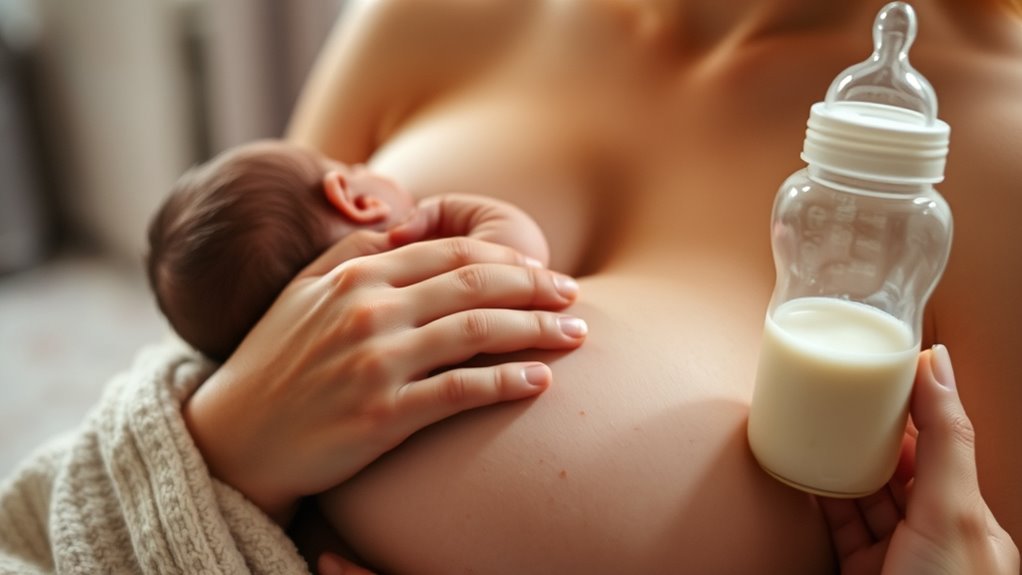
As your newborn grows, the amount of breast milk they need per feeding changes considerably. In the first day, your infant will take small amounts, gradually increasing as they develop.
Here’s a clear breakdown to guide you:
- Day 1: 5-7 mL (1-2 teaspoons) per feeding.
- Day 3: About 22-27 mL (approximately 1 ounce) per feeding.
- One week: 45-60 mL (1.5-2 ounces) per feeding.
Frequently Asked Questions
How Much Pumped Breastmilk Should I Feed My Newborn?
You should feed your newborn about 0.5 to 1 ounce per feeding in the first days, increasing to 2 to 3 ounces by week one. Watch hunger cues and diaper output to adjust amounts accordingly.
What Is the 3-3-3 Rule for Breast Milk?
You feed every 3 hours, nurse for 3 to 30 minutes, and aim for about 8 to 12 feedings daily. The 3-3-3 rule helps you keep a steady schedule and guarantees your baby gets enough breast milk.
Is 2 Oz Every 2 Hours Too Much for a Newborn?
No, 2 ounces every 2 hours isn’t usually too much for a newborn. You should watch their cues and diaper output to make certain they’re comfortable and gaining weight well. If unsure, talk to your healthcare provider.
Is 10 Minutes of Breastfeeding Enough for a Newborn?
Ten minutes can feel like an eternity when your newborn’s hungry, but it’s often enough if they nurse actively. Trust their cues—if they’re content, wet diapers are plentiful, and weight’s steady, you’re doing great.
Conclusion
You’ll quickly learn to read your newborn’s hunger cues, like a secret language only the two of you share.
Remember, in those early days, your baby’s tiny tummy only needs about 1.5 to 3 ounces of breast milk per feeding.
Trust your instincts and let your baby guide you—they’ll let you know when they’re full or ready for more.
Feeding is a dance, and with time, you’ll both find the perfect rhythm.
Every baby is unique, so how much breast milk a newborn needs can vary a bit. The key is to pay attention to their signals and offer breast milk on demand. This approach helps ensure your little one gets the right amount to grow and thrive.
So, don’t stress about exact ounces—focus on your baby’s cues and enjoy those special feeding moments together. After all, understanding how much breast milk a newborn needs is part of building a strong, nurturing bond.