5 Easy Steps to Transition From Formula to Whole Milk
You’ll want to start shifting your baby from formula to whole milk around their first birthday, especially once they’re eating solids and drinking from a cup reliably.
Transitioning to whole milk is an important step in your baby’s growth and nutrition.
Begin by mixing one part whole milk with three parts formula or breast milk.
Gradually increase the milk over a week or two to help your baby adjust.
Offer about 16 ounces daily, spread over meals in a sippy cup to encourage independence.
If your baby resists, try mixing milk into familiar foods like cereal or yogurt.
Stay patient and consistent—this change might take some time.
Keep following these tips to make the transition smoother and healthier for your little one.
Key Takeaways
- Begin transitioning after the baby’s first birthday and confirm readiness with your pediatrician. It’s important to make sure your little one is ready for this change.
- Start mixing whole milk with formula at a 1:3 ratio. Gradually increase the amount of milk over 7–10 days to help your baby adjust smoothly.
- Serve the milk mixture in a clean, spill-proof sippy cup. You can offer it at room temperature or slightly warmed, whichever your baby prefers.
- Limit whole milk intake to 16–24 ounces daily. Try to spread this amount evenly across meals and snacks throughout the day.
- Use patience and offer milk in familiar foods. Keep mealtime routines positive to encourage your baby’s acceptance of the new taste.
When to Start Transitioning Your Baby From Formula to Whole Milk
When should you start switching your baby from formula to whole milk? The American Academy of Pediatrics recommends introducing cow’s milk after your baby’s first birthday, around 12 months old.
Before making the switch, confirm your baby is eating a variety of solid foods and can drink from a cup reliably. This readiness usually coincides with your baby turning a year old.
The transition from formula typically begins near the baby’s first birthday, but always seek pediatrician approval first, especially if allergies or digestion concerns exist.
Once approved, you can gradually increase whole milk intake over a week or two. Starting with small amounts helps your baby adjust to the new taste and texture while solid foods remain a key part of their diet.
How to Gradually Mix Whole Milk With Formula or Breast Milk
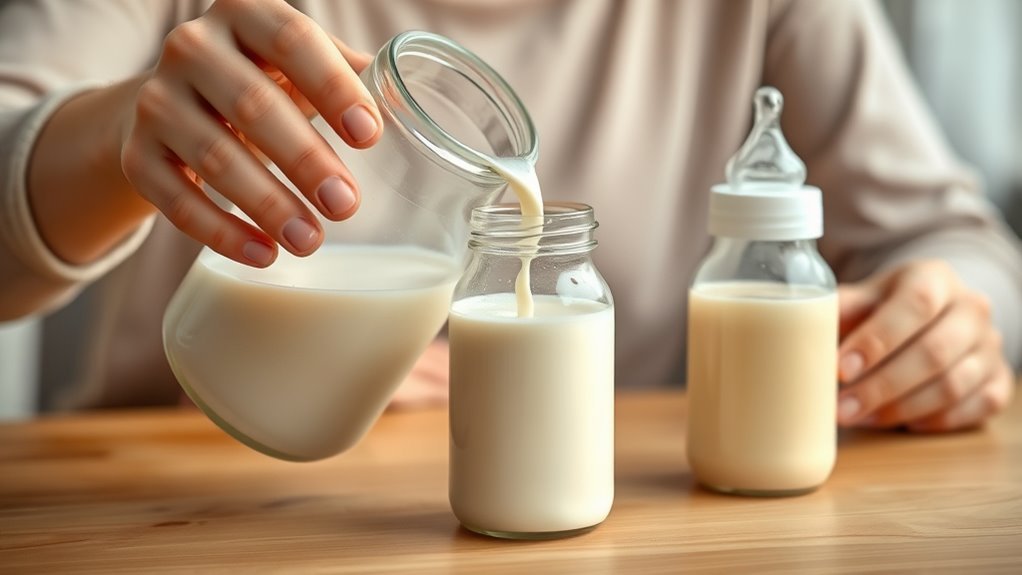
Since your baby is ready to try whole milk, start by mixing one part whole milk with three parts formula or breast milk. This approach helps you gradually introduce the new taste and texture without overwhelming your baby.
Use a clean sippy cup to serve the mixture, making it easier for your little one to get used to the new texture and temperature. Serve the mixture at room temperature or slightly warmed for comfort.
Over about a week, slowly increase the proportion of whole milk while decreasing formula or breast milk. During this changeover, keep a close eye on your baby for any signs of intolerance or allergic reactions.
Paying attention to these signs helps ensure a smooth and safe transition to whole milk. It’s all about going slow and making sure your baby feels comfortable with each step.
How Much Whole Milk Should Your 1-Year-Old Drink?
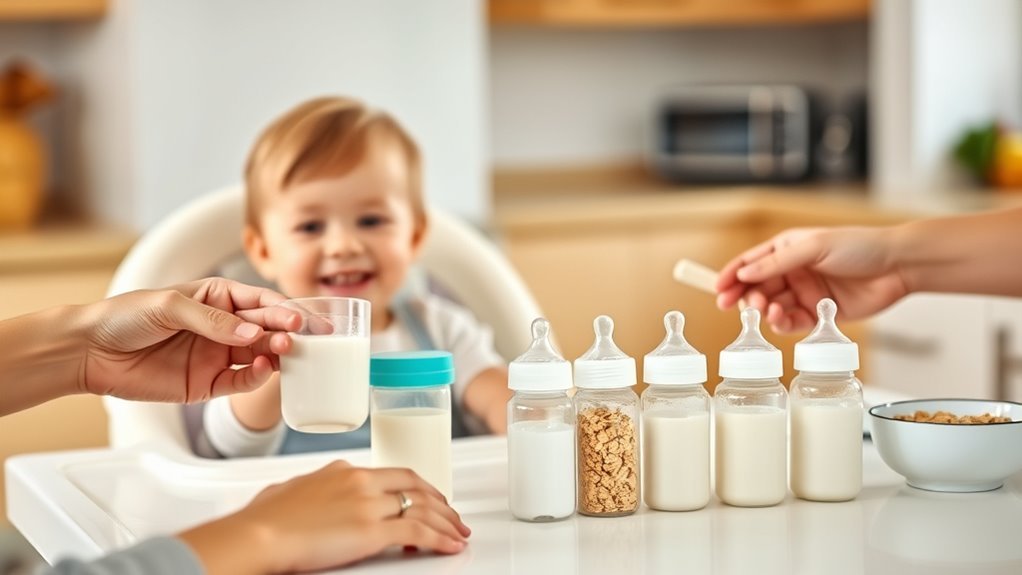
Although your 1-year-old is enthusiastic to explore whole milk, you should aim to provide about 16 ounces daily to support their calcium and vitamin D needs without risking iron deficiency.
To facilitate a smooth transition and proper nutrition, keep these points in mind:
- Limit whole milk to 16-24 ounces (2-3 cups) daily to avoid interfering with iron absorption and risking iron deficiency.
- Spread the daily intake across meals and snacks to maintain a balanced diet and prevent your child from feeling too full.
- Adjust the amount based on your 1-year-old’s appetite, growth, and pediatrician’s advice to meet their individual nutrition needs.
Following these guidelines helps you provide the right amount of whole milk while supporting your child’s overall health.
How to Move From Bottle to Whole Milk in a Sippy Cup
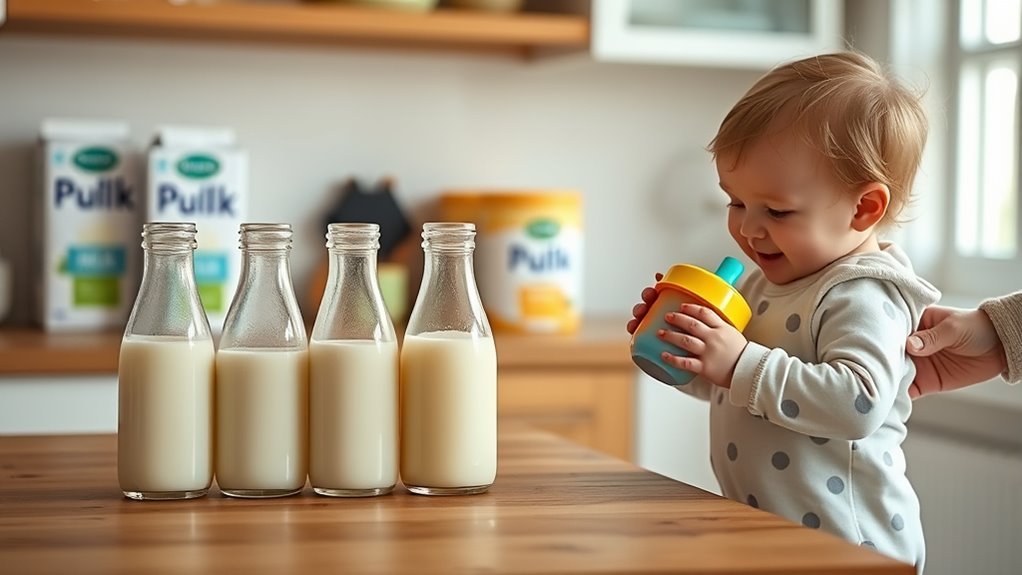
Wondering how to help your toddler switch from a bottle to drinking whole milk in a sippy cup? Start by introducing small amounts of whole milk in a spill-proof sippy cup alongside familiar foods to encourage acceptance.
Gradually shift by replacing formula with whole milk over 7 to 10 days. Increase the whole milk while decreasing the formula bit by bit.
Use a sippy cup during meals and snacks as part of your toddler’s feeding routine. This helps them get used to drinking independently.
Serve the milk at room temperature or slightly warm to make it more appealing. Offer the sippy cup consistently without pressure.
Be patient as your toddler adjusts. This gradual approach supports a smooth changeover and helps your child embrace whole milk and the new feeding method comfortably.
Managing Milk Acceptance Challenges: What to Do If Your Baby Struggles
If your baby struggles to accept whole milk, don’t worry—it’s a common challenge that many parents face. Milk acceptance often requires patience and persistence, especially when introducing whole milk.
Here’s what you can do:
- Mixing milk gradually: Start by blending small amounts of whole milk with breast milk or formula. Increase slowly to help babies hesitant about new tastes adjust smoothly.
- Use a sip and cup during routine mealtime: Offering milk in a familiar cup instead of a bottle builds positive associations and encourages acceptance.
- Incorporate milk into familiar foods: Adding milk to oatmeal, smoothies, or mashed potatoes makes the transition easier for babies who reject milk straight.
Frequently Asked Questions
How to Slowly Transition From Formula to Whole Milk?
You start by mixing small amounts of whole milk into formula, gradually increasing milk while decreasing formula over a week. Warm the milk slightly, watch for reactions, and once your baby accepts it, switch entirely to whole milk.
How Long Does It Take to Transition From Formula to Whole Milk?
It usually takes you about 7 to 10 days to shift your baby from formula to whole milk. This slow change helps 90% of babies avoid tummy troubles, making the switch smoother and easier for both of you.
Is 10 Months Too Early to Transition to Whole Milk?
Yes, 10 months is too early to shift to whole milk. You should wait until your baby is 12 months old to avoid nutritional risks like iron deficiency and digestive problems, ensuring a safer, healthier switch.
How Do I Transition My Baby From Formula to Full-Cream Milk?
You’ll want to mix whole milk with formula, gradually increasing milk over a week. Serve it warm or room temperature, offer in a cup, and watch for any reactions while ensuring proper daily intake and balanced nutrition.
Conclusion
Moving your little one from formula to whole milk doesn’t have to be tricky—you’ve got this! By starting at the right time, mixing gradually, and encouraging sippy cup use, you’re setting up healthy habits for life.
Remember, patience is your secret weapon; every sip brings your baby closer to the big kid table. So, keep calm and pour on—the journey to whole milk is smoother than you think!
Transitioning from formula to whole milk can feel overwhelming, but breaking it down into simple steps makes it easy. With gradual mixing and consistent encouragement, your toddler will adapt in no time. Embrace this exciting milestone—it’s all about nurturing healthy growth and building lifelong good habits. Keep these tips in mind, and you’ll master the formula to whole milk transition with confidence!